Introduction
The magnetic north pole is an essential reference point for navigation and geographical studies. Its gradual movement affects various fields, including aviation and maritime operations. As global climate change progresses and Earth’s magnetic field undergoes fluctuations, understanding the dynamics of the magnetic north pole has never been more crucial for navigators, scientists, and policymakers alike.
Recent Developments
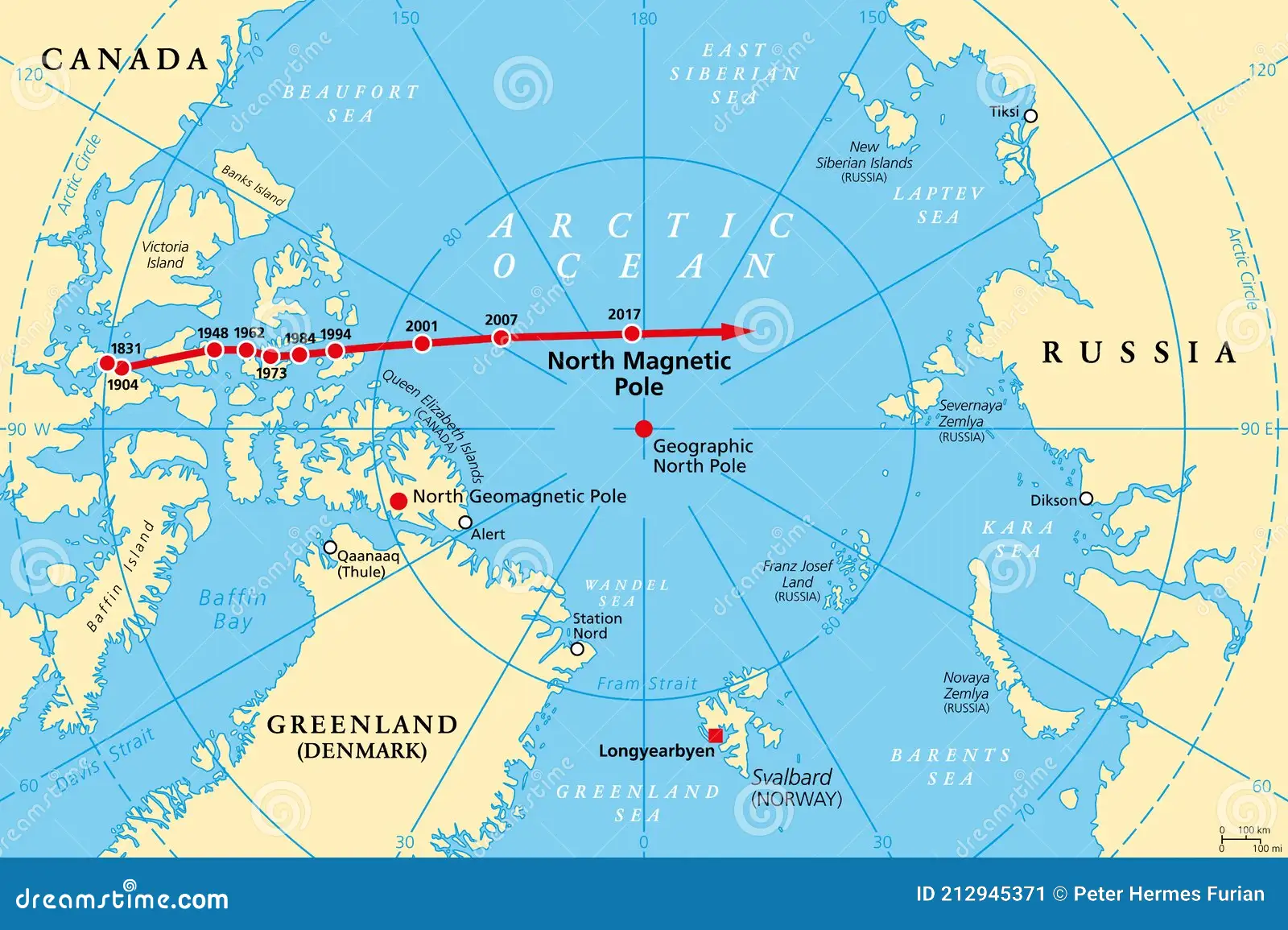
As of 2023, the magnetic north pole has been moving at an accelerated pace towards Russia, traveling around 55 kilometers a year. This shift has raised concerns regarding navigation systems that rely on compass readings, particularly in the Arctic regions where the changes are most pronounced. The World Magnetic Model (WMM), updated every five years, has recently been revised to accommodate these changes, with the latest update released in December 2020 to improve the accuracy of navigation devices.
Researchers have noted that the magnetic field of the Earth is influenced by molten iron movements in the outer core. As these movements shift, so too does the magnetic field, leading to the magnetic north pole’s movement. In a collaborative effort, scientists from the British Geological Survey and the United States Geological Survey continue to monitor the pole’s trajectory, using sophisticated satellite technology and ground observation.
Implications of the Shift
The implications of the magnetic north pole’s shift are widespread. For the aviation industry, pilots must adjust their navigational tools to prevent compass errors during flights over polar regions. Similarly, shipping routes in the Arctic are affected, necessitating constant updates to maritime charts to ensure safe passage for vessels. Furthermore, the navigation systems in smartphones and other handheld devices also require recalibrations based on the updated understanding of magnetic variations.
Conclusion
As the magnetic north pole continues its journey, it serves as a reminder of the dynamic nature of our planet. For navigators, scientists, and policymakers, staying informed about the pole’s movement is essential to maintaining safe and efficient travel routes. The ongoing research into the magnetic field’s changes offers critical insights into Earth’s internal processes, further emphasizing the importance of monitoring this phenomenon. As we look to the future, advancements in technology promise even greater accuracy in navigation and help mitigate the challenges posed by the shifting magnetic north pole.