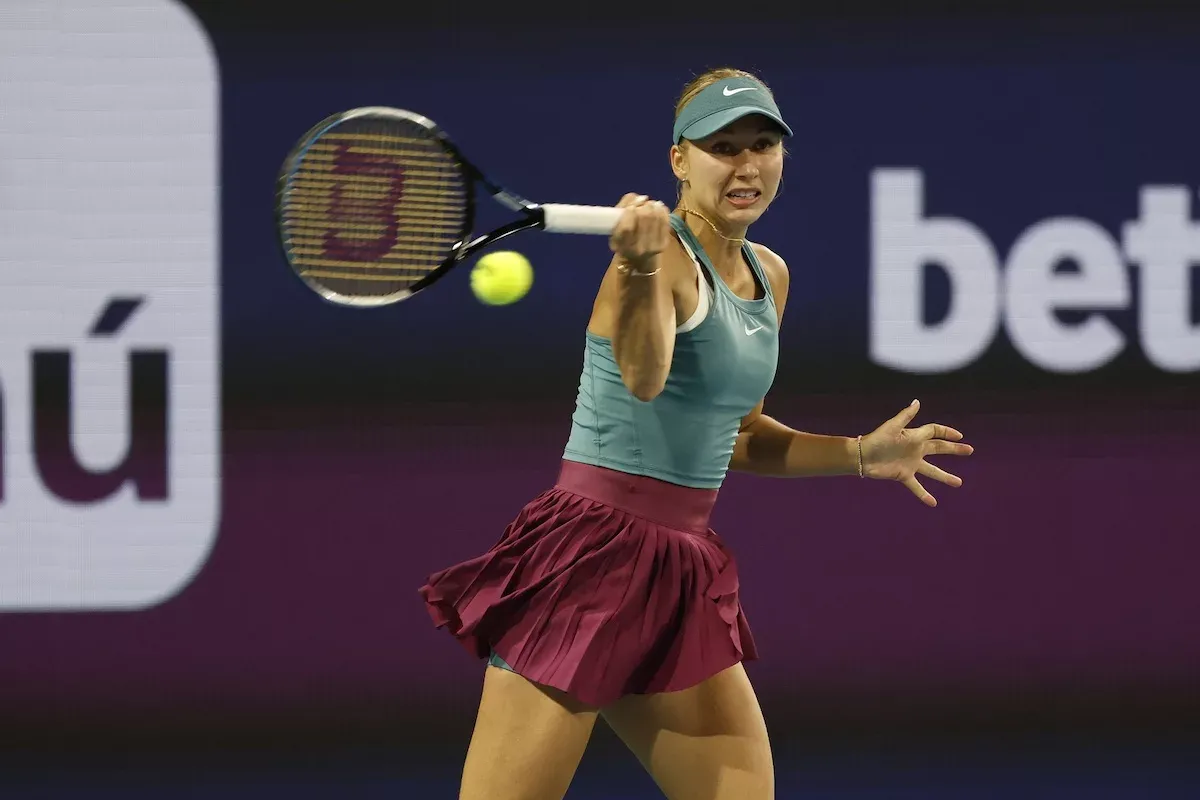
Anastasia Potapova’s historic achievement as the first lucky loser to reach a WTA 1000 semifinal at the Madrid Open on May 4, 2026, showcases the unpredictable and exhilarating landscape of women’s tennis. Before this moment, expectations were modest—Potapova entered the tournament ranked 56 and had lost in qualifying.
But then came her decisive match against Karolina Pliskova. Potapova triumphed with a score of 6-1, 6-7(4), 6-3, displaying remarkable resilience. She saved seven out of ten break points in her previous match against Elena Rybakina, an upset that set her on this unprecedented path.
The impact on Potapova has been profound. After defeating Pliskova, she dropped to her knees and cried—an emotional release that signifies how far she has come. Her victory not only elevates her status but also reshapes perceptions around what a lucky loser can achieve.
Experts have noted that Potapova’s performance challenges conventional wisdom. Typically, lucky losers struggle to advance past early rounds. Yet here she stands, poised to face Marta Kostyuk in the semifinals. This shift in narrative could inspire other players who find themselves in similar situations.
Her journey reflects broader themes within women’s tennis—where unpredictability reigns and opportunities abound for those willing to seize them. As Potapova herself remarked, “It seems that this tournament keeps giving me second chances and I keep using them.” This mindset may prove crucial as she prepares for her next challenge.
As we look ahead, the excitement surrounding women’s tennis continues to grow. The next match against Kostyuk promises to be another thrilling encounter. Fans eagerly await what could be another chapter in Potapova’s remarkable story.