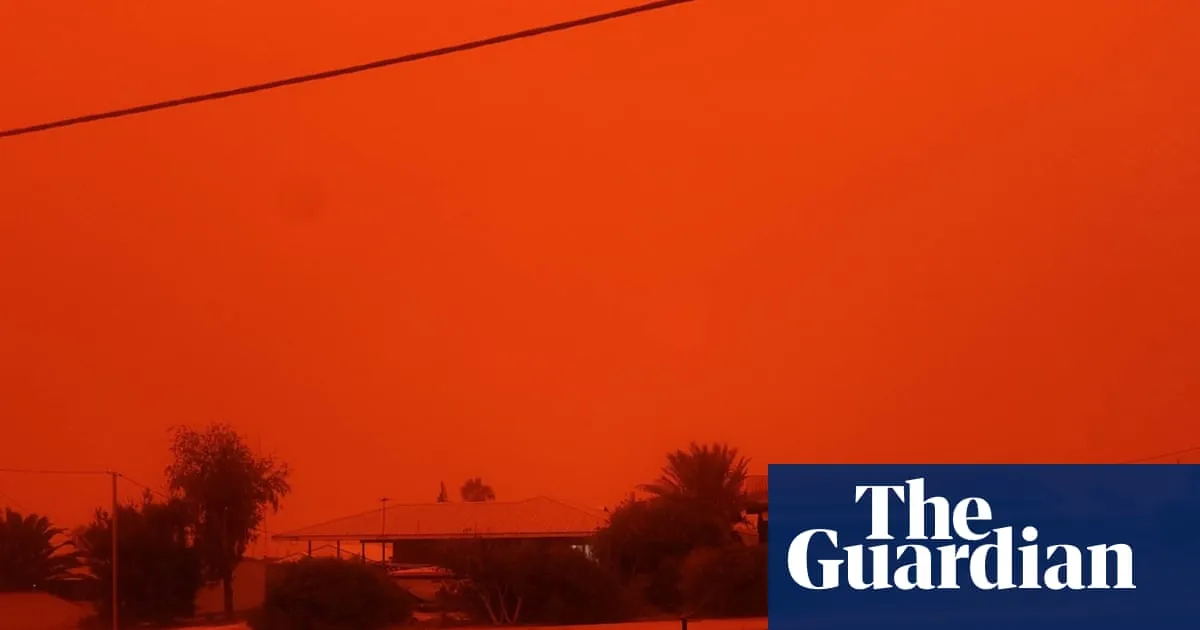
On March 27, 2026, the coastal town of Shark Bay, located roughly 900 kilometers north of Perth, experienced an extraordinary natural event as Tropical Cyclone Narelle made landfall. Just before the cyclone’s arrival, the skies turned a striking blood red, captivating and alarming residents alike.
This eerie phenomenon was attributed to an iron-infused dust storm that swept through the region, stirring up rust-red, iron-rich soils. Videos shared online depicted the sky ablaze with streaks of fiery orange and red, creating a surreal backdrop against the impending storm.
Locals described the atmosphere as “incredibly eerie,” with one resident from the Shark Bay Caravan Park noting, “everything is covered in dust. Not a lot of wind yet.” This unsettling calm before the storm heightened the tension as the cyclone approached.
As Narelle crossed into Western Australia, it marked a significant meteorological event, becoming the first storm system in over 20 years to make landfall in three of Australia’s states and territories. This historical aspect adds a layer of importance to the unfolding situation, as communities brace for the impact of the cyclone.
Jessica Lingard, a local observer, remarked on the cyclone’s ability to whip up dust from the landscape, pushing it through areas like Shark Bay ahead of the storm. The event lasted for several hours, leaving a lasting impression on those who witnessed it.
The current state of affairs sees residents preparing for the full force of Narelle, with emergency services on high alert. The striking visual of the red sky serves as a reminder of nature’s power and unpredictability.
This sequence of events is crucial not only for the immediate communities affected but also for broader discussions on climate patterns and the increasing frequency of extreme weather events in Australia. As the cyclone progresses, the implications for infrastructure, safety, and environmental conditions will be closely monitored.
In summary, Tropical Cyclone Narelle’s landfall in Shark Bay has not only created a visually stunning spectacle but also a significant historical moment in Australia’s meteorological records. The red sky phenomenon, driven by an iron-infused dust storm, highlights the intricate relationship between weather systems and environmental factors.