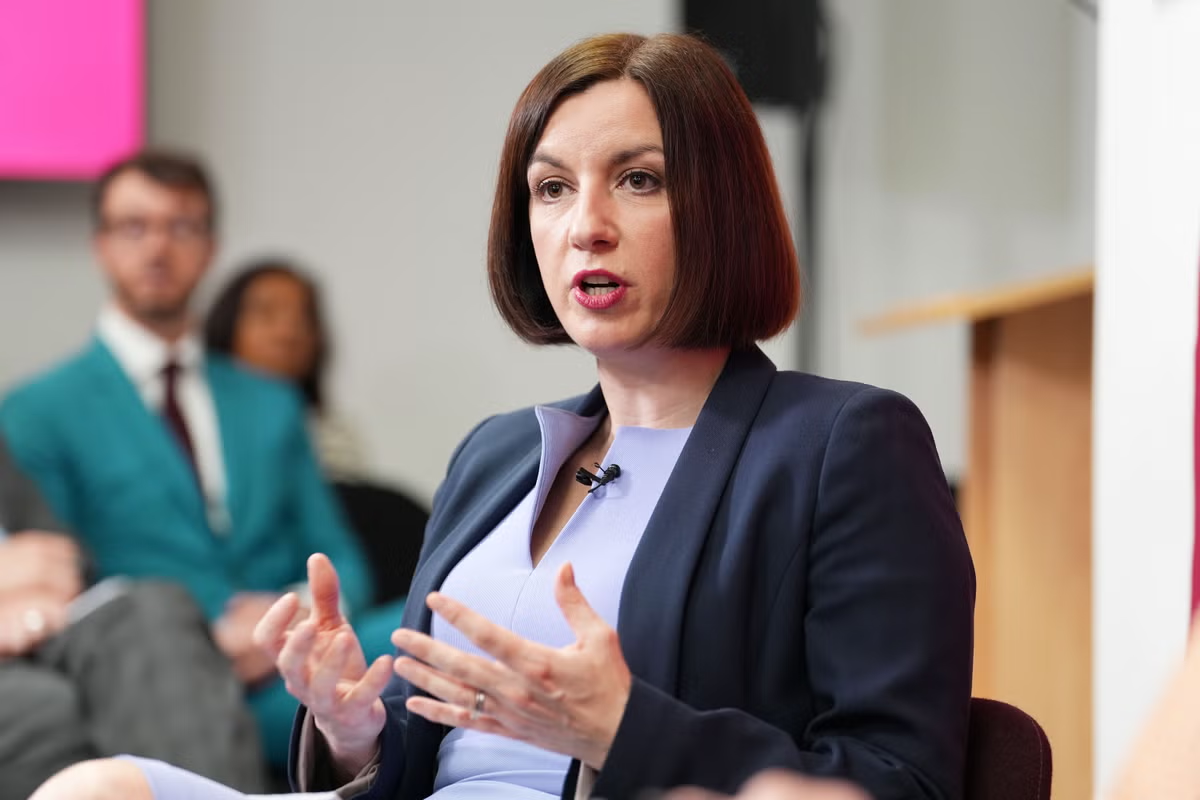
Introduction to Bridget Phillipson
Bridget Phillipson, the Member of Parliament for Houghton and Sunderland South, has become a significant figure in UK politics, particularly as the Shadow Secretary of State for Education. Her role is pivotal as the UK grapples with educational reform and recovery in the aftermath of the COVID-19 pandemic. With her passion for education and an emphasis on the importance of equality in learning, her contributions are more relevant now than ever.
Recent Developments
In recent months, Phillipson has been vocal about the need for increased funding in schools and has challenged the government on issues surrounding student mental health and support mechanisms. In a speech delivered at a recent Labour Party conference, she highlighted the inequalities exacerbated by the pandemic and called for immediate action to support underfunded schools, particularly in disadvantaged areas.
Phillipson’s advocacy extends beyond mere funding; she has also put forward proposals for a more inclusive curriculum and professional development for teachers. Her commitment to modernising education in the UK aligns with the Labour Party’s broader goals of social equality and community support.
Significance of Her Work
Bridget Phillipson’s advocacy is not only about addressing current challenges in education but also about laying the groundwork for a more equitable future. She is among a new generation of politicians who bring fresh perspectives to long-standing issues, recognising that education is the key to tackling broader societal challenges.
As she continues to gain traction within the Labour Party, the impact of her work could reshape educational policies and offer new directions for the party as it positions itself ahead of the next general election. Analysts are watching her closely as she navigates the political landscape, gauging whether her focus on educational reform can assist in rallying support among both constituents and party members.
Conclusion
Bridget Phillipson stands at a crucial intersection of politics and education reform, representing a hopeful prospect for many in the UK. Her determined stance on educational issues is likely to resonate with voters who prioritise equity and quality in schooling. As the political landscape evolves, Phillipson’s influence may very well shape the future of education policy in the UK and inspire a new wave of political engagement on critical social issues.