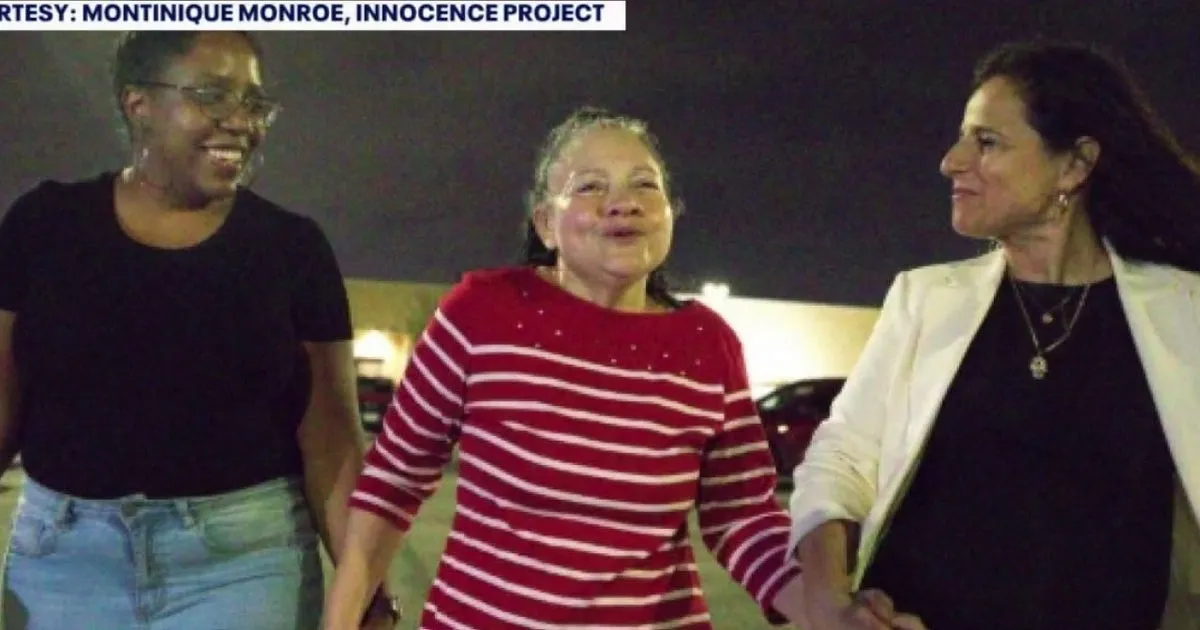
Carmen Mejia Exonerated After 22 Years in Prison
Carmen Mejia, who was wrongfully convicted of murder in 2005, has been exonerated after spending over 22 years in prison. The Texas Court of Criminal Appeals overturned her conviction on March 9, 2026, due to newly discovered evidence that established her innocence.
Mejia was convicted for the 2003 death of a 10-month-old baby, who suffered third-degree burns from scalding bathwater. Initially sentenced to three life sentences, Mejia’s conviction was based on flawed medical testimony and a lack of proper investigation into the circumstances surrounding the tragic incident.
During post-conviction hearings, the medical examiner changed the cause of death from homicide to accident, which played a crucial role in Mejia’s exoneration. Furthermore, her daughter testified that she was not present in the bathroom when the baby was injured, casting further doubt on the prosecution’s case.
Mejia’s case highlights systemic failures in the justice system, as acknowledged by Sarah Byrom, an Assistant District Attorney, who stated, “We acknowledge that our office failed you. The state pursued and obtained a conviction against you for what we now understand was a tragic accident and that failure cost you 20 years of your life.”
Upon her release, Mejia expressed gratitude and hope, stating, “I never lost faith and hope — I never lost it in 22 years.” Her exoneration has been celebrated as a significant victory for justice, with Travis County District Attorney José Garza remarking, “Ms. Mejia’s release is an example of the power that regular people have when they fight against injustice.”
Despite her exoneration, Mejia’s future immigration status remains uncertain, as she currently lives without legal immigration status. U.S. Immigration and Customs Enforcement had placed a detainer on her after her exoneration, which was lifted on March 11, 2026.
Mejia originally came to the U.S. from Honduras in 1995 and had Temporary Protected Status. The circumstances surrounding her wrongful conviction and the subsequent legal battles illustrate the complexities of the intersection between the justice system and immigration law.
As the community reflects on Mejia’s case, it serves as a reminder of the importance of vigilance in the pursuit of justice and the need for reforms to prevent such miscarriages of justice in the future. Details remain unconfirmed regarding her next steps and potential legal challenges ahead.