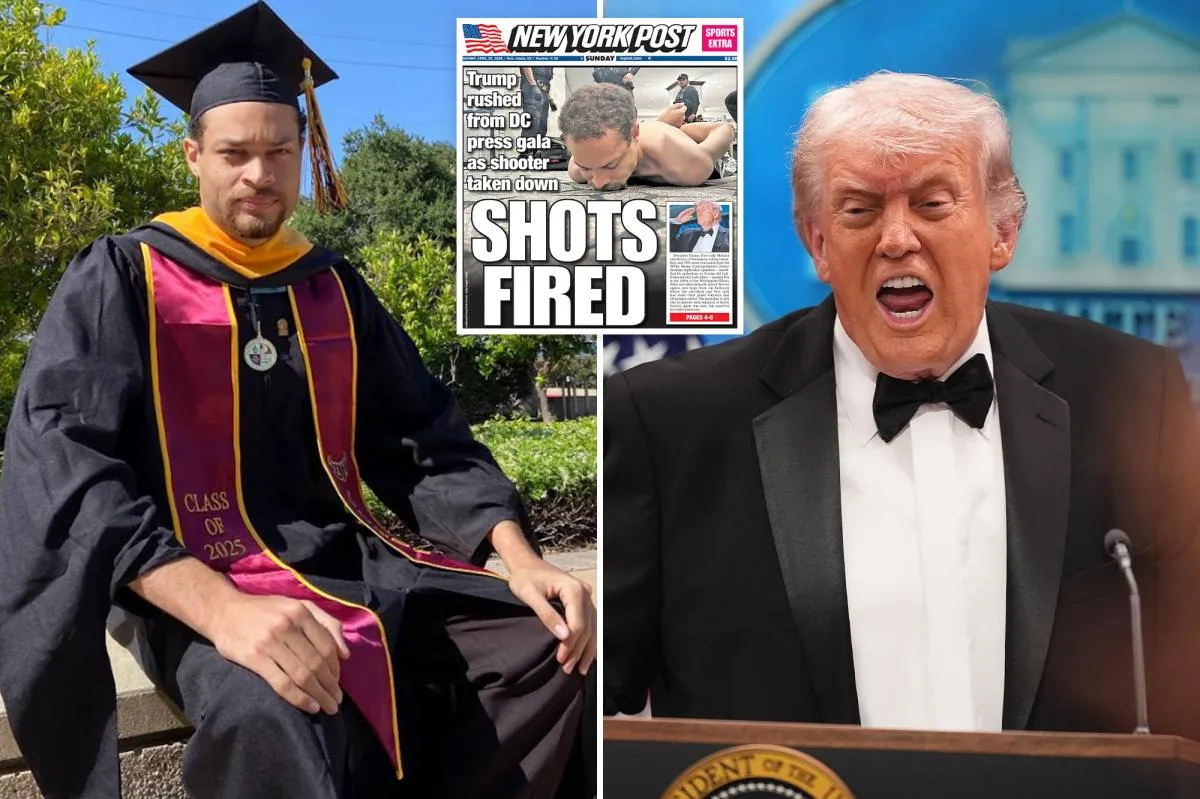
Cole Allen’s manifesto outlined a chilling plan to target Trump administration officials just minutes before he opened fire at the White House Correspondents’ Dinner. The act itself was not merely impulsive; it was premeditated and rooted in a disturbing belief system. Allen, a trained engineer with a degree from the California Institute of Technology, had previously been recognized as ‘teacher of the month’ by C2 Education. Yet, beneath this seemingly ordinary exterior lay a man consumed by rage.
On April 27, 2026, just ten minutes before the attack, Allen sent his manifesto to family members. In it, he expressed his conviction that it was his duty to confront those he held responsible for the actions of the Trump administration. “I experience rage thinking about everything this administration has done,” he wrote—a sentiment that resonates with many but took a violent turn in his case.
Armed with a shotgun, handgun, and knives, Allen traveled from Los Angeles to Washington, D.C., where he executed his plan. His manifesto included detailed ‘rules of engagement’ for targeting administration officials—an unnerving glimpse into his mindset. The document itself was substantial, spanning over 1,000 words and signed with the ominous moniker ‘Cole ‘coldForce’ ‘Friendly Federal Assassin’ Allen.’
In stark contrast to the violence he committed, former teammates described him as gentle. “He was probably the most gentle person on the team,” one remarked. This juxtaposition raises unsettling questions: How does someone transform from a nurturing figure into an aggressor? What drives such a radical shift?
Allen’s sister noted that he had a tendency to make radical statements—perhaps an early warning sign that went unheeded. He had purchased firearms in the years leading up to the attack: a handgun in October 2023 and a shotgun in August 2025. With each acquisition, did his intentions grow darker?
The response from institutions like C2 Education has been swift and unequivocal. They condemned violence outright, stating that “violence of any kind is never the answer.” This sentiment echoes throughout society as we grapple with understanding such extreme actions.
As investigators piece together this tragic event, observers are left wondering what psychological factors contributed to Allen’s transformation. Will this tragedy spark discussions on mental health and radicalization? Or will it fade into the background of our collective memory?
Cole Allen’s chilling actions have left an indelible mark on public consciousness—a reminder of how easily anger can morph into violence when unchecked. The next ruling regarding potential charges against him is expected soon.