Introduction
The Kensington Roof Gardens, located atop the former BIBA building in London, is a celebrated green retreat that has been captivating visitors since its opening in 1938. This extraordinary space is significant not only for its lush gardens but also for its rich history and cultural relevance in London.
A Brief History
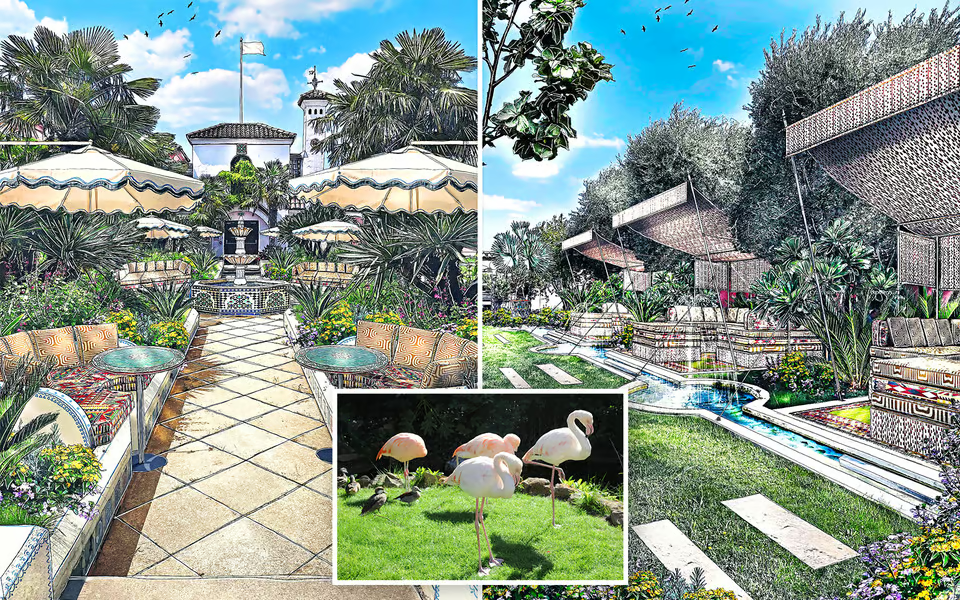
The Roof Gardens were designed by renowned landscape designer Ralph Hancock and were originally established as a way to create a picturesque setting for social gatherings and private events. Featuring a variety of themed gardens, including the Spanish Garden, the Tudor Garden, and the Wildlife Garden, the venue is a testament to innovative architectural achievement in urban landscaping.
Recent Events and Developments
In recent years, the Kensington Roof Gardens have seen numerous renovations and events that have enhanced its appeal. In 2020, the venue underwent structural and aesthetic upgrades, improving accessibility and visitor experience without compromising its historic charm. Events ranging from summer film screenings to music performances have drawn significant crowds, positioning the gardens as a key player in London’s cultural scene.
The COVID-19 pandemic presented challenges for the gardens, leading to temporary closures. However, management has adapted by hosting outdoor events and creating smaller, exclusive experiences for visitors, ensuring safety protocols while promoting local artists and businesses.
The Importance of Green Spaces
Kensington Roof Gardens highlights the necessity of green spaces within urban environments. Studies have shown that access to greenery can significantly improve physical and mental well-being, providing a sanctuary for city dwellers amidst the hustle and bustle. The gardens not only serve as a recreational space but also contribute to biodiversity, featuring a range of native plants and wildlife.
Conclusion
As more Londoners seek refuge in serene environments, the Kensington Roof Gardens remain a vital part of the city’s landscape. The integration of nature into urban settings is more relevant now than ever, emphasizing the importance of preserving such green spaces. With ongoing events and future plans for expansion and enhancement, the gardens are sure to continue thriving as a beloved destination for both locals and tourists alike. As the demand for engaging and restorative spaces grows, Kensington Roof Gardens sets an example of how urban landscapes can harmonise with nature.