Introduction
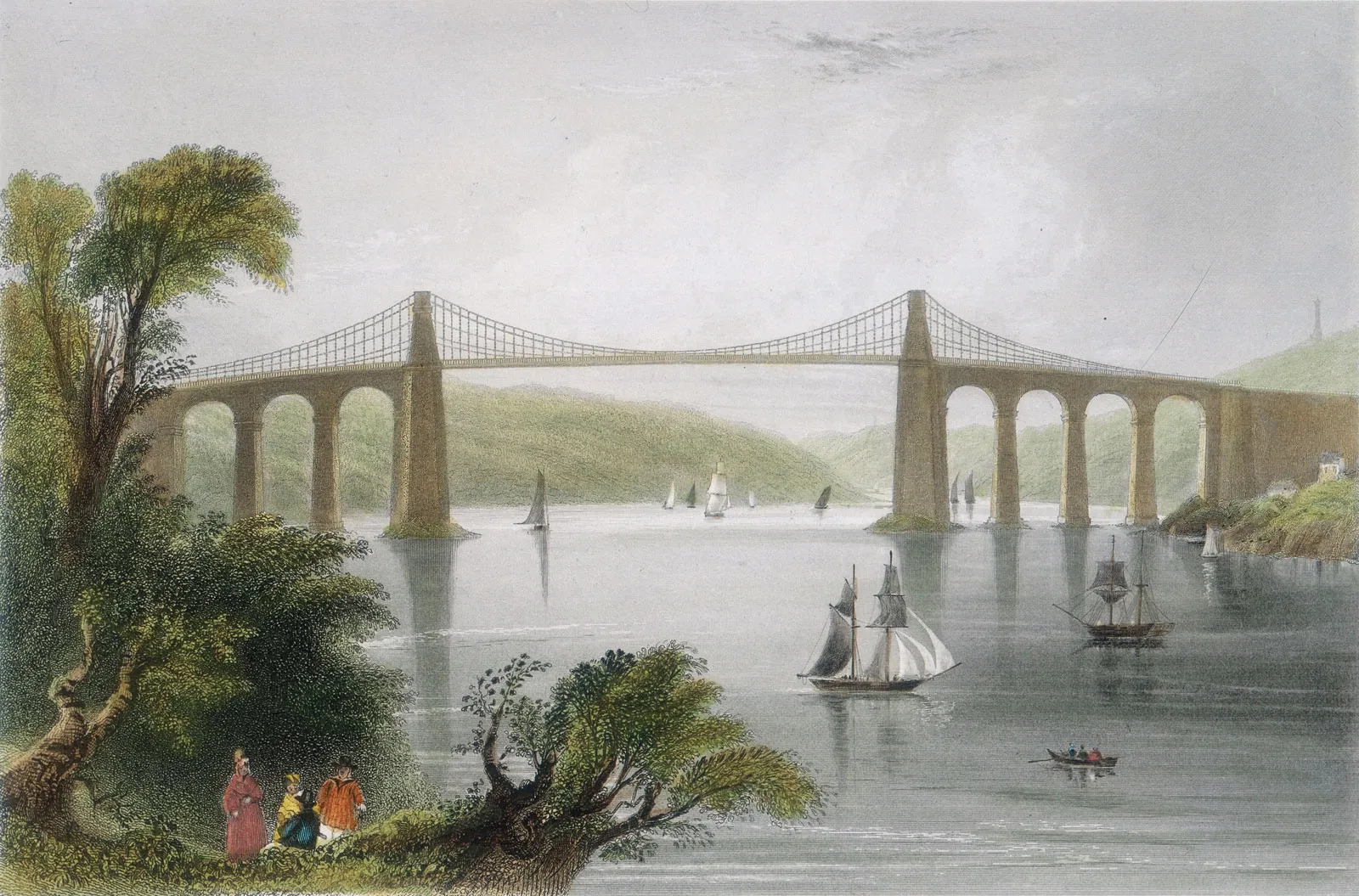
The Menai Bridge, an iconic suspension bridge in North Wales, is more than just a passage between the island of Anglesey and the mainland. Opened in 1826, it represents a critical engineering feat of the Industrial Revolution, and today, it continues to hold historical and cultural significance for both locals and visitors.
Historical Background
Designed by Thomas Telford, the Menai Bridge was the first to employ wrought iron chains for its construction. Spanning approximately 1,512 feet, it was an essential link for trade and travel, dramatically reducing the journey time between Anglesey and the Welsh mainland. The bridge’s construction spurred economic growth and development in the region, allowing for the transportation of goods and passengers while promoting tourism.
Architectural Features
The bridge features elegant neoclassical style with distinctive towers that rise majestically from the waters of the Menai Strait. Its intricate design and engineering excellence have led it to be a designated Grade I listed structure. The bridge is also a significant part of the Welsh landscape and cultural heritage, often featured in literature and art.
Current Events and Usage
Today, Menai Bridge remains an essential route, accommodating thousands of vehicles daily. Recent discussions among local authorities revolve around the need for maintenance and updates to ensure the bridge meets modern safety standards while preserving its historical elements. Government funding has been allocated for inspections and possible refurbishments, highlighting the bridge’s relevance in contemporary transport networks.
Conclusion
Menai Bridge is not merely a functional structure; it embodies the spirit of innovation and progress from the 19th century, serving as a crucial artery connecting communities. As we look ahead, the continued investment in its maintenance will ensure that this historical landmark remains a vital and vibrant part of Welsh heritage, cherished for future generations. The bridge’s significance goes beyond travel; it is a symbol of cultural identity and engineering prowess in North Wales.