Introduction
Luxembourg, one of the smallest countries in Europe, has a significant influence on the continent despite its size. Located between Germany, France, and Belgium, it serves as a major financial hub and a representative of the European Union’s values. This small nation’s economy and political standing have made it a focal point for international relations and global finance.
Economy and Financial Hub
Luxembourg has long been recognised for its robust economy, largely driven by its financial services sector. The country boasts one of the highest GDP per capita in the world, a testament to its wealthy financial institutions and diverse economy. According to the latest statistics from Statec, Luxembourg’s national statistics bureau, the economy grew by 5.2% in 2022, showcasing resilience in the face of global economic challenges.
The capital, Luxembourg City, is a leading centre for banking and finance, housing numerous European institutions, including the European Court of Justice and the European Investment Bank. The presence of major global banks and investment companies has positioned Luxembourg as a key player in international finance, attracting foreign investments and multinational corporations.
Political Importance and European Union Role
Politically, Luxembourg plays a vital role within the European Union. As one of the founding members of the EU, the country has been instrumental in shaping European policy and integration. The Grand Duchy’s Prime Minister, Xavier Bettel, currently holds significant influence within EU discussions surrounding economic recovery, climate change, and digital transitions.
Luxembourg’s strategic geopolitical position allows it to act as a mediator between larger EU nations, fostering cooperation and dialogue. Its commitment to EU principles has reinforced its reputation as a reliable partner in international affairs.
Cultural Heritage and Tourism
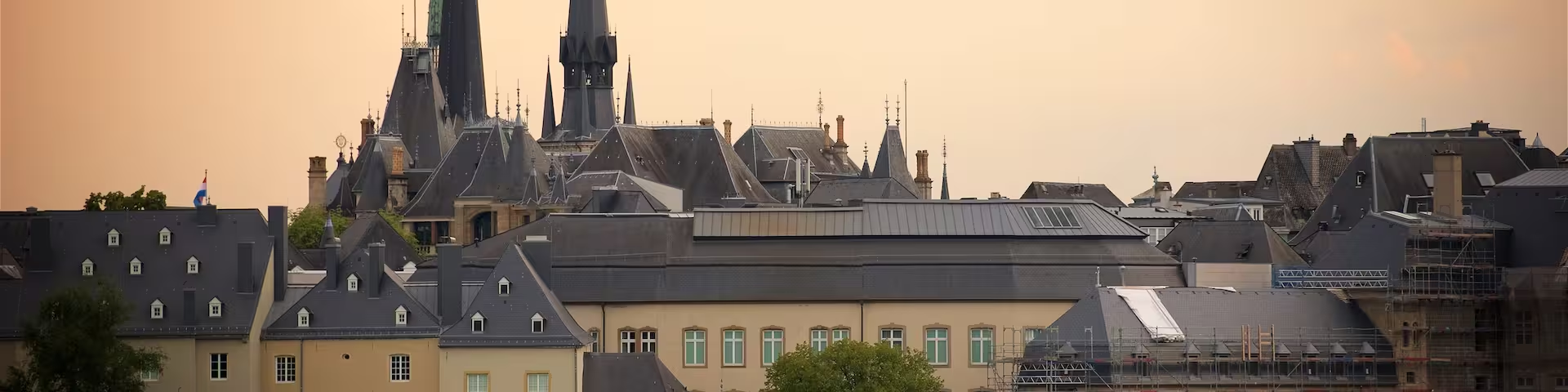
Despite its small size, Luxembourg is rich in cultural heritage. The modern history of the nation is reflected in its architecture and museums, which attract millions of visitors each year. Key attractions include the historic city centre of Luxembourg City, which is a UNESCO World Heritage site, and the picturesque Moselle Valley, known for its vineyards and scenic landscapes.
Conclusion
In conclusion, Luxembourg may be small in size, but it wields a considerable influence on Europe’s political, economic, and cultural landscape. As it continues to navigate global challenges and foster collaboration within the EU, Luxembourg solidifies its role as a cooperative leader and innovator. For readers, understanding Luxembourg’s contributions and ongoing developments is crucial as it shapes the future of Europe.