Introduction
Luxembourg, a small landlocked country in Western Europe, is often overlooked in favour of its larger neighbours, yet it plays a critical role on the continent. Known for its high standard of living, multicultural society, and prominent financial sector, Luxembourg is a beacon of stability and growth in the European Union. Its relevance has surged in recent years, particularly as a hub for international diplomacy and finance.
The Economic Landscape
With a GDP per capita that ranks among the highest in the world, Luxembourg’s economy is heavily reliant on banking, finance, and investment. The country is host to several major European institutions, including parts of the European Court of Justice and the European Investment Bank, further solidifying its status as a financial centre. In 2023, Luxembourg was ranked the second most competitive economy globally by the International Institute for Management Development (IMD), demonstrating its attractiveness to multinational corporations and startups alike.
Cultural Significance
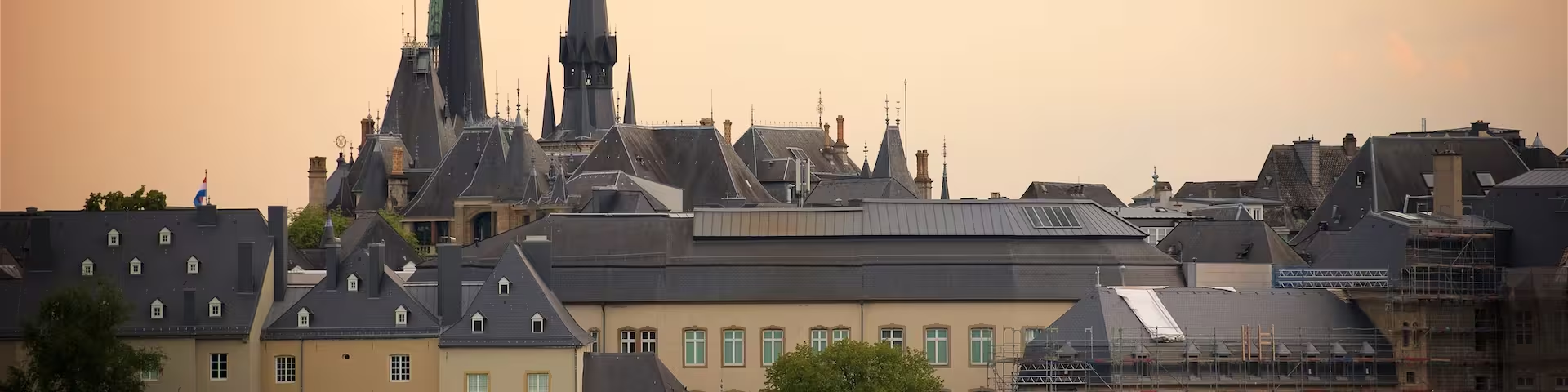
Despite its small size, Luxembourg boasts a vibrant cultural scene. The Grand Ducal Palace, a symbol of the country’s history and governance, along with numerous museums and festivals, reflect its rich heritage. The country officially recognises three languages: Luxembourgish, French, and German, which highlights its multicultural identity. Recent events, such as the “Luxembourg Art Week” and the growing prominence of its film industry, showcase the nation’s investment in arts and culture.
Geopolitical Importance
Luxembourg’s geographical position makes it a strategic point in Europe. It shares borders with Belgium, Germany, and France, contributing to its diplomatic significance. As a founding member of NATO and the EU, Luxembourg often mediates discussions among European leaders, promoting unity and cooperation. The recent challenges of Brexit and tensions globally underscore the need for diplomatic spaces, where Luxembourg often serves as a neutral ground for dialogue.
Conclusion
As Europe continues to navigate complex economic and political landscapes, Luxembourg’s role is poised for even greater significance. Its thriving economy, cultural richness, and diplomatic positioning underline its status as a key player in European affairs. For readers, understanding Luxembourg’s contributions can provide valuable insights into the dynamics that shape the European Union and global relations.