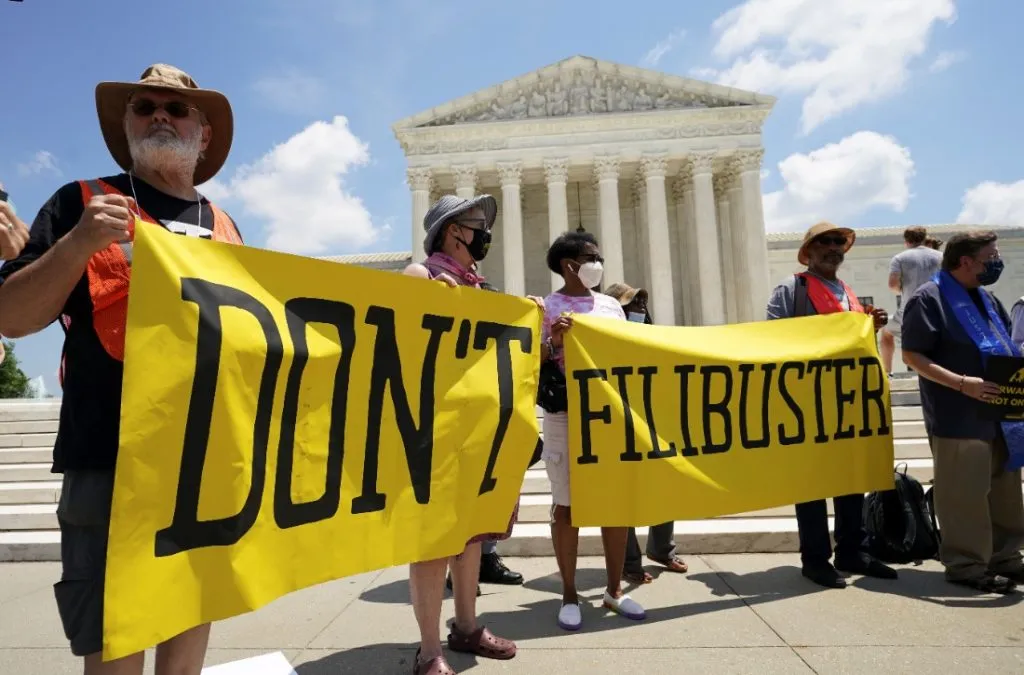
Many GOP senators are refusing to get rid of the Senate filibuster despite Donald Trump’s demands for its elimination, highlighting a significant divide within the party. This resistance comes as Janet Mills, who is running for Senate, proposes a reform that would require senators to speak on the floor to maintain a filibuster, a move that echoes calls from Trump and other conservatives.
The current filibuster requires a 60-vote threshold for legislation to pass in the Senate, a rule that has often been a barrier to bipartisan efforts. Mills’ proposal for a talking filibuster aims to change this dynamic, but the National Republican Senatorial Committee has warned that such changes could push a radical agenda detrimental to the party’s interests.
Trump’s suggestion to eliminate the filibuster altogether has garnered little support among senators, indicating a reluctance to abandon a tool that has been pivotal in legislative strategy. Senate Minority Leader Chuck Schumer has opposed the SAVE America Act, labeling it “Jim Crow 2.0,” further complicating the conversation around the filibuster.
Janet Mills has been vocal about her stance, stating, “Washington is broken, and Maine people are paying the price.” This sentiment reflects a growing frustration among some lawmakers regarding the current legislative gridlock. However, critics like Samantha Cantrell argue that Mills is openly revealing her intentions to advance a “radical anti-Trump agenda” should she gain a seat in Washington.
Mills’ relationship with Trump has been adversarial, particularly highlighted by confrontations over policies regarding transgender athletes. This ongoing tension adds another layer to the debate surrounding the filibuster, as both sides prepare for potential legal battles over contentious issues.
The filibuster has become a flashpoint in the Senate, particularly for Republicans, who are grappling with the implications of any changes. As the political landscape evolves, observers are keenly watching how these dynamics will play out in upcoming legislative sessions.
Details remain unconfirmed regarding the full extent of support for Mills’ proposals, but the conversation around the filibuster is expected to intensify as the Senate prepares for critical votes in the near future.