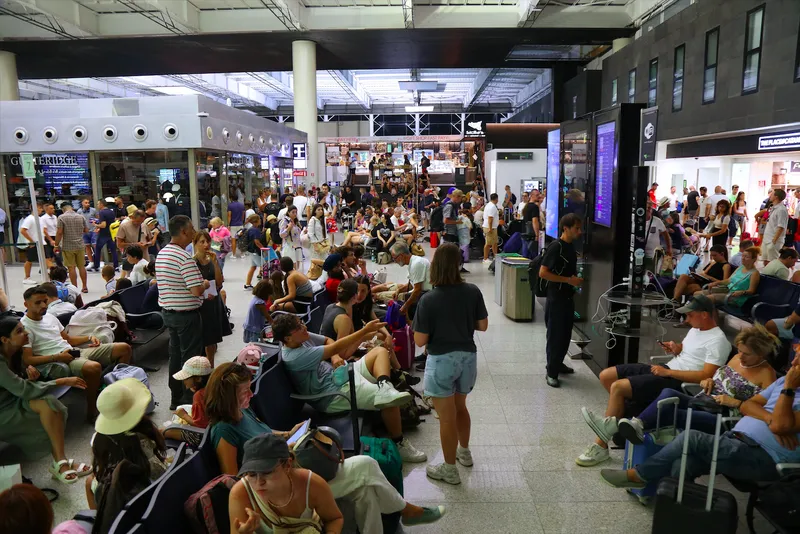
Flight cancellation and delay issues have wreaked havoc across Europe, with a staggering 1,475 flights delayed and 172 flights cancelled as of April 6, 2026. Major airports in Madrid, London, and Rome have been among the hardest hit, leaving countless passengers stranded and frustrated.
Travelers have reported extended waiting times and missed connections, as airlines scramble to adjust schedules at short notice due to the accumulated delays. Both low-cost carriers like Ryanair and full-service airlines such as KLM and Scandinavian Airlines (SAS) are feeling the strain, highlighting the widespread impact of this disruption.
Passengers attempting to rebook flights have encountered limited availability, complicating their travel plans further. The current situation underscores the sensitivity of tightly scheduled air travel systems to operational pressures, which can cascade quickly through the network.
Air traffic management requirements have also played a role, limiting the number of flights that can operate on schedule. This disruption not only affects personal travel but also has significant implications for business travel across the continent.
Airlines and airports are actively working to restore normal operations, but the path to recovery may be lengthy. The situation serves as a stark reminder of how operational issues in one part of the network can ripple out, affecting travel across multiple countries.
Details remain unconfirmed regarding the precise cause of the disruption, leaving many passengers and industry observers eager for clarity. As the situation evolves, the focus will be on how quickly airlines can adapt and what measures will be implemented to prevent similar occurrences in the future.