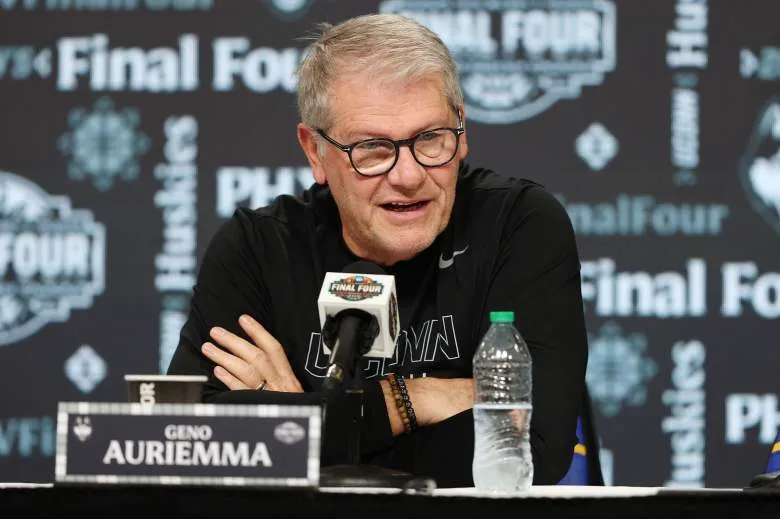
Who is involved
Geno Auriemma, the legendary coach of the University of Connecticut (UConn) women’s basketball team, has long been a figure of excellence in the sport. With a record 12 national championships, he has set a standard that many aspire to reach. However, the landscape of women’s college basketball coaching salaries has been shifting, particularly with the rise of coaches like Dawn Staley of South Carolina, who became the highest-paid coach in women’s college basketball history in January 2025.
Before the recent developments, Auriemma’s salary was a topic of discussion, especially in light of Staley’s ascendance. Auriemma’s base salary was $400,000 per year, with a total contract value of $18.7 million over five years. While this figure was substantial, it paled in comparison to Staley’s base salary of $4.25 million for the 2025-26 season, highlighting a growing disparity in compensation among top coaches.
The decisive moment came when Auriemma’s reported salary for the 2025-26 season reached $3.54 million, bolstered by additional compensation starting at $2.94 million in the 2024-25 season, which increases by $200,000 each year. This adjustment reflects not only Auriemma’s continued success but also the increasing financial investment in women’s sports. Furthermore, Auriemma earned $250,000 in bonuses for reaching the Final Four in 2026, adding to his overall compensation.
The direct effects of these changes are significant for both Auriemma and the broader coaching community. For Auriemma, the increase in salary serves as a recognition of his contributions to the sport, while also positioning him more competitively against his peers like Staley. For Staley, her record-breaking salary sets a new benchmark for women’s basketball coaches, further elevating the profile of the sport and potentially influencing future negotiations for coaches across the country.
Experts suggest that these salary shifts are indicative of a larger trend in women’s sports, where increasing viewership and sponsorship opportunities are driving up compensation. As Dawn Staley noted, “UConn has been the standard in women’s basketball for a very long time, and everyone has to measure up to their standard.” This sentiment underscores the competitive nature of the coaching landscape and the importance of financial recognition for successful coaches.
As the dynamics of women’s college basketball continue to evolve, the implications of Auriemma’s salary adjustments extend beyond individual contracts. They reflect a growing acknowledgment of the value of women’s sports and the need for equitable compensation in a field that has historically been underfunded. The increasing salaries of top coaches may also lead to a more competitive recruitment process for both players and coaches alike.
In summary, the changes in Geno Auriemma’s salary illustrate a pivotal moment in women’s college basketball. As the sport gains prominence and financial backing, the compensation for its leading figures is likely to continue to rise, setting new standards and expectations for future generations of coaches and athletes.