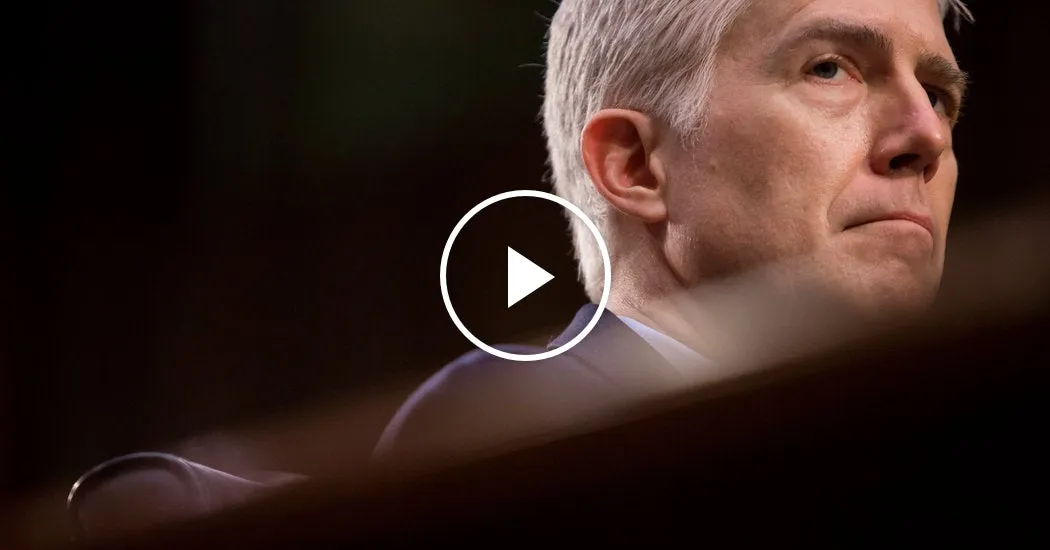
Justice Neil Gorsuch recently asserted that his loyalty lies solely with the Constitution, directly countering President Trump’s claims that justices owe allegiance to their appointing presidents. This statement comes amid ongoing criticism from Trump regarding various Supreme Court rulings.
Gorsuch, who joined the Supreme Court in 2017 after being appointed by Trump, has made it clear that he rebuffs any suggestion of judicial loyalty to the president. His comments underscore a commitment to judicial independence—a principle fundamental to the integrity of constitutional law.
In light of recent Supreme Court decisions that have drawn ire from Trump, including votes by both Gorsuch and Justice Amy Coney Barrett, the former president has expressed disappointment. He criticized their rulings as a betrayal of their appointments.
Yet, Gorsuch remains unfazed by public opinion. “Do I care what people say left, right, center about me? Nah,” he stated. This reflects a broader belief among federal judges that their life tenure enables them to apply the law fairly without external pressures.
He emphasized the importance of understanding the history of the Supreme Court before advocating for reforms. Gorsuch advised those pushing for changes to consider how well the current structure has functioned since Congress set the number of justices at nine in 1869.
Furthermore, he expressed confidence in the existing composition of the Supreme Court, stating it has worked reasonably well. His perspective raises questions about potential reforms and their implications for judicial stability.
The Trump administration’s influence on the judiciary is a complex topic. As Gorsuch noted, “You’ve given nine old people life tenure,” highlighting both the power and responsibility held by justices in interpreting constitutional law.
Looking ahead, observers will be watching closely as discussions about judicial reform continue. The dynamic between executive expectations and judicial independence remains a crucial aspect of American governance.
As these conversations unfold, Gorsuch’s firm stance on constitutional loyalty serves as a reminder of the judiciary’s role in upholding democratic principles.