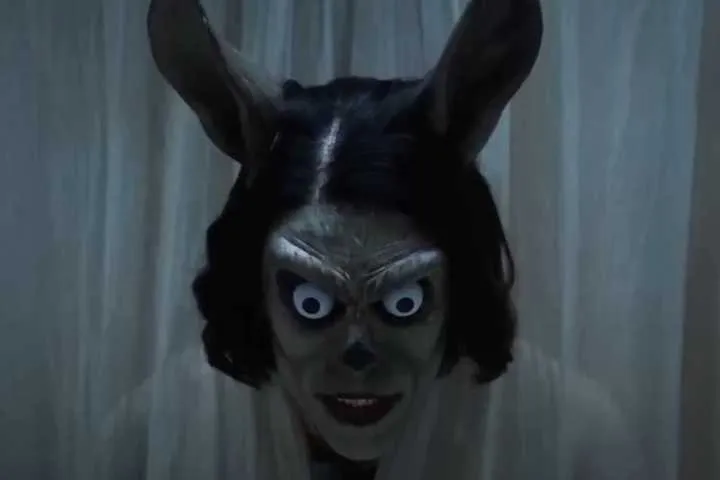
In Hokum, directed by Damian McCarthy, we follow Ohm Bauman—played by Adam Scott—a successful American writer. He travels to a haunted hotel in rural Ireland to scatter his parents’ ashes. This journey unveils deep themes of trauma interwoven with supernatural horror.
The film opens with Bauman arriving at the eerie hotel, where whispers of its haunted past linger. The honeymoon suite, long boarded up, adds an unsettling layer to the atmosphere. As he navigates the hotel’s secrets, viewers can expect jump scares that heighten the sense of claustrophobia.
Throughout his stay, Bauman confronts not only the hotel’s ghosts but also his own character trauma. The narrative cleverly mirrors Irish folklore, drawing on mythic elements that resonate deeply with the themes of loss and redemption.
As Bauman delves deeper into the hotel’s mysteries, he encounters a witch held captive within its walls—a plot twist that amplifies the supernatural elements. This revelation invites viewers to reflect on the nature of captivity and freedom, both literal and metaphorical.
Key aspects of Hokum:
- The runtime is a gripping 105 minutes, ensuring tight pacing.
- It features numerous jump scares designed to keep audiences on edge.
- The film’s haunting imagery draws heavily from Irish folklore traditions.
Critics have noted that Hokum is so effectively unsettling that it leaves viewers wishing for a shorter runtime—just to escape the pervasive dread. The film has been described as littered with dead women—mothers, wives, and saviors—all victims of male violence.
The middle section of the film stands out for its exceptional use of space—the hotel itself becomes a character in its own right. This setting not only enhances the narrative but also serves as a catalyst for Bauman’s personal confrontation with grief.
As audiences engage with Hokum, they are invited to ponder how trauma shapes identity and narrative. The intertwining of personal loss with supernatural elements creates a rich tapestry that resonates beyond mere horror tropes.