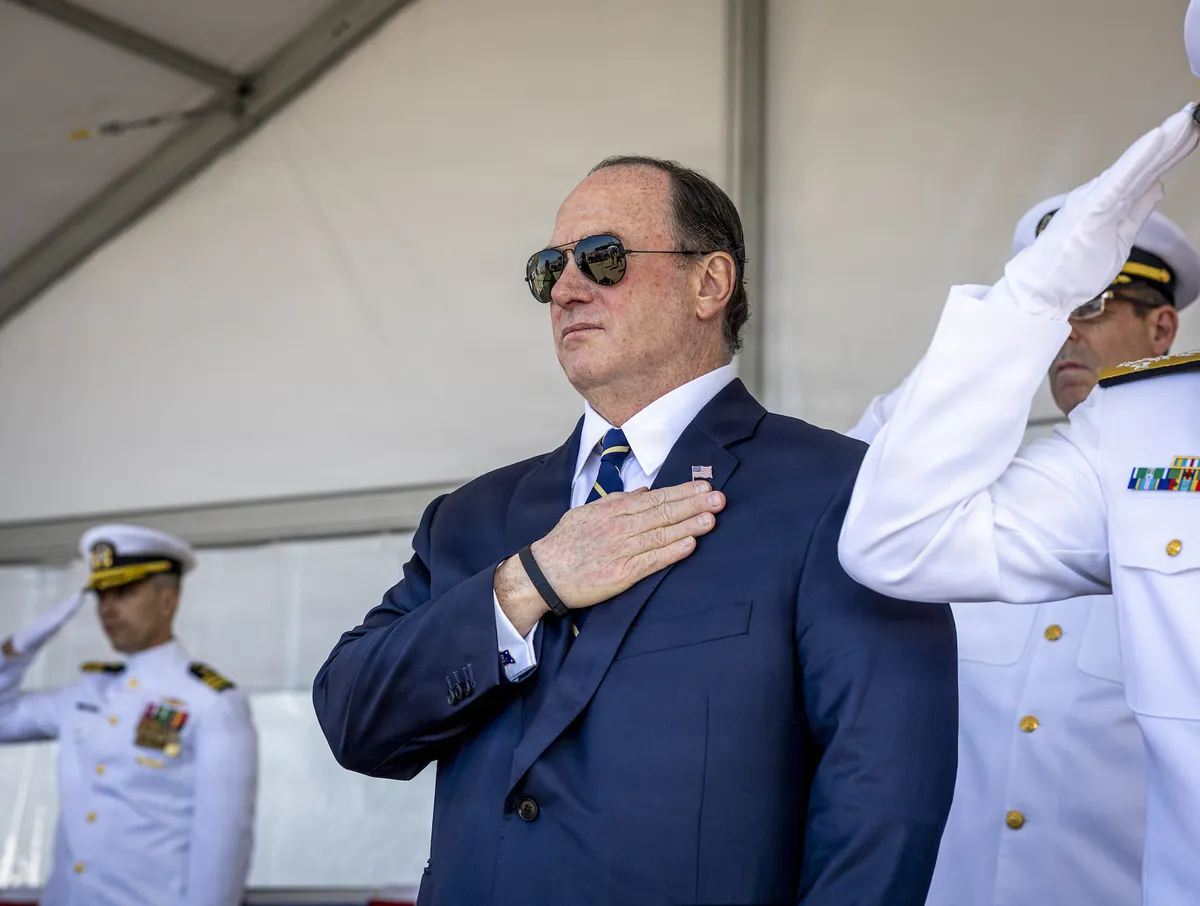
“Secretary of the Navy John C. Phelan is departing the administration, effective immediately,” announced Pentagon spokesman Sean Parnell. This abrupt change marks a significant shift in leadership at the Pentagon, with Hung Cao stepping in as acting Secretary of the Navy.
Cao’s appointment comes on the heels of Phelan’s exit—part of a broader wave of leadership changes during Trump’s presidency. Phelan, known for his substantial financial contributions to Trump’s campaign, leaves behind a complex legacy that includes both support and criticism regarding military policies.
Before this new role, Hung Cao served as the Under Secretary of the Navy. He brings with him a wealth of experience: a retired U.S. Navy captain with 25 years of service, he has deployed to Iraq, Afghanistan, and Somalia. His academic credentials are impressive—Cao holds a bachelor’s degree in ocean engineering from the U.S. Naval Academy and a master’s degree in applied physics from the Naval Postgraduate School.
In his first statements as acting Secretary, Cao emphasized the need for modernization within the Navy’s IT systems. “They deserve the best training and weapons available,” he stated passionately. “Their intrinsic desire to solve problems using technology should not be stifled by red tape.” This focus on technological advancement hints at a strategic pivot for the Navy under his leadership.
However, Cao’s past is not without controversy. He has been vocal against COVID-19 vaccine mandates for service members and has criticized military diversity initiatives—positions that may resonate with some but alienate others within military ranks and beyond. His comments about needing “alpha males and alpha females who are going to rip out their own guts, eat them and ask for seconds” reveal a combative approach that could galvanize certain factions while raising eyebrows elsewhere.
As he steps into this pivotal role, one must consider what lies ahead for Cao and the Navy. His previous campaigns for political office—unsuccessful bids for both the U.S. Senate and House in Virginia—suggest he is no stranger to high-stakes environments. Yet, how will this translate into effective leadership? The landscape is changing rapidly.
Details remain unconfirmed regarding potential further changes within military leadership or how Cao plans to implement his vision amidst existing challenges. For now, all eyes will be on Hung Cao as he navigates this new terrain—his actions will undoubtedly shape not just his career but also the future direction of the U.S. Navy.