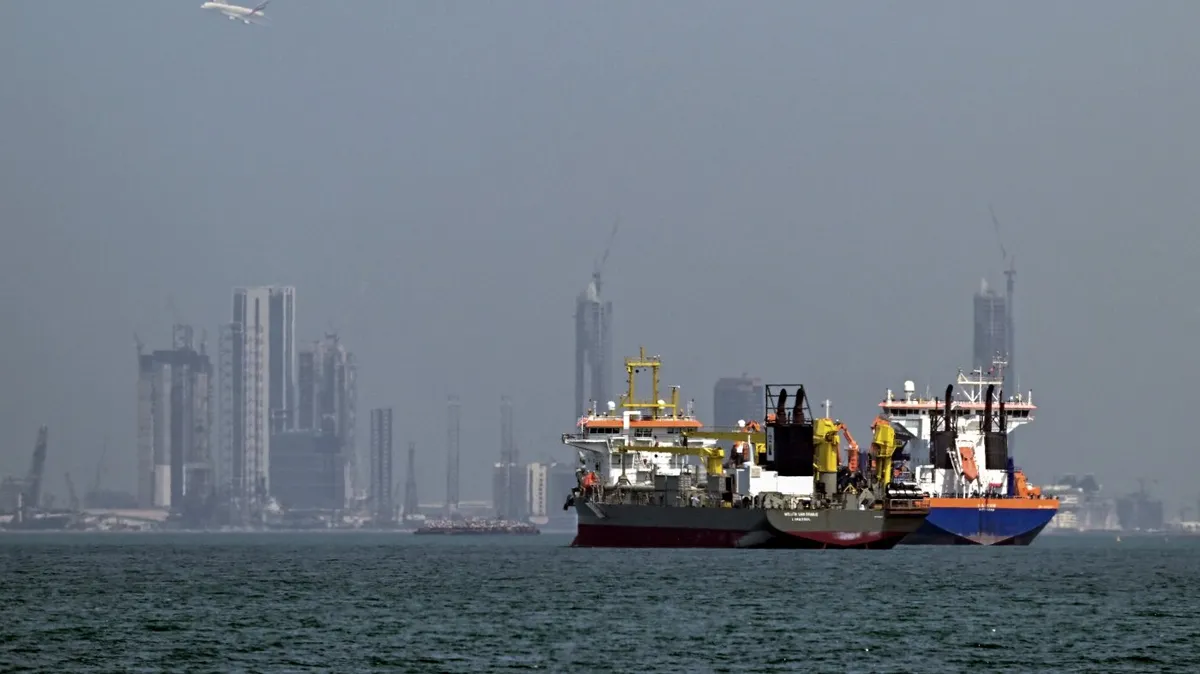
Significant Consequences of the Iran War
The ongoing Iran war has severely impacted the Strait of Hormuz, a crucial passageway for oil and gas from the Persian Gulf. As a result, gasoline prices are rising, and shipping risks have escalated, prompting international concern.
French President Emmanuel Macron is spearheading efforts to unblock the Strait of Hormuz, which has effectively been shuttered to tanker traffic due to the conflict. The situation has become increasingly perilous, with Iran capable of targeting vessels in the strait using anti-ship cruise missiles, drones, and naval mines.
In a recent escalation, three commercial ships were attacked near the Strait of Hormuz, highlighting the dangers faced by maritime traffic in the region. The U.S. military has responded by destroying 16 mine-laying vessels in the area, aiming to secure safer passage for shipping.
Insurance premiums for vessels operating in the Strait of Hormuz have soared, reflecting the heightened risks. Chubb, a leading underwriter, is managing a U.S. government-led insurance program to mitigate these risks for ships navigating the strait.
The human cost of the Iran war is staggering, with reports indicating that 1,200 people have been killed in Iran, alongside significant casualties in Lebanon, Israel, and among U.S. soldiers. The conflict has also displaced approximately 750,000 people in Lebanon.
Retired French navy Vice Admiral Pascal Ausseur remarked, “In today’s context, sending warships or civilian vessels into the Strait of Hormuz would be suicidal,” emphasizing the gravity of the situation. He added, “Maritime traffic is a business. That business has to make money,” underscoring the economic implications of the conflict.
President Trump has called for the immediate removal of any mines that may have been placed in the Hormuz Strait, stating, “If Iran has put out any mines in the Hormuz Strait, and we have no reports of them doing so, we want them removed, IMMEDIATELY!” This reflects the urgency of ensuring safe navigation in the area.
Israeli Prime Minister Benjamin Netanyahu has also weighed in, suggesting that the situation may evolve rapidly, stating, “Your dreams will become a reality. When the time is right, and that time is fast approaching, we will pass the torch to you.” This indicates potential shifts in regional dynamics.
Details remain unconfirmed regarding the exact timeline for reopening the Strait of Hormuz, and the long-term impact of the Iran war on global oil markets remains uncertain.