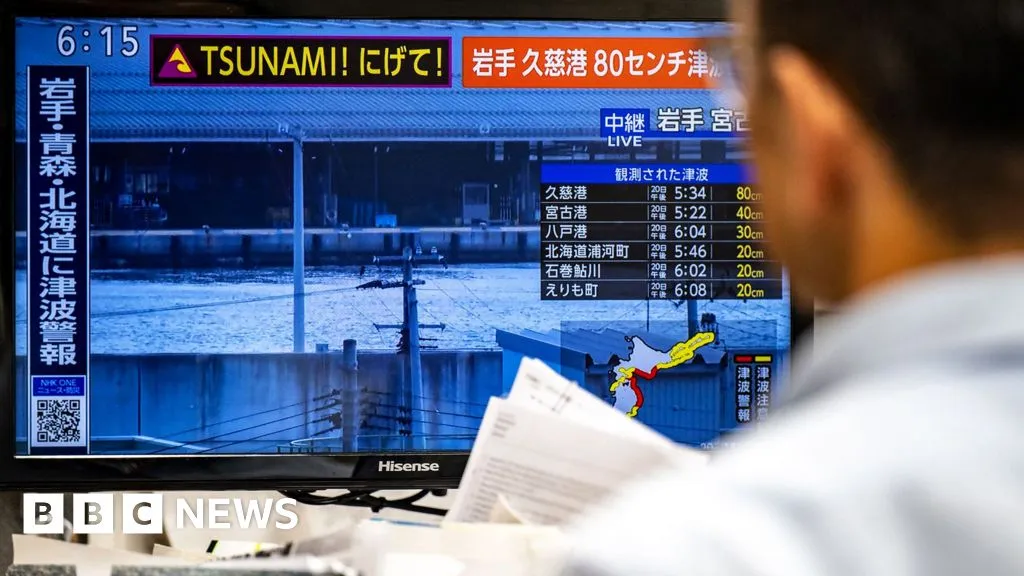
A 7.7 magnitude earthquake rocked northern Japan on April 20, 2026, at around 4:53 p.m. local time. The tremor, originating from a depth of 19 kilometers, resulted in two reported injuries—both due to falls—and sparked a short-lived tsunami alert.
At Kuji port, an 80-centimeter tsunami was detected, while a smaller wave of 40 centimeters was recorded at another port in Iwate prefecture. These waves served as stark reminders of the catastrophic events of March 2011, when a magnitude 9.0 earthquake and subsequent tsunami led to over 22,000 deaths.
The immediate response included the temporary suspension of Shinkansen bullet trains connecting Tokyo with northern regions—a critical lifeline for commuters and travelers alike. Prime Minister Sanae Takaichi reassured citizens, stating, “The government will do our utmost in case of an emergency.” Yet, the rapidity of the quake’s aftermath raised questions about preparedness.
Japan’s Meteorological Agency warned that tsunami waves might hit repeatedly; they urged people not to leave safe ground until the warning was lifted. This precaution underscores the ongoing tension between natural disasters and human safety in a region frequently tested by seismic activity.
Despite the chaos, the Nuclear Regulation Authority reported no abnormalities at regional nuclear power plants—a sign of some stability amidst turmoil. However, the U.S. Geological Survey measured the quake’s strength slightly lower at 7.4 magnitude.
The aftermath leaves us with uncertainties—there is a reported 1% chance for a megaquake within the following week. Details remain unconfirmed regarding any further impacts or damages beyond the immediate injuries and disruptions.