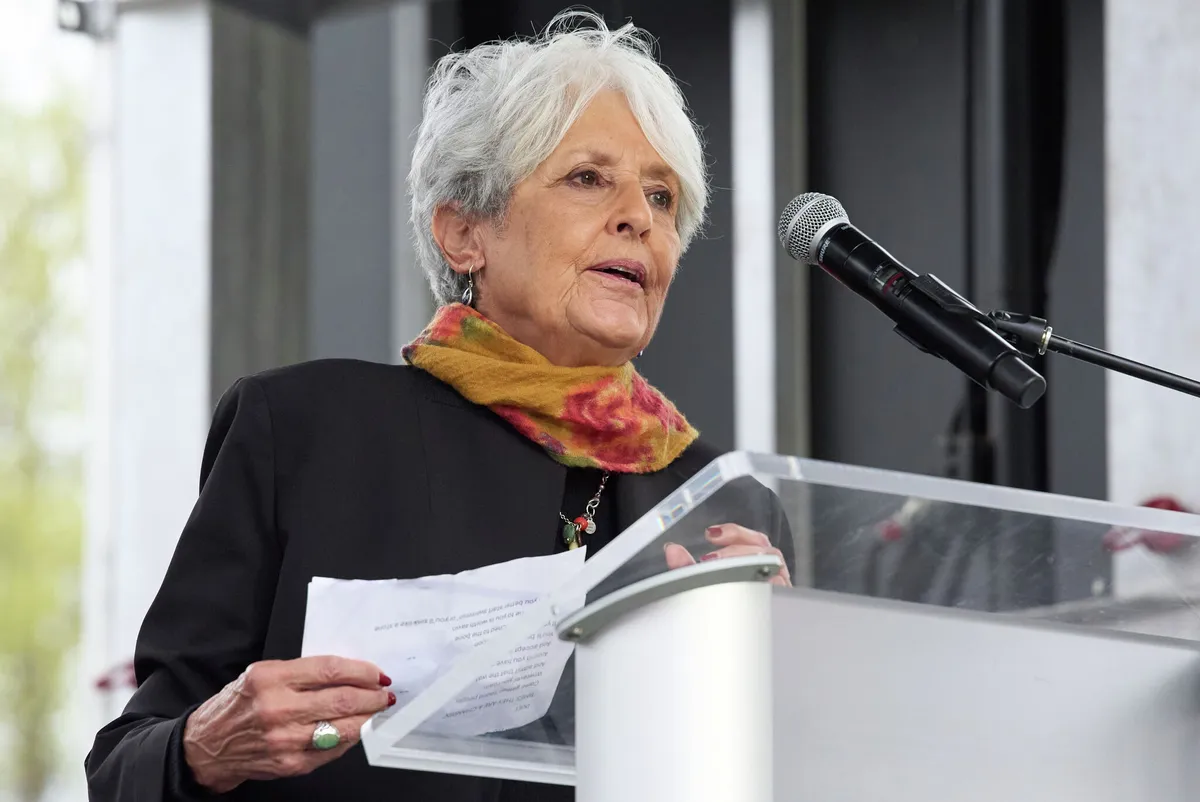
On March 27, 2026, Joan Baez stood shoulder to shoulder with fellow activist Jane Fonda at a significant protest outside the Kennedy Center in Washington, DC. This rally, part of the ‘Artists United for Our Freedoms’ initiative, was sparked by recent changes made by the Kennedy Center’s leadership, which have drawn criticism and led to artist boycotts.
As Baez took the stage, she performed powerful anthems like ‘The Times They Are a-Changin” and ‘Ain’t Gonna Let Nobody Turn Me Around,’ resonating with the crowd of hundreds of thousands who gathered nationwide to voice their concerns about free speech and artistic expression.
The backdrop of this protest is a troubling narrative for the Kennedy Center, which has faced declining ticket sales and layoffs in recent months. The White House has dismissed the criticism surrounding these changes, but artists like Baez and Fonda are determined to push back against what they see as an erosion of artistic freedoms.
Baez, who received the Kennedy Center Honor in 2021, expressed her deep commitment to the cause, stating, “I considered turning in my Kennedy Center Honor, but realized that would be admitting defeat.” Her words reflect a broader sentiment among artists who feel that their rights to express themselves are under threat.
Jane Fonda echoed this sentiment, warning that if artists do not fight back, “the news we get will be increasingly fake.” This protest is not just about the Kennedy Center; it symbolizes a larger struggle for truth and freedom in the arts.
The ‘No Kings’ movement, which gained momentum during this rally, aims to unite artists across the country in a fight for their rights. As the movement expands, it highlights the interconnectedness of artistic expression and societal issues.
With performances from other notable artists like Bruce Springsteen and Billy Porter, the rally showcased a diverse array of voices united for a common cause. The participation of poets like Rupi Kaur and musicians such as Crys Matthews and Kristy Lee further emphasized the depth of talent standing against censorship.
The current state of the Kennedy Center reflects a critical juncture for the arts in America. As Baez and her fellow artists continue to advocate for free speech, the implications of their actions extend beyond the confines of the protest.
This sequence of events matters not just for those involved but for the broader public as well. The fight for artistic freedom is a fight for the right to tell stories, report truths, and sing songs that resonate with the human experience.
As the protest concluded, the message was clear: artists will not back down. Joan Baez’s legacy as an activist remains as vital as ever, reminding us all of the power of music and art in the face of adversity.