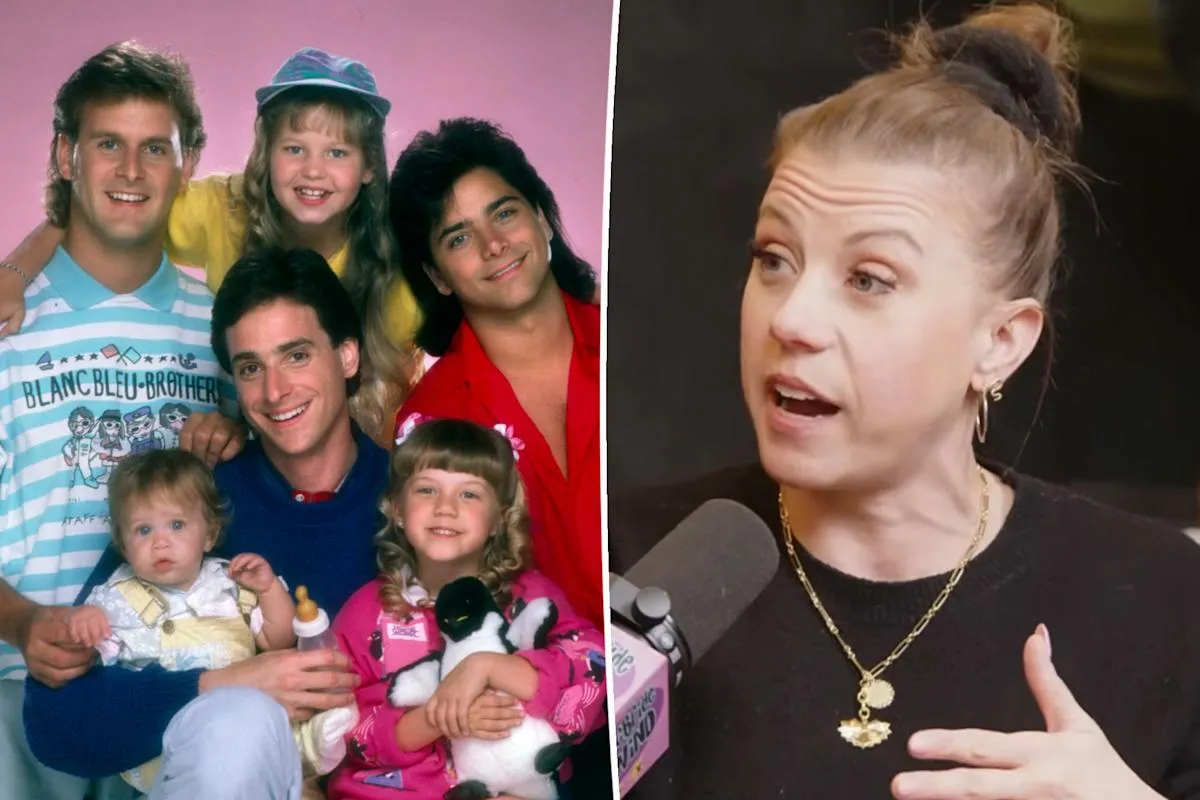
Jodie Sweetin recently shared an astonishing detail about her acting career — she received a one-cent residual check for her role in ‘Full House’. This revelation sheds light on the broader issue of declining residual payments in the streaming era, which has left many former child stars grappling with financial realities.
Sweetin, who portrayed Stephanie Tanner from 1987 to 1995 and reprised her role in ‘Fuller House’ from 2016 to 2020, has seen her earnings dwindle significantly. The shift from traditional syndication to streaming platforms has dramatically altered how actors receive compensation for their work. As Sweetin put it, “There’s no syndication anymore because it’s all in streaming. Who gets paid for that? Nobody gets paid for that.”
In a candid moment, Sweetin revealed her current financial situation. She drives a 2023 used Hyundai Sonata, rents her home, and has maxed out several credit cards. Her lifestyle, which she describes as “normal,” starkly contrasts with the glitzy image often associated with child stars.
Her experience is not isolated. Many actors from shows like ‘Full House’ find themselves in similar predicaments as streaming services dominate the landscape. The lack of adequate compensation has become a pressing concern for those who once relied on residuals as a steady income source.
Despite these challenges, Sweetin remains optimistic about her acting future. She expressed interest in reprising her role as Stephanie Tanner again someday, saying, “I will never say never to anything.” This sentiment reflects a resilience common among those who have navigated the unpredictable waters of Hollywood.
The implications of this shift in residual payments extend beyond individual actors. It raises questions about the sustainability of careers for those who once thrived under different economic conditions. As streaming continues to evolve, how will it shape the future of acting careers?
For now, Jodie Sweetin’s story serves as a poignant reminder of how drastically the entertainment industry has changed over the past few decades — and how it continues to impact those who were once at its center.