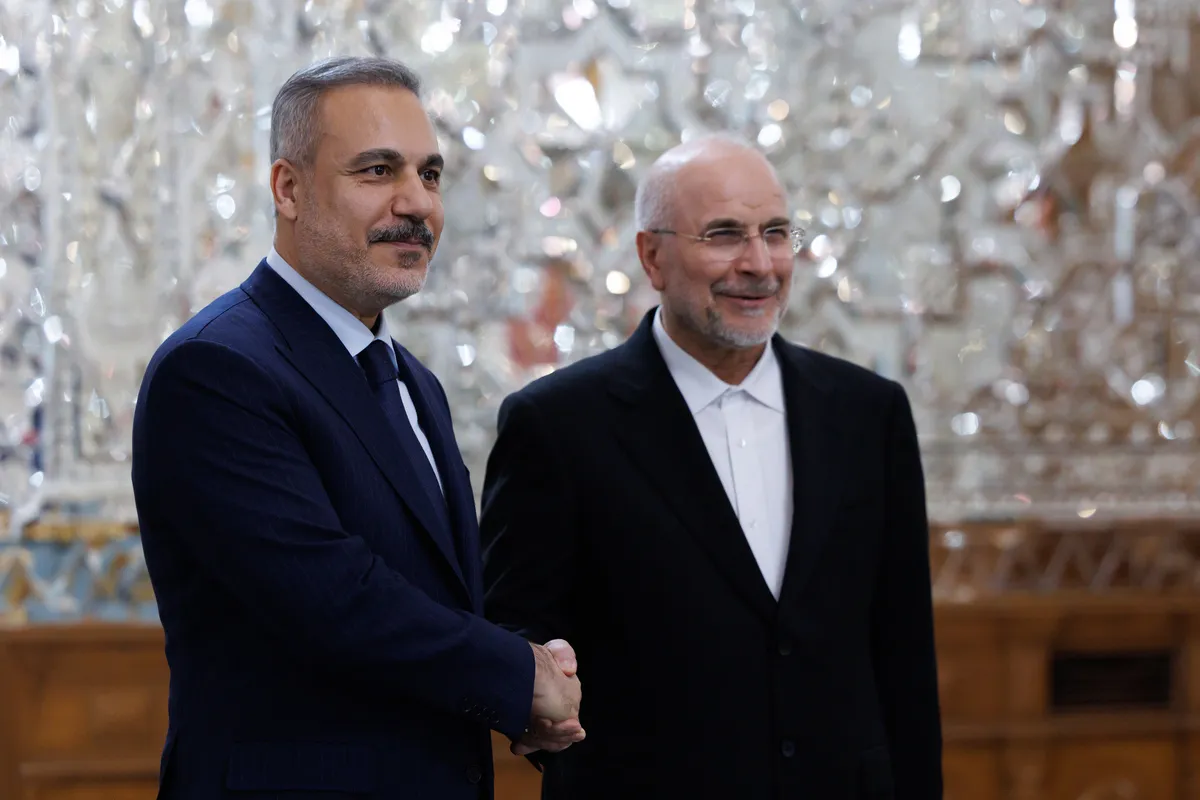
What does the recent escalation involving Mohammad Bagher Ghalibaf signify for the geopolitical landscape of the Middle East? The Iranian parliament speaker has made headlines by threatening the United States and its troops following a series of attacks on Israel’s oil refinery. This confrontation raises critical questions about the stability of the region and the potential for further conflict.
In a recent statement, Ghalibaf warned the U.S. against any ground invasion, declaring that American troops would be set “on fire” if such actions were taken. This stark warning comes amid heightened tensions, with Ghalibaf asserting that Iranian forces are prepared to attack U.S. troops and their regional allies. The situation has escalated to a point where oil prices surged to $115 per barrel, reflecting the market’s reaction to the instability.
Former President Donald Trump has also weighed in on the situation, indicating that he is closely monitoring Ghalibaf’s willingness to engage with the U.S. Trump stated, “You’ll see shortly,” suggesting that the U.S. may be preparing for a response. This back-and-forth highlights the precarious nature of U.S.-Iran relations, particularly in light of Trump’s previous comments about regime change in Iran and his assertion that the old guard has been replaced.
Ghalibaf has not only threatened military action but has also criticized Trump’s social media posts, labeling them as market manipulation aimed at escaping the “quagmire” in which America and Israel find themselves. He referred to the U.S.’s 15-point plan as merely “their wishes,” emphasizing Iran’s refusal to bow to external pressures. This rhetoric underscores a growing defiance within Iranian leadership, particularly in the context of the country’s recent threats to strike American and Israeli universities for the first time.
The implications of these developments are significant. With Ghalibaf’s aggressive stance, the potential for military confrontation looms large. The Iranian parliament speaker’s remarks reflect a broader sentiment within Iran’s political elite, which appears increasingly willing to confront U.S. interests in the region. As tensions rise, the risk of miscalculation or unintended escalation becomes a pressing concern.
Details remain unconfirmed regarding the health status of Iran’s new Supreme Leader, Mojtaba Khamenei, which adds another layer of uncertainty to the situation. His leadership could influence Iran’s response to U.S. actions and the overall direction of the country’s foreign policy. As the situation unfolds, the international community watches closely, aware that the stakes are high.
In summary, Mohammad Bagher Ghalibaf’s recent threats against the U.S. and Israel mark a significant turning point in Iranian politics. The interplay between military posturing and economic ramifications, such as rising oil prices, will likely shape the future of U.S.-Iran relations. As both sides prepare for potential confrontation, the world holds its breath, waiting to see how this volatile situation will evolve.