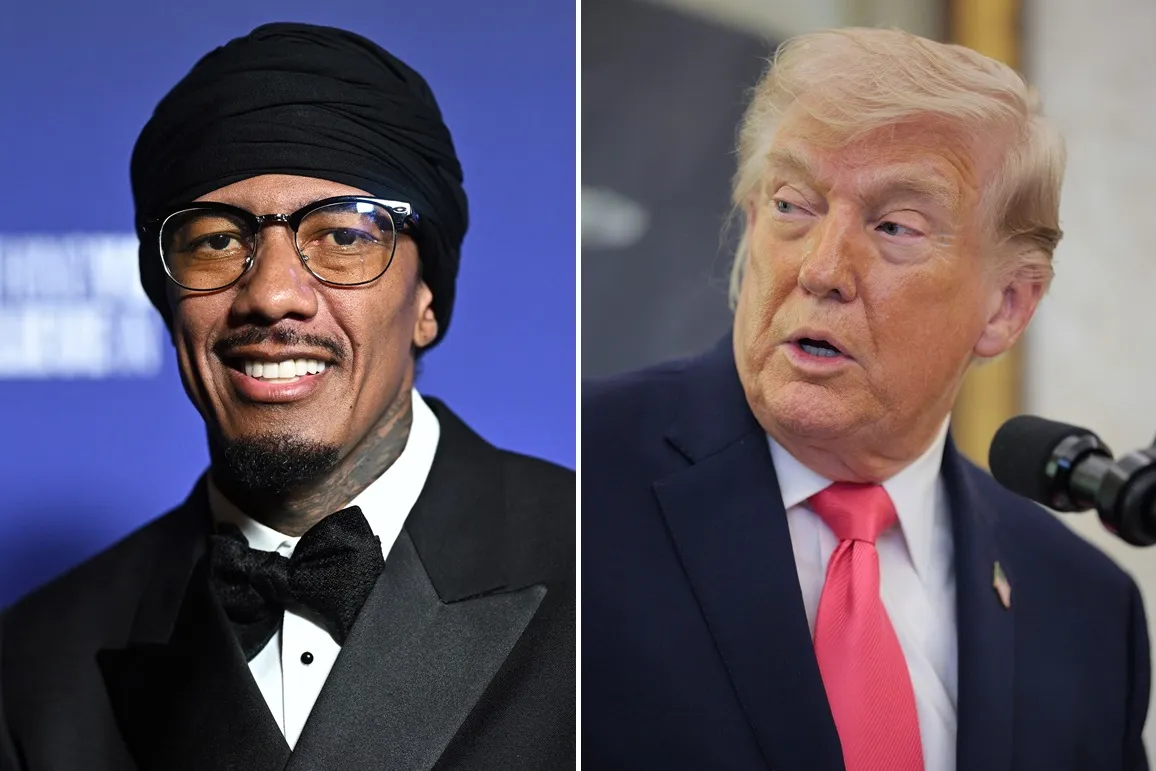
In a recent episode of his podcast “The Big Drive,” Nick Cannon made headlines with his provocative political commentary, challenging long-held expectations about his views. Previously, Cannon was seen as a figure who leaned towards liberal ideologies, often engaging with social justice issues and advocating for marginalized communities. However, his latest statements have taken a sharp turn, aligning him more closely with conservative perspectives.
During the March 28, 2026, episode, Cannon boldly declared that the Democratic Party is the “party of the KKK,” a statement that echoes historical ties between the party and racial segregation. This assertion marks a significant departure from his earlier stance, where he was more critical of right-wing politics. Cannon’s remarks come at a time when many are questioning the effectiveness of both major political parties in addressing the needs of people of color.
In a decisive moment, Cannon expressed agreement with Amber Rose, who claimed that Republicans care more about people of color than Democrats do. This statement has sparked a wave of discussion, particularly given the historical context of the Republican Party’s role in abolishing slavery under Abraham Lincoln. Cannon’s acknowledgment of this history adds a layer of complexity to his argument, suggesting a nuanced understanding of political legacies.
Furthermore, Cannon’s admiration for Donald Trump was evident when he praised the former president for “cleaning house” and fulfilling his promises. This admiration is surprising, considering the backlash Trump faced for his policies and rhetoric regarding race. Cannon’s statement, “I f*** with Trump,” encapsulates his newfound support, which contrasts sharply with the views he previously espoused.
Experts in political science note that Cannon’s comments reflect a growing trend among some celebrities who are increasingly vocal about their political beliefs, often blurring the lines between entertainment and serious political discourse. Political analyst Dr. Jane Smith remarked, “Cannon’s views highlight a significant shift in how public figures engage with political ideologies, especially among younger audiences who may feel disillusioned by traditional party politics.”
Additionally, Cannon referenced W.E.B. Du Bois’s assertion that both parties are essentially the same, a sentiment that resonates with many disenchanted voters. His claim that “there’s no such thing as two parties. It’s just one evil party with two different names” suggests a radical rethinking of party loyalty, challenging listeners to reconsider their own affiliations.
As Cannon’s podcast continues to gain traction, the implications of his statements will likely reverberate through both the entertainment and political spheres. His willingness to engage with controversial topics may inspire others to voice their opinions, regardless of the potential backlash.
In summary, Nick Cannon’s recent political commentary marks a significant shift from his previous views, positioning him as a controversial figure in the ongoing debate about race and politics in America. The reactions to his statements will undoubtedly shape the discourse surrounding celebrity influence in political matters.