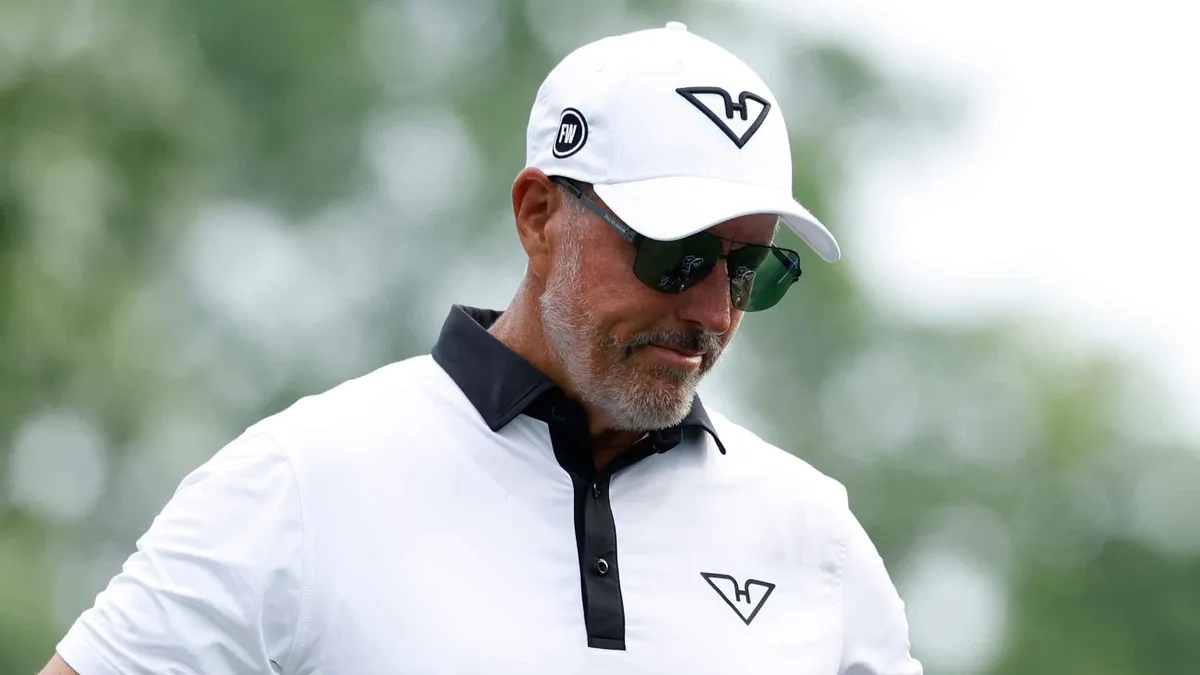
Before the recent announcement, Phil Mickelson was expected to compete in the 2026 Masters at Augusta National Golf Club, a tournament he has won three times. His presence was anticipated not only because of his impressive history at Augusta, where he has a scoring average of under par across 120 rounds, but also due to the emotional significance of the event for both him and fans. Mickelson’s last appearance was at LIV Golf South Africa, where he finished T48, raising questions about his form.
However, the decisive moment came when Mickelson revealed he would not participate in the Masters due to a family health matter, stating, “Unfortunately, I will not play in the Masters tournament next week and will be out for an extended period of time as my family continues to navigate a personal health matter.” This announcement has profound implications, as it marks the first Masters since 1994 without either Mickelson or Tiger Woods, a statistic that underscores the changing landscape of professional golf.
The immediate effects of Mickelson’s absence are felt not only by him but also by the tournament and its fans. Fred Ridley, chairman of Augusta National, expressed, “We know how much Phil loves the Masters Tournament, and he will be missed by everyone in Augusta next week.” This sentiment reflects the deep connection Mickelson has with the event, having achieved 16 top-10 finishes across 32 Masters appearances.
Experts in the golf community are taking note of this shift, emphasizing the significance of Mickelson’s absence in the context of the sport’s evolution. The Masters has long been a stage for legends, and with both Mickelson and Woods sidelined, it raises questions about the future of the tournament and the players who will carry its legacy forward.
Moreover, Mickelson’s decision to step back comes amid a challenging period in his career, having missed the first four LIV Golf events of 2026. This situation highlights the ongoing struggles many athletes face, as they balance personal challenges with professional commitments. As Tiger Woods also recently stated, “I am stepping away for a period of time to seek treatment and focus on my health,” it becomes clear that health issues are increasingly impacting the sport.
As fans and analysts reflect on this unprecedented moment in golf history, the absence of two of its most iconic figures prompts a reevaluation of the sport’s current state and future direction. The Masters, often regarded as the pinnacle of golf, will undoubtedly feel the void left by Mickelson’s absence, as he has been a staple of the tournament for decades.
In summary, Phil Mickelson’s withdrawal from the 2026 Masters due to family health matters not only alters the dynamics of the tournament but also symbolizes a significant shift in the golfing landscape. As the sport continues to evolve, the legacy of players like Mickelson will remain a topic of discussion and reflection for years to come.