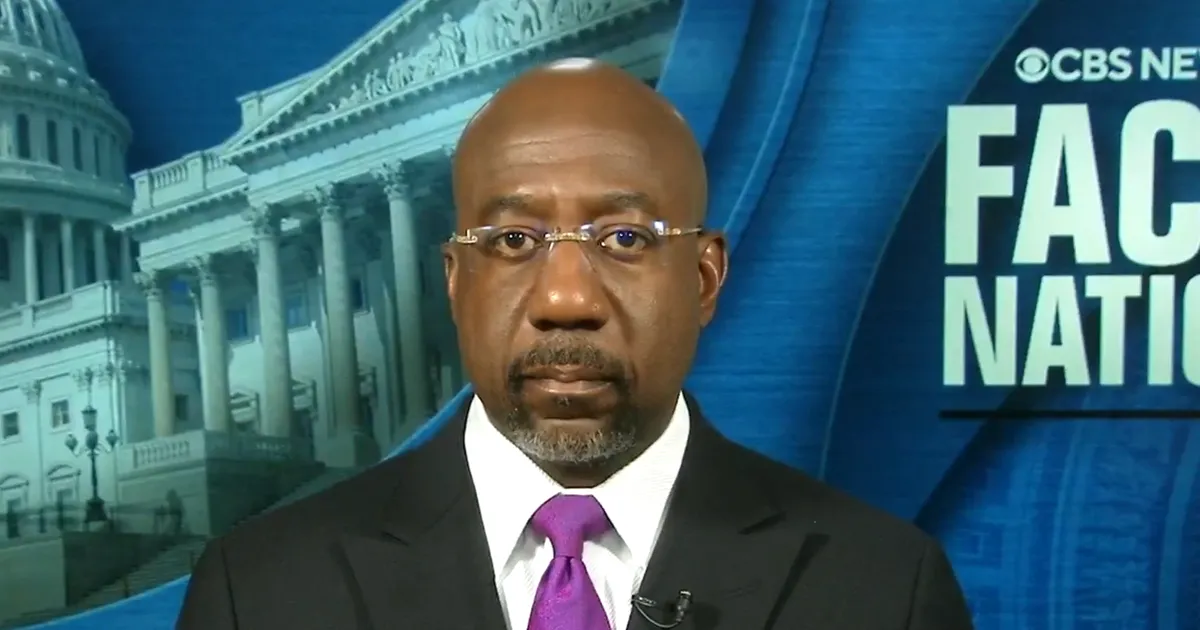
Senator Raphael Warnock has raised concerns about the Supreme Court’s recent ruling, asserting that it poses a significant threat to minority voting rights and may escalate partisan redistricting battles across the country. The decision narrows the application of Section 2 of the Voting Rights Act, complicating efforts to challenge electoral maps based on racial discrimination.
In his response, Warnock characterized the ruling as a “massive and devastating blow” to democracy, particularly affecting people of color in the South. He emphasized that by making it harder to prove intent behind discriminatory practices, states could feel emboldened to redraw district lines in ways that dilute minority voting power.
The Supreme Court’s decision follows a troubling trend—one marked by diminished federal oversight of voting laws. This trend includes the 2013 Shelby County v. Holder ruling, which significantly weakened protections for minority voters. As a result, many states have already begun exploring ways to reshape congressional maps.
Warnock pointed out that this ruling could fuel a “redistricting arms race,” as Republican governors in several states have expressed interest in revisiting their electoral maps post-ruling. He stated, “The court, sadly, poured fuel on this redistricting arms race,” highlighting the potential for further gerrymandering.
To address these challenges, Warnock has introduced legislation aimed at banning partisan gerrymandering, advocating for fairer elections. He believes that gerrymandering distorts the democratic process—”rather than the people picking their politicians, the politicians are picking their voters.”
As discussions surrounding election laws continue to evolve, observers are left pondering what this means for future elections. The implications of this ruling could extend beyond Georgia; it may set a precedent for how states navigate their electoral processes moving forward.
In light of these developments, advocates for voting rights are urged to remain vigilant. The fight for equitable representation is far from over.