Introduction
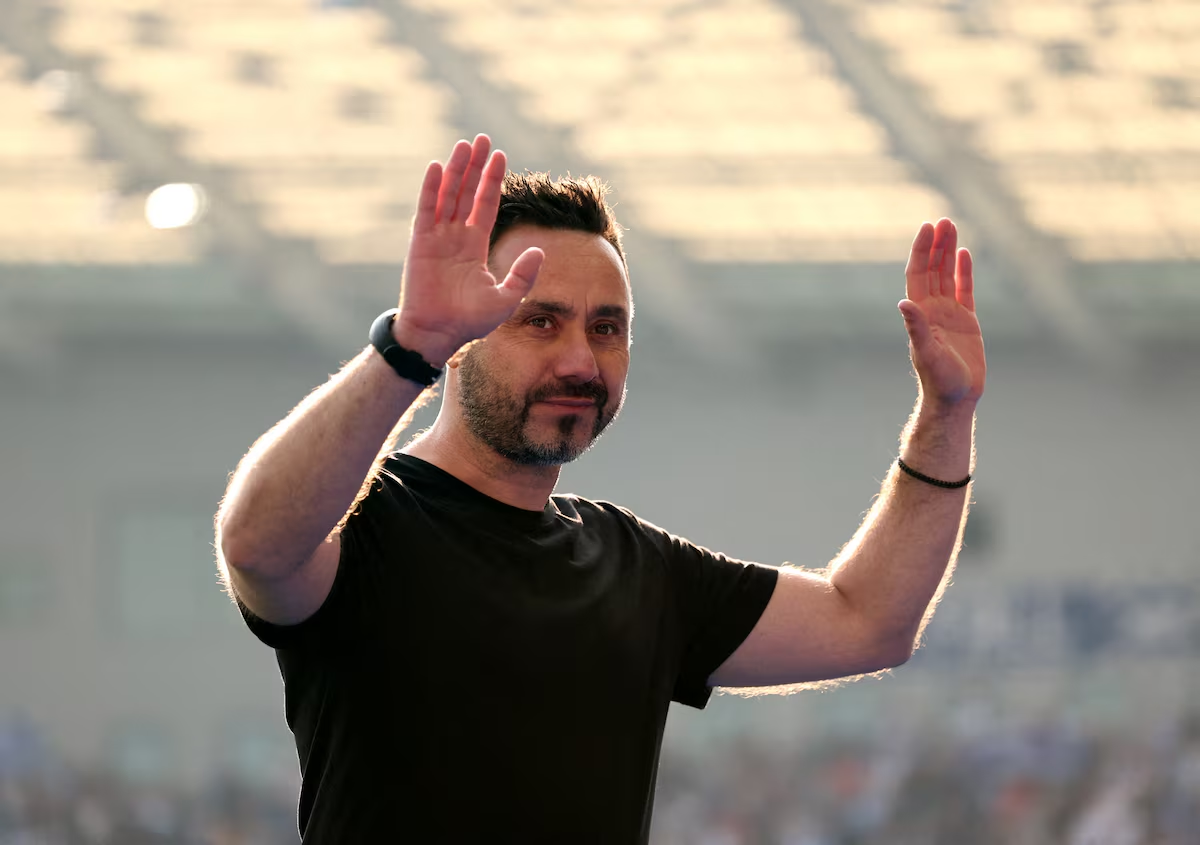
Roberto De Zerbi has emerged as one of the most innovative managers in football today, renowned for his tactical acumen and ability to develop young talent. His coaching style and philosophy have transformed teams, making him a pivotal figure within the football community. As clubs seek competitive advantages, De Zerbi’s methods and strategies are garnering international attention, notably during his time at Brighton & Hove Albion, where he has made significant strides in the Premier League.
The Rise of De Zerbi
Originally from Italy, De Zerbi began his coaching career in the lower tiers of Italian football, eventually leading to a notable tenure at Sassuolo. Here, he gained recognition for introducing a fluid attacking style that emphasised ball possession and player movement. His success in Serie A earned him a transfer to the Ukrainian club Shakhtar Donetsk, where he continued to refine his coaching philosophy amidst the complexities of international competitions.
Brighton & Hove Albion
In September 2022, De Zerbi took the helm at Brighton following the departure of Graham Potter to Chelsea. The transition was seamless, as both coaches shared a similar emphasis on an attractive, attacking brand of football. De Zerbi’s detailed approach focuses on positional play, with players given the freedom to express themselves. Under his management, Brighton has become known for their high pressing and quick transitions, leading the club to significant victories against top Premier League teams.
Key Tactics and Strategies
De Zerbi’s tactical framework includes a commitment to possession-based football, often utilising a dynamic 4-2-3-1 formation. Central to his vision is the use of wide players who stretch opponents and create space for midfielders to exploit. Furthermore, his emphasis on player adaptability allows for fluid tactical shifts during matches, challenging opponents and often yielding decisive results. This adaptability has been essential in navigating injury crises and the demands of a crowded fixture schedule.
Conclusion
Roberto De Zerbi represents a new generation of football management, illustrating how tactical innovation and player development can correlate with success. As Brighton & Hove Albion continues to evolve under his leadership, the footballing world watches with interest. With De Zerbi at the helm, fans and stakeholders can anticipate an exciting future for the club, positioning themselves not only as contenders in the Premier League but also in European competitions. The significance of his methods extends beyond results; they exemplify a shift towards more progressive footballing philosophies, setting benchmarks for aspiring managers globally.