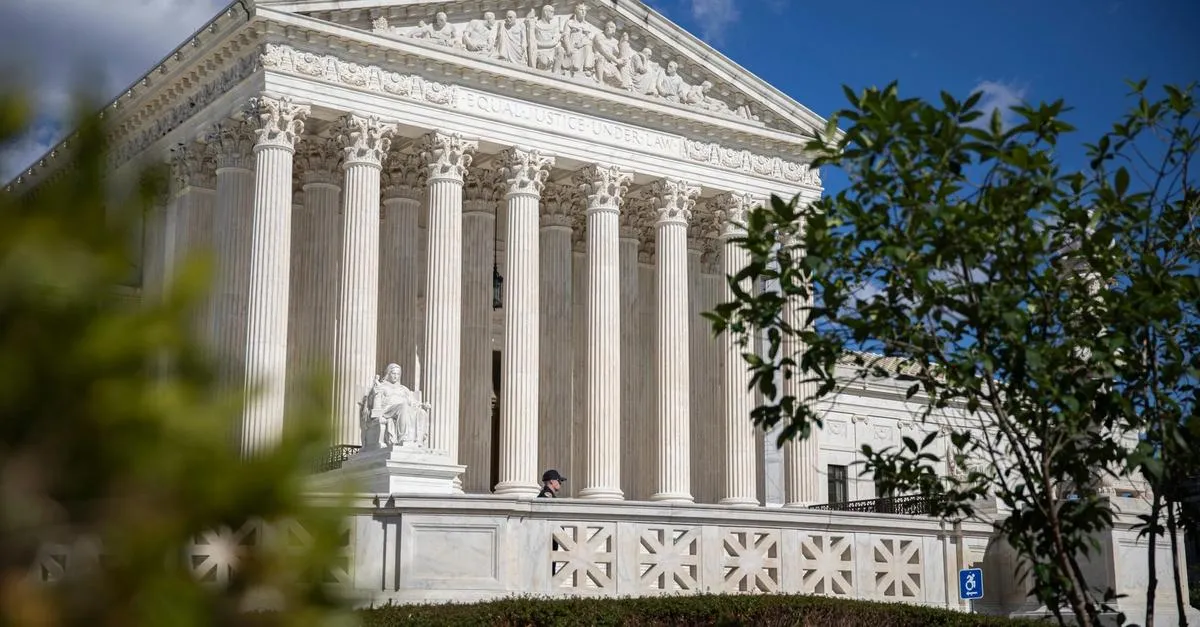
On May 5, 2026, the Supreme Court’s decision in Louisiana v. Callais showcased an ideological chasm between justices, particularly highlighted by Justice Samuel Alito’s sharp rebuke of Justice Ketanji Brown Jackson’s dissent. The ruling struck down Louisiana’s congressional map, paving the way for a new one ahead of the upcoming elections.
The court, voting 6-3, allowed Louisiana to bypass the typical 32-day waiting period before certifying its ruling. This expedited timeline is crucial as it gives the state an opportunity to redraw its congressional map in time for the 2026 elections. The new map is expected to favor Republicans, who currently hold four of the six congressional seats.
Jackson emerged as the lone dissenter, arguing that this ruling has “spawned chaos in the State of Louisiana.” Her concerns reflect a broader apprehension about how redistricting may dilute minority representation—an issue deeply connected to the Voting Rights Act. In her dissent, she stated, “Our decision represents an unprincipled use of power,” suggesting that such rulings could undermine electoral fairness.
In response, Alito described Jackson’s dissent as “baseless and insulting,” emphasizing that her rhetoric lacked restraint. He argued that her claims did not consider the practical implications of allowing Louisiana to proceed with its redistricting efforts. Yet, his fierce rebuttal raises questions about how personal these exchanges have become among justices.
The Supreme Court’s decision is likely to have broader implications beyond Louisiana—potentially affecting redistricting efforts across the nation. As states grapple with similar issues ahead of their elections, this ruling could set a precedent for how partisan advantages are evaluated under current law.
As part of this process, the Louisiana Legislature plans to hear public comments on a proposed map that would include one majority-Black district—an attempt to address some of Jackson’s concerns about representation. However, lawsuits have already been filed challenging the postponement of Louisiana’s primary election originally scheduled for May 16.
The ideological divide within the Supreme Court is becoming increasingly apparent. With justices like Alito and Jackson firmly on opposing sides, their exchanges reflect not only legal interpretations but also deeply held beliefs about democracy and representation in America.