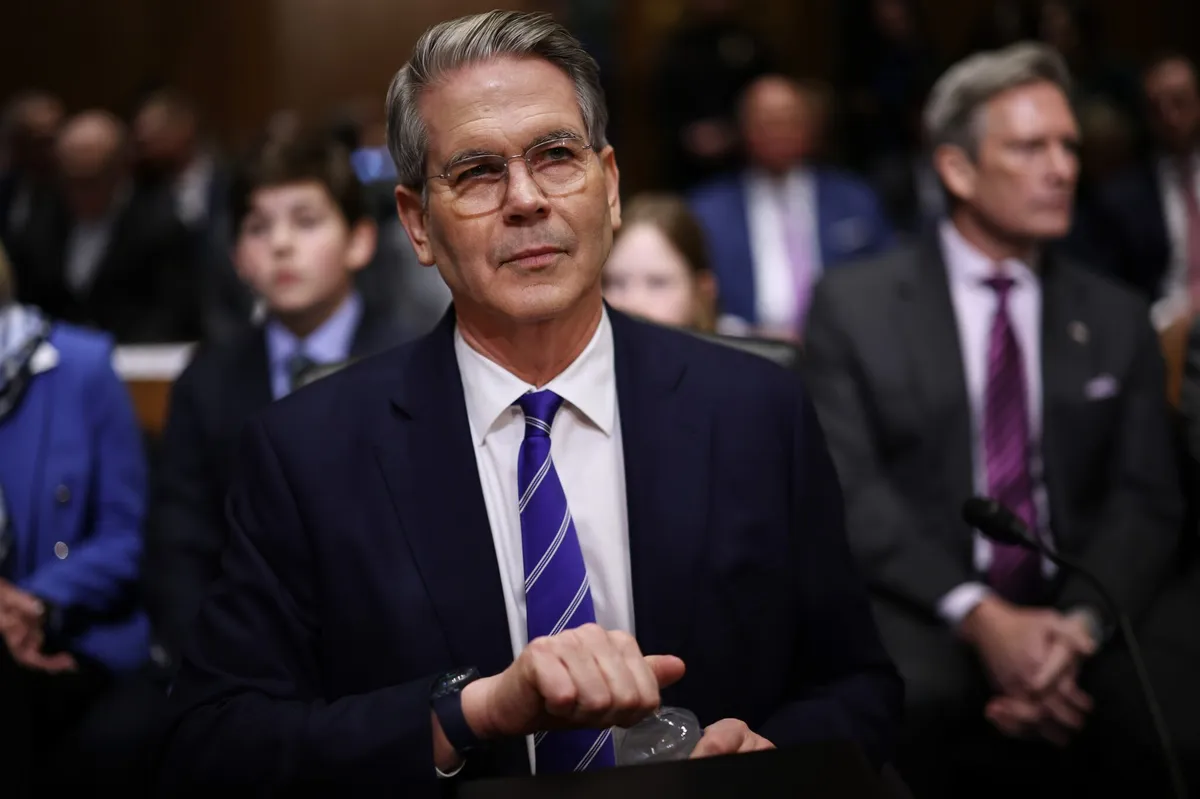
Scott Bessent, the US Treasury Secretary, has recently called for a cautious approach regarding interest rates, particularly in light of the ongoing Iran war and its implications for the economy. His remarks come as consumer prices have surged by 0.9% month-over-month, marking the largest increase in nearly four years. Bessent’s stance reflects a broader concern about the potential impacts of inflation on economic stability.
In a recent statement, Bessent noted, “I think now that we have to wait and see,” indicating a reluctance to hastily lower interest rates despite pressures to do so. He pointed out that the US economy had shown remarkable strength in January and February, suggesting that a premature move could jeopardize this stability.
Supporting his caution, Bessent highlighted that inflation, when excluding food and energy, rose by 0.2% month-over-month and 2.6% year-over-year. These figures underscore the complexities of the current economic landscape, where rising prices are juxtaposed against a robust economic backdrop.
Additionally, Bessent, alongside Federal Reserve Chairman Jerome Powell, convened a meeting with CEOs from major banks, including Citigroup, Morgan Stanley, Bank of America, and Goldman Sachs, to address emerging cybersecurity risks linked to Anthropic’s AI model. This meeting, however, saw JPMorgan CEO Jamie Dimon absent, raising questions about the collective response from the banking sector.
During the meeting, it was revealed that Anthropic’s AI model had identified thousands of zero-day vulnerabilities across major operating systems and web browsers. The Pentagon has classified these vulnerabilities as a national security risk, further complicating the economic environment.
Bessent’s comments reflect a broader sentiment within the administration, as he remarked, “If ever there was ‘Team Transitory,’ it’s this,” suggesting that the current inflationary pressures may not be as temporary as previously thought. He added, “Obviously, we’re going to have some make-up to do,” hinting at the challenges ahead in stabilizing the economy.
As the situation evolves, the interplay between inflation, interest rates, and national security concerns will likely shape future economic policies. Details remain unconfirmed regarding the long-term strategies that will be adopted to address these multifaceted challenges.