Introduction
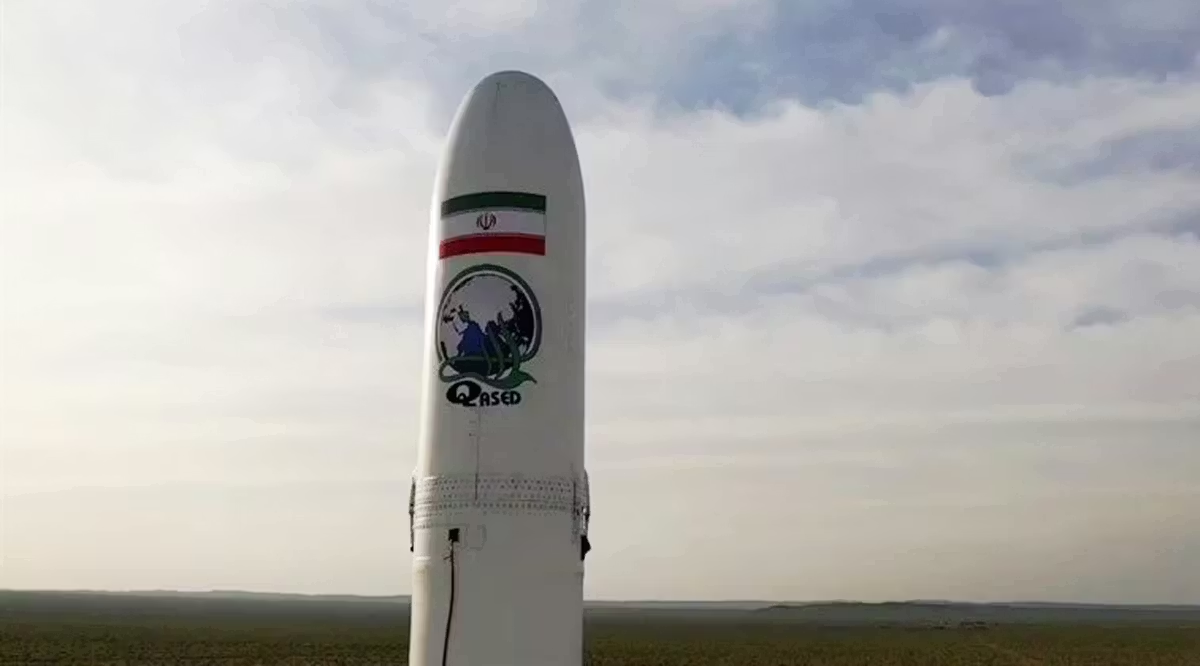
The Islamic Revolutionary Guard Corps (IRGC) plays a critical role in shaping Iran’s domestic and foreign policies. Established in 1979, the IRGC was formed following the Islamic Revolution to protect the regime and its values. Understanding its influence has become increasingly important, particularly given the rising tensions in the Middle East and its involvement in various regional conflicts.
Structure and Objectives of the IRGC
The IRGC operates separately from Iran’s regular military and possesses its own ground, naval, and air forces. Additionally, it oversees the Basij militia, a paramilitary volunteer force that has been deployed to quash dissent and enforce the regime’s ideology. The Guard’s primary mission is to safeguard the Islamic Republic’s achievements, promote the Islamic Revolution abroad, and counter perceived threats to Iran and its allies.
Recent Developments and International Response
On 4 October 2023, US officials announced new sanctions targeting the IRGC in response to its activities in support of militant groups across the region. The sanctions aim to curb its influence, particularly in Iraq, Syria, and Yemen, where the IRGC has been implicated in training, supplying, and financing armed factions. This move has further strained relations between Iran and Western nations, highlighting the complex interplay of military, political, and economic factors shaping the region.
The IRGC’s Global Network
The IRGC has built a vast network of alliances with non-state actors, which has allowed Iran to extend its reach far beyond its borders. Its involvement in militias like Hezbollah in Lebanon and Houthi rebels in Yemen showcases its strategy of using proxy forces to advance Iran’s interests without overt military engagement. This tactic raises significant security concerns for neighbouring countries and the international community, as it complicates efforts to achieve stability in conflict-ridden areas.
Conclusion
The significance of the IRGC in Iran’s governance and military strategy is undeniable. As it continues to influence regional dynamics, its actions will remain a focal point for policymakers around the world. The evolving geopolitical landscape suggests that the IRGC will likely play a pivotal role in future conflicts, making it essential for international observers to monitor its activities closely. With ongoing sanctions and increasing scrutiny from global powers, the IRGC’s impact on Iran’s future will be critical to watch in the coming years.