Introduction
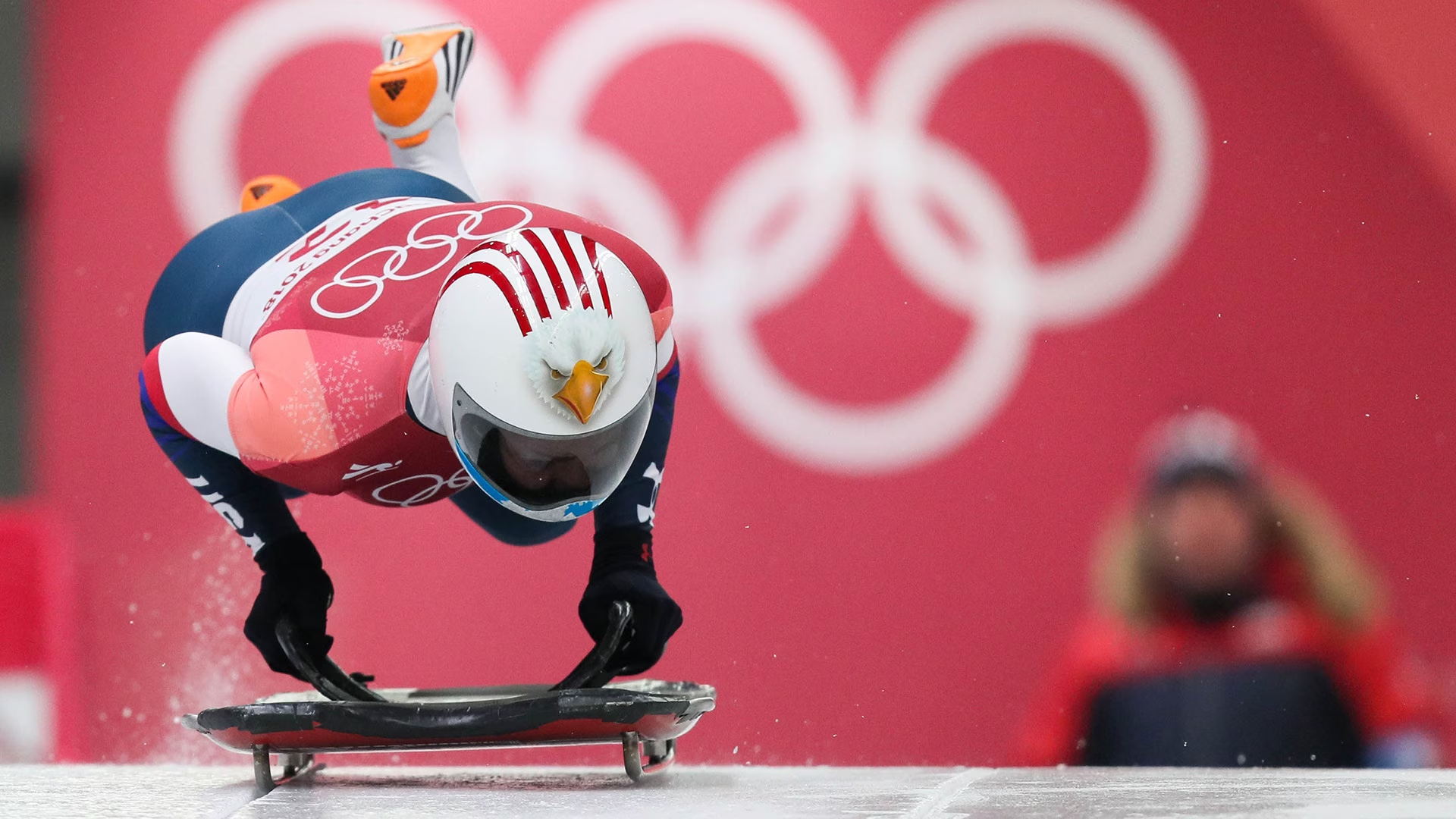
The Skeleton event has become one of the most thrilling and fast-paced sports at the Winter Olympics. With athletes racing down a narrow, twisting track on small, sled-like structures, the competition is fierce. This sport not only tests the speed and agility of its competitors but also showcases their extraordinary courage. As the date for the 2026 Winter Olympics in Milan-Cortina approaches, interest in Skeleton and its athletes has surged, underlining its significance in the landscape of winter sports.
History and Development of Skeleton
Skeleton made its Olympic debut at the 1928 Winter Olympics in St. Moritz, Switzerland, but it was not until 2002 that it returned to the Games after a long absence. The sport’s name reflects the skeleton-like appearance of the sleds used by the athletes, who lie face down, steering with subtle shifts in weight. Over the years, Skeleton has undergone significant technical advancements, from improved sled design to enhanced safety measures for athletes.
Key Events and Athletes
The upcoming 2026 Winter Olympics in Italy is set to feature both men’s and women’s Skeleton events, where athletes will compete for the coveted gold medals. Notable athletes from previous Games, such as Lizzy Yarnold from Great Britain, who won gold in 2014 and 2018, have reignited interest in the sport. Similarly, the success of fellow competitors like Martins Dukurs from Latvia, known for his incredible record, is expected to attract attention whether they can translate their skills to Olympic glory once more.
Expectations for 2026
As the Skeleton event prepares to take centre stage in 2026, anticipation is building around the innovations in training and equipment that athletes are adopting. Many athletes are embracing technology, utilising data analysis and simulation techniques to fine-tune their performance. Furthermore, the support from national federations in terms of training facilities and resources, especially in countries such as Germany, the USA, and Canada, is crucial for athletes striving to achieve Olympic success.
Conclusion
The Skeleton event at the Winter Olympics epitomises the spirit of winter sports — high speed, daring, and intense competition. As the world tunes in for the 2026 Games, might we witness new records, thrilling rivalries, and the emergence of future stars? The excitement surrounding Skeleton is set to enhance its popularity, drawing new fans and inspiring athletes around the globe. For anyone looking to experience the thrill of the Winter Olympics, Skeleton is a must-watch event that promises to deliver exhilarating moments.