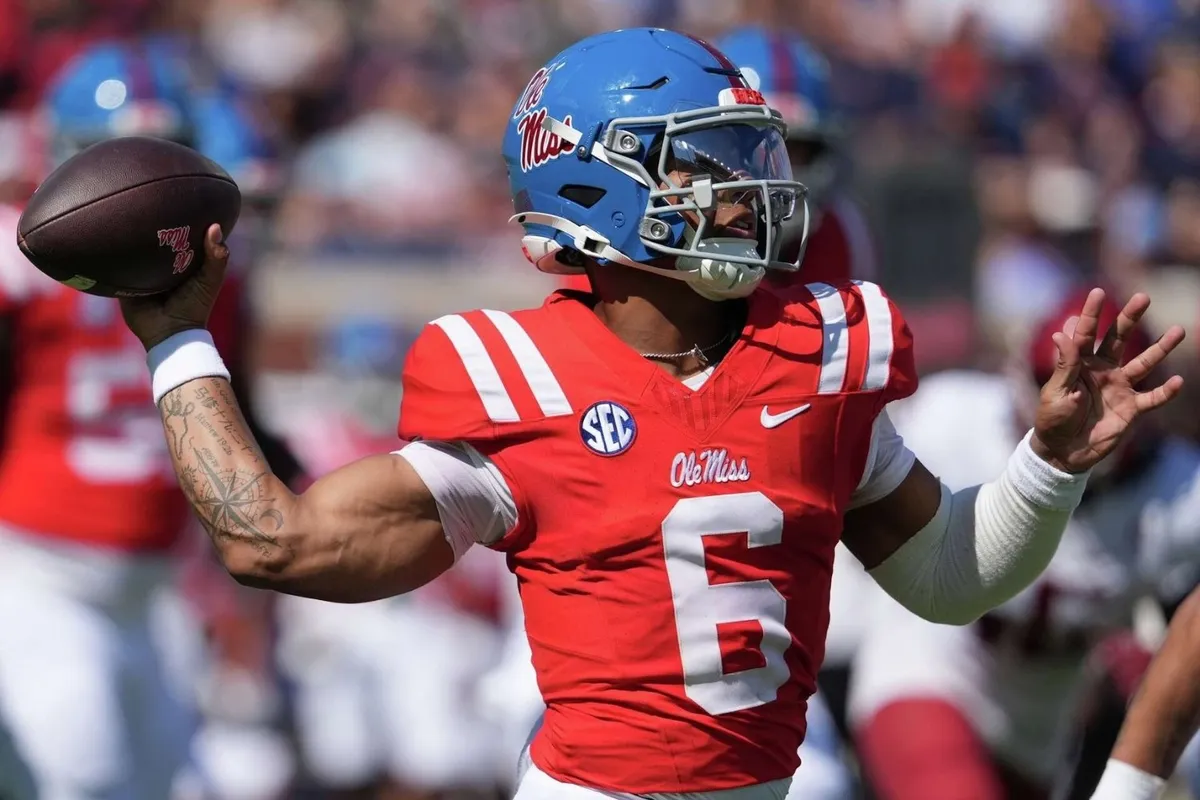
In a significant development for college football, Trinidad Chambliss has been granted a preliminary injunction that allows him to play for Ole Miss in the 2026 season. This ruling comes after a tumultuous journey marked by health challenges and eligibility disputes with the NCAA. The implications of this decision extend beyond Chambliss himself, potentially reshaping the landscape of college athletics and the enforcement of eligibility rules.
The Mississippi Supreme Court’s recent denial of the NCAA’s petition to appeal the injunction on March 27, 2026, underscores the court’s support for Chambliss. Judge Robert Whitwell’s ruling in favor of Chambliss for a sixth year of eligibility, which was issued in February 2026, has been pivotal in this case. This decision allows the 23-year-old quarterback to continue his college career, a prospect that seemed uncertain just months prior.
Chambliss’s journey to this point has been fraught with obstacles. After transferring from Ferris State before the 2025 season, he faced significant health issues that hindered his development. He experienced recurrent throat infections, poor sleep quality, daytime fatigue, and exercise-related discomfort, all stemming from a documented episode of infectious mononucleosis in 2020. These challenges led to his application for a retroactive medical redshirt, which the NCAA initially denied on January 9, 2026.
Despite these setbacks, Chambliss made a remarkable impact at Ole Miss, leading the team to a pair of College Football Playoff wins. Last season, he threw for an impressive 3,937 yards, completing 22 touchdown passes against just three interceptions. His performance earned him the title of SEC newcomer of the year, showcasing his potential as a key player in college football.
Chambliss’s case is particularly notable as it highlights the complexities surrounding NCAA eligibility rules, especially for athletes facing medical issues. The NCAA’s attempt to bar him from continuing his college career has raised questions about the fairness and consistency of their policies. The ongoing legal battles may prompt a reevaluation of how the NCAA handles similar cases in the future.
Reaction from the field
The reaction to Chambliss’s ruling has been mixed, with some praising the decision as a victory for student-athletes facing health-related challenges. Others, however, express concern about the implications for NCAA regulations and the precedent this case may set. As Chambliss prepares for the upcoming season, the focus will be on how he can leverage this opportunity to further his career.
As the season approaches, uncertainties remain regarding the overall lawsuit ruling concerning Chambliss’s eligibility. It is unclear if the NCAA will file a motion for another hearing regarding his case. Details remain unconfirmed, leaving many to speculate on the future of Chambliss and the potential ramifications for the NCAA.