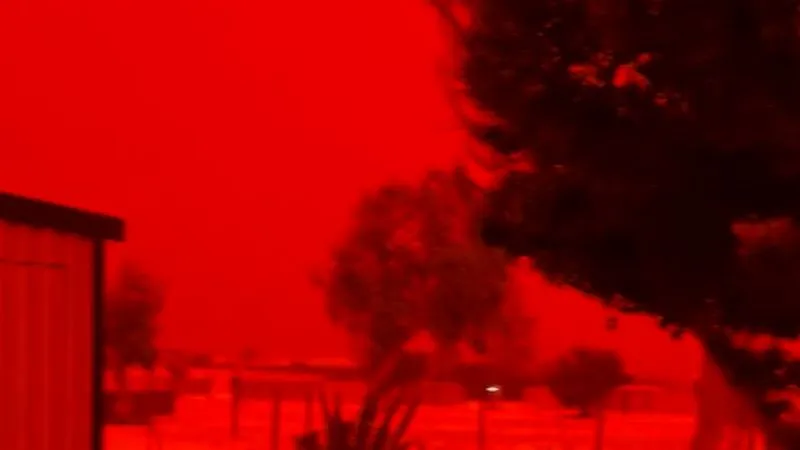
On March 27, 2026, Tropical Cyclone Narelle intensified to a Category 4 storm, wreaking havoc across Shark Bay and particularly impacting Exmouth, Western Australia. As the cyclone approached, winds exceeded 250 km/h, causing widespread concern among residents and emergency services.
The cyclone’s powerful winds lifted iron-rich dust into the atmosphere, resulting in a dramatic blood-red sky that captivated and alarmed onlookers. This phenomenon, reminiscent of a similar incident in 2009 that turned skies orange as far as Sydney, has drawn attention to the environmental effects of such extreme weather events.
As the cyclone made landfall, Exmouth experienced the brunt of the storm, with emergency services reporting significant structural damage and critical outages. Despite the destruction, there were no reported injuries, which is a relief given the severity of the conditions.
Currently, the cyclone has been downgraded, but emergency alerts remain active as recovery efforts begin. Winds are still forecasted to be dangerously high, between 180-190 km/h, raising concerns about further damage and the safety of residents.
Queensland Premier David Crisafulli remarked, “In many cases it will be the strongest wind people have experienced in this part of the state for a long, long time.” This statement underscores the unprecedented nature of the storm and its impact on the region.
Local grower Doriana Mangili expressed concern for agricultural losses, stating, “If the winds are as they are forecast – which at the moment is forecast to be 180-190km/h – then we would unlikely to have any bananas left standing.” Such sentiments reflect the broader economic implications of the cyclone, particularly for local farmers.
The cyclone has also disrupted major gas operations due to damaged infrastructure, further complicating recovery efforts and highlighting the interconnectedness of natural disasters and economic stability.
As authorities assess the damage and begin the recovery process, the striking red sky serves as a stark reminder of the power of nature and the challenges faced by communities in the wake of such events. Emergency services continue to monitor conditions closely, ensuring that residents remain safe as they navigate the aftermath of Tropical Cyclone Narelle.
Details remain unconfirmed regarding the full extent of the damage and the timeline for recovery, but the situation remains critical as the community rallies to rebuild.