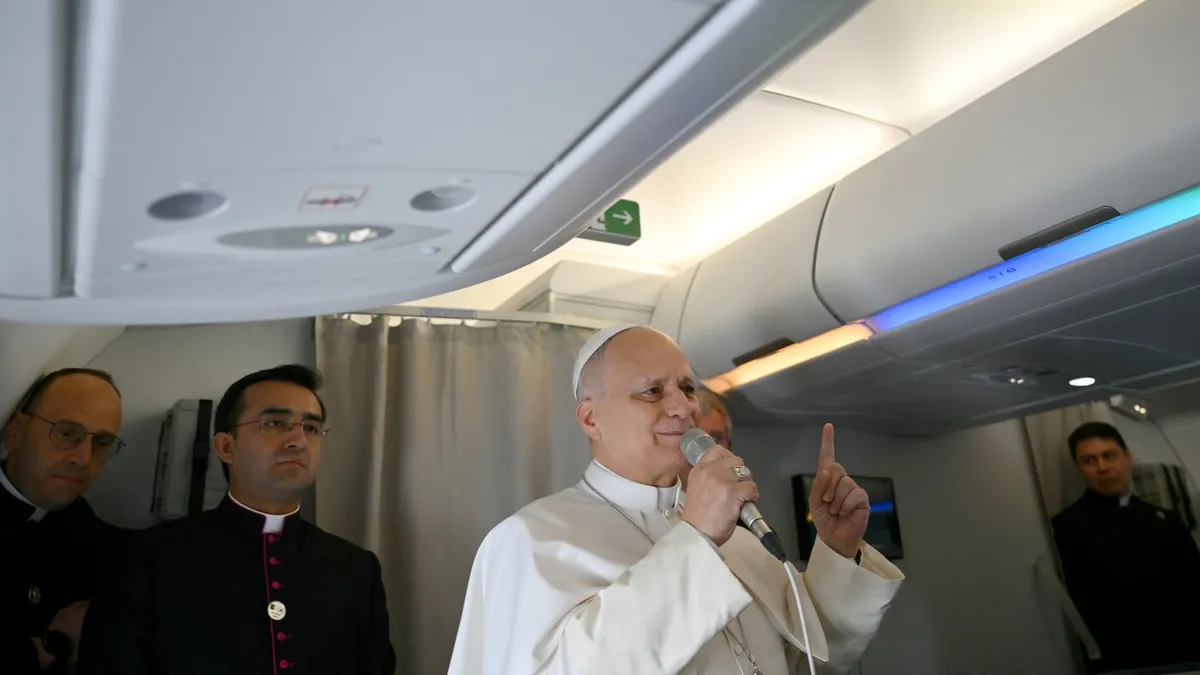
In a striking turn of events, former President Donald Trump has drawn parallels between himself and Jesus, a move that has ignited both intrigue and controversy within political and religious circles. This comes as Pope Leo XIV, the first U.S.-born pope, embarks on an 11-day trip to Africa, emphasizing peace amid rising tensions in the Middle East, particularly regarding Iran.
Trump’s provocative stance was highlighted when he criticized Pope Leo XIV, labeling him as “weak” and “terrible for Foreign Policy.” This criticism follows Trump’s claim that if he were not in the White House, the pope would not be in the Vatican, suggesting a direct correlation between his political presence and the papacy’s current state.
In a recent post on Truth Social, Trump shared an image of himself depicted as Jesus, further blurring the lines between politics and religion. His comments have found support among certain Italian politicians, reflecting a growing faction that aligns with Trump’s views on foreign policy, particularly regarding Iran.
Pope Leo XIV has not shied away from addressing these criticisms. He stated, “I will continue to speak out loudly against war,” reinforcing his commitment to peace and reconciliation amid the ongoing conflict involving Iran. The pope has been vocal about the “delusion of omnipotence” that he believes is fueling the war, positioning himself as a moral counterpoint to Trump’s aggressive rhetoric.
During the 2024 election, Trump secured 55% of the Catholic vote, indicating a significant base of support within the Catholic community. This demographic’s response to the ongoing feud between Trump and Pope Leo XIV will be crucial as both figures navigate their respective roles in a polarized political landscape.
As tensions escalate, the pope’s emphasis on the Gospel’s message—”Blessed are the peacemakers”—stands in stark contrast to Trump’s confrontational approach. The juxtaposition of these two leaders highlights the complexities of modern religious and political dynamics.
Looking ahead, the implications of this rivalry could shape not only U.S. politics but also international relations, particularly with Iran. Pope Leo XIV’s call for peace may resonate with a broader audience, potentially challenging Trump’s narrative.
Details remain unconfirmed regarding the long-term effects of this confrontation on both the papacy and Trump’s political ambitions. As the situation develops, observers will be keenly watching how these two influential figures continue to interact and influence their respective followers.