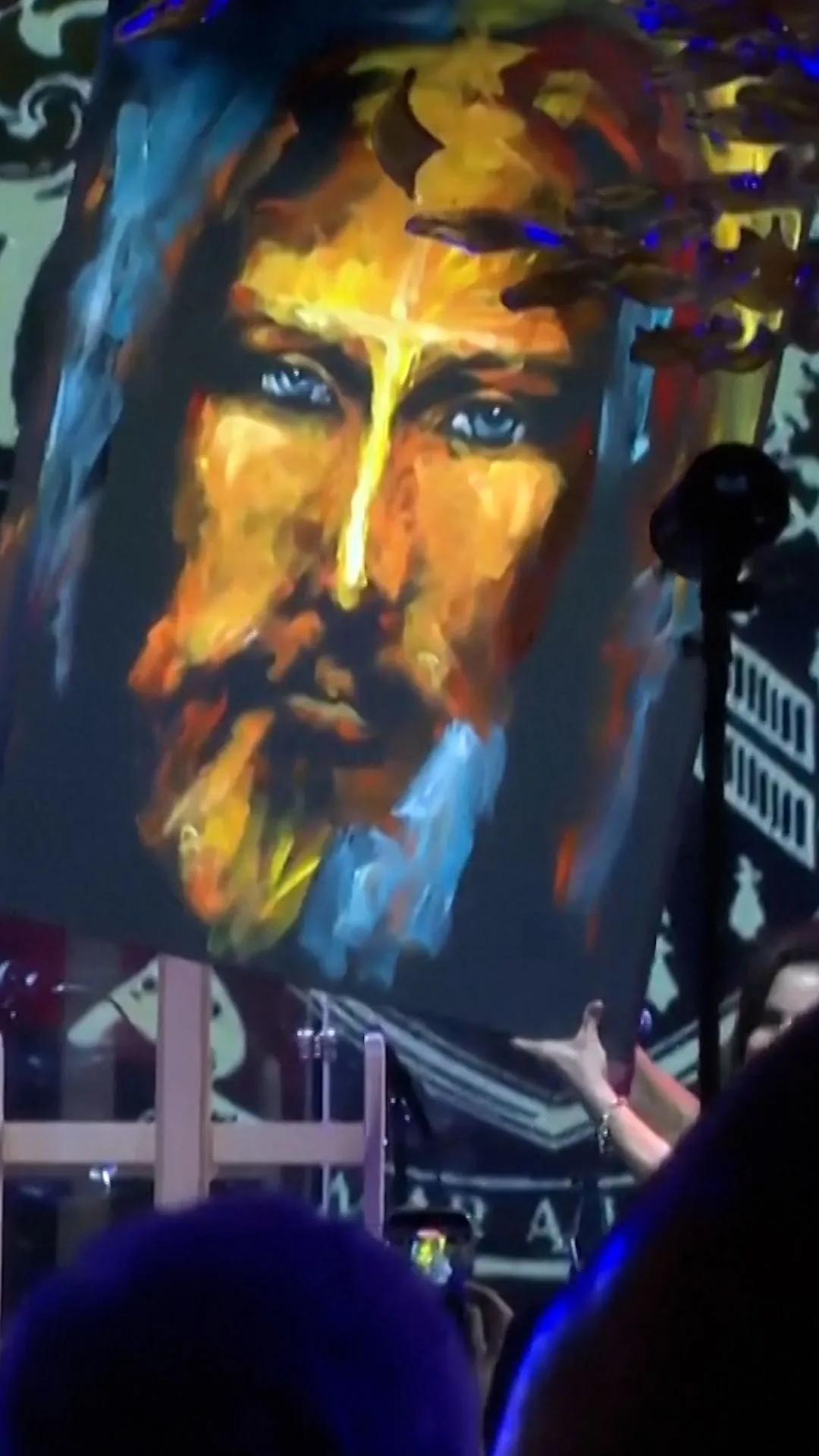
In a provocative move, former President Donald Trump posted an AI-generated image on his Truth Social platform on April 13, 2026, depicting himself as a Christ-like figure. The image, which Trump claimed illustrated him as a doctor in connection with the Red Cross, was swiftly deleted approximately 13 hours after its initial posting due to the intense backlash it provoked.
The immediate response to Trump’s post was overwhelmingly negative, with church leaders, conservatives, and Democrats alike expressing their disapproval. Critics described the image as an act of gross blasphemy, with conservative activist Riley Gaines questioning whether Trump genuinely believed he was being humorous or if he was under the influence of some substance. Megan Basham, another commentator, labeled the post as “OUTRAGEOUS blasphemy” and called for Trump to issue an apology.
Trump’s relationship with religious voters has been complex, particularly among Christians. In the 2024 election, he garnered significant support, with 56% of Catholics backing his campaign. However, this latest incident has raised questions about the sustainability of that support, especially in light of the backlash from influential religious figures. Archbishop Paul S. Coakley emphasized that the Pope, whom Trump criticized as “weak on crime” and “terrible for foreign policy,” is not a politician but a spiritual leader concerned with the care of souls.
The controversy surrounding the image is not an isolated incident. Tensions between the White House and the Vatican have been building for months over various policies, and Trump’s remarks about Pope Leo XIV have only exacerbated these strains. Italian Prime Minister Giorgia Meloni condemned Trump’s comments as “unacceptable,” further illustrating the international ramifications of his statements.
In the wake of the uproar, Bishop Robert Barron joined the chorus of voices calling for Trump to apologize for his remarks about the Pope. The backlash highlights a growing divide between Trump’s political persona and the expectations of many within the Christian community, who may view such actions as lacking humility and respect.
As the dust settles on this incident, it remains to be seen how it will impact Trump’s standing among his Christian supporters. The former president has a history of sharing controversial images, including one portraying himself as the Pope after the death of Pope Francis, which suggests a pattern of provocative behavior aimed at garnering attention.
While Trump continues to maintain a strong base among certain voter demographics, the reactions to the Trump Jesus image may signal a turning point in how religious voters perceive his actions. As the political landscape evolves, the implications of this incident could resonate well beyond the immediate backlash, potentially influencing future electoral outcomes.