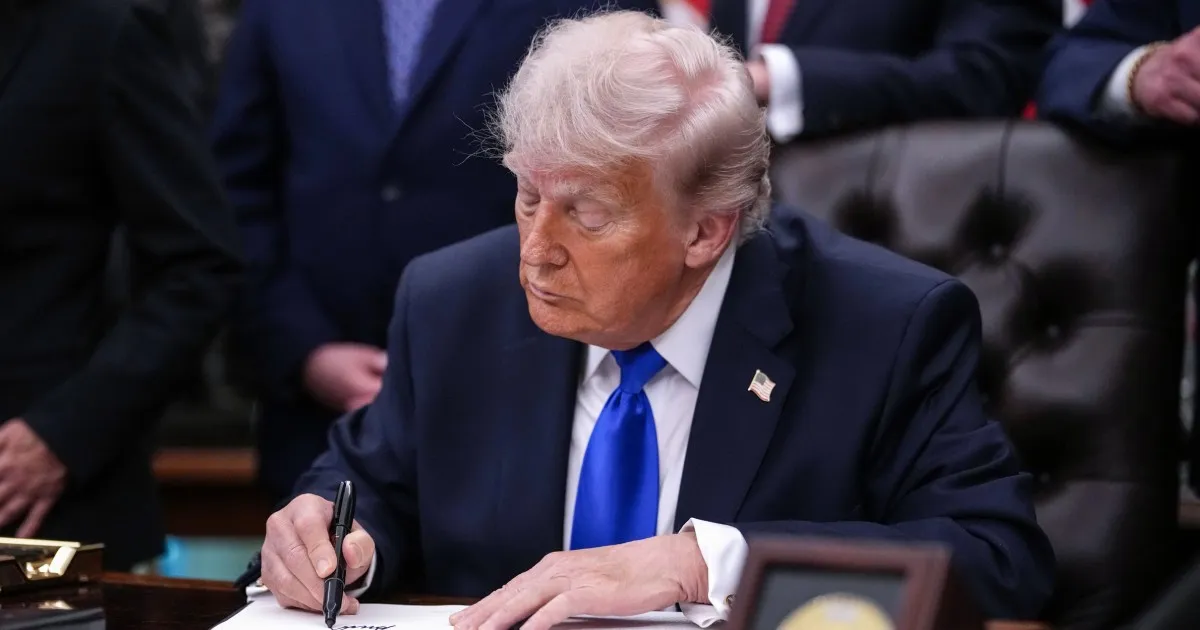
On April 30, 2026, President Donald Trump signed an executive order aimed at expanding access to retirement plans for millions of American workers who currently lack employer-sponsored options. This initiative, which introduces a new online marketplace called TrumpIRA.gov, could fundamentally change how individuals approach their retirement savings.
The executive order specifically targets approximately 50 million people without employer-sponsored retirement plans. It directs the Treasury Department to establish this online platform, allowing users to easily enroll in various retirement accounts, including 401(k) plans and IRAs.
Key facts about the Saver’s Match program:
- The program offers a maximum match of $1,000 for single filers and $2,000 for married couples filing jointly.
- Single filers earning less than $20,500 qualify for the maximum match, while those earning up to $35,500 receive smaller matches.
- This initiative is set to help low- and moderate-income workers making less than $35,500, with the Saver’s Match available starting next year.
Trump emphasized the significance of this move, stating, “For millions of Americans who lack employer-sponsored plans, this will be really revolutionary, because they’ll be covered.” The administration plans to collaborate with Congress to potentially broaden eligibility for the Saver’s Match beyond the current income limits.
The focus on low administrative costs—capped at 0.15% of account balance—will ensure that users can maximize their retirement savings without being burdened by high fees. Observers note that last year, a striking 87% of individuals without workplace retirement plans expressed a willingness to save more if they could receive such a match.
The implications are significant. If implemented effectively, this could lead to an estimated 32.3 million workers entering the retirement savings system under a federal auto-enrollment plan. Yet challenges remain in ensuring that these programs reach their intended audience.
The next steps involve legislative discussions aimed at expanding this program further. Kevin Hassett from the administration stated, “We’re working with Congress to significantly expand this program and are looking forward to legislation this year.” The potential for change is palpable; how effectively it will address the existing retirement coverage gap remains a critical question.