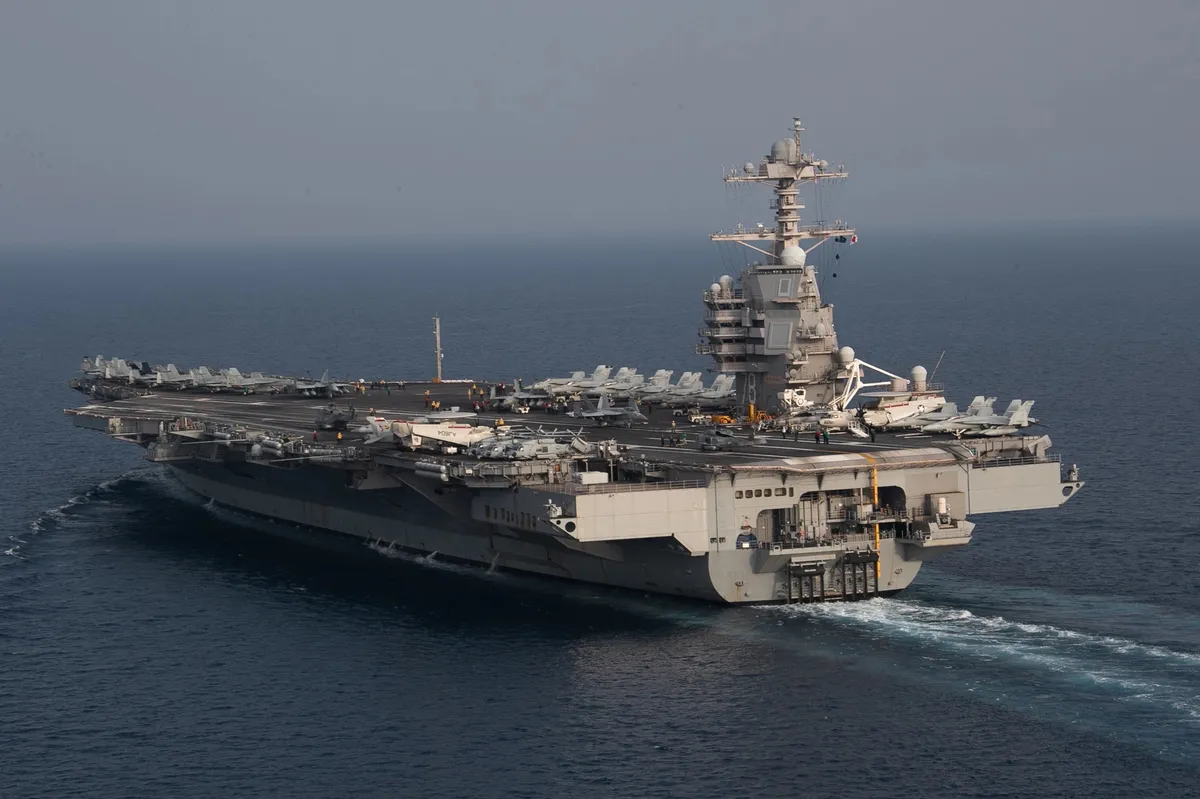
“Gerald R. Ford remains poised for full mission tasking in support of national objectives in any area of operation.” This statement from the U.S. Navy underscores the readiness of the USS Gerald R. Ford following its recent repairs in Split, Croatia.
The aircraft carrier departed Split after addressing damage caused by a fire in its laundry and berthing areas, which resulted in injuries to two personnel. The incident affected approximately 100 sleeping berths and required treatment for around 200 sailors due to smoke exposure.
Equipped with Carrier Air Wing 8, the USS Gerald R. Ford boasts a formidable arsenal, including F/A-18E/F Super Hornets and EA-18G Growlers. This deployment marks a significant period of operational activity, as the carrier has been engaged in various theaters since June 2025, including the Arctic, Mediterranean, Caribbean, and Red Sea.
The carrier’s involvement in U.S. operations against Iran has intensified since the initiation of joint U.S.-Israeli strikes in late February 2026. This context amplifies the importance of the USS Gerald R. Ford’s readiness as geopolitical tensions escalate.
However, the carrier’s Electromagnetic Aircraft Launch System (EMALS) has faced scrutiny, with reliability concerns surfacing during both testing and operational phases. Despite achieving 600 cycles between operational failures, this figure falls short of the 4,000 cycles that were the design requirement.
As the USS Gerald R. Ford resumes its mission, the decision to prioritize immediate operational availability over comprehensive maintenance raises questions about the long-term implications for the vessel’s performance. The Navy’s approach suggests a strategic focus on maintaining a robust presence in volatile regions.
Details remain unconfirmed regarding the extent of repairs conducted on the USS Gerald R. Ford, particularly concerning any underlying maintenance issues that may have been deferred during its demanding nine-month deployment.
As the carrier continues its operations, it remains a critical asset for the U.S. Navy, capable of repositioning without the political constraints that often accompany land-based aircraft. This flexibility is vital in a rapidly changing global landscape.
Looking ahead, if the timeline proposed by former President Trump holds, the USS Gerald R. Ford may soon enter its planned post-deployment maintenance period, allowing for a thorough assessment and any necessary upgrades.