How it unfolded
On March 16, 2026, Uber Technologies, Inc. made headlines with the announcement of an expansion of its partnership with NVIDIA, a move that signals a significant shift in the company’s strategy towards autonomous vehicles. This collaboration aims to leverage NVIDIA’s advanced technology to enhance Uber’s transportation services, marking a pivotal moment in the evolution of ride-sharing.
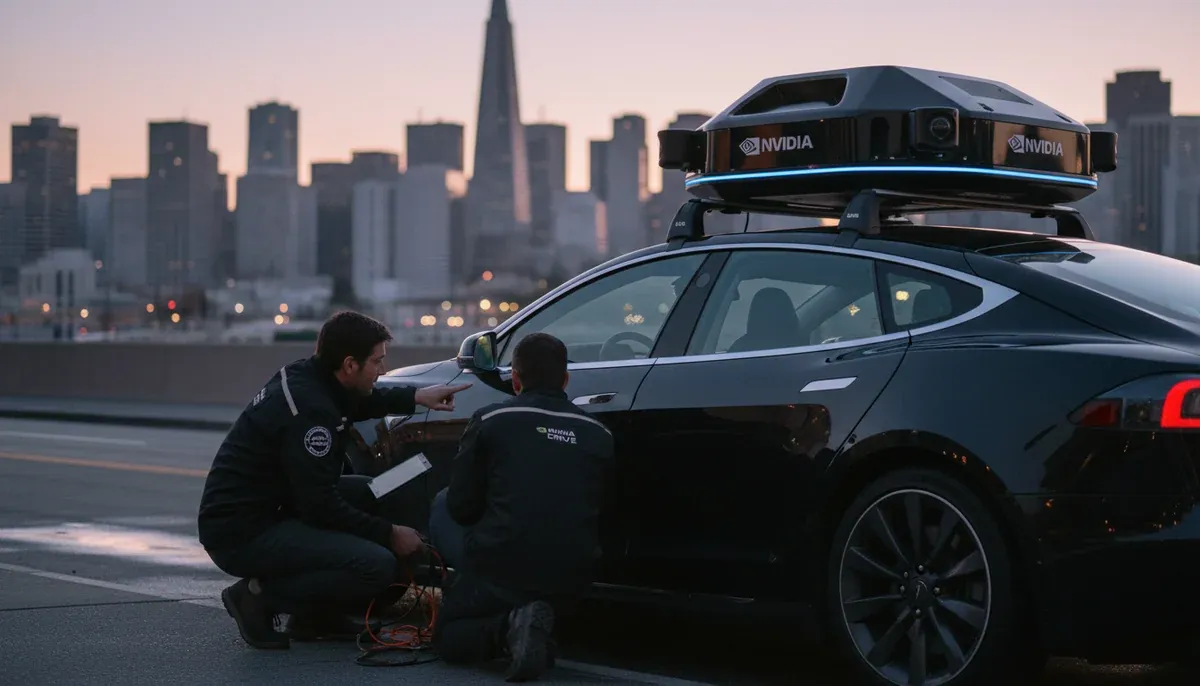
The partnership is set to roll out a global fleet of NVIDIA software-driven autonomous vehicles, with the initial launch planned for the first half of 2027. The deployment will begin in major urban centers such as Los Angeles and San Francisco, before expanding to a total of 28 cities by 2028. This ambitious plan highlights Uber’s commitment to integrating cutting-edge technology into its operations, which could reshape the landscape of urban transportation.
Utilizing the NVIDIA DRIVE Hyperion platform and the NVIDIA Alpamayo AI model, the companies aim to create a fleet that not only enhances safety but also improves reliability and accessibility for users. Dara Khosrowshahi, CEO of Uber, emphasized the potential of autonomous technology, stating, “Autonomous technology holds enormous promise to make transportation safer, more reliable, and more accessible.” This sentiment reflects the broader industry trend towards automation in transportation.
As the announcement unfolded, Uber’s financial performance also drew attention. The company reported a net income of $10.053 billion for the full year of 2025, alongside a free cash flow of $9.763 billion. These figures indicate a significant turnaround for Uber, which has transitioned from a history of chronic losses to a profitable business model. The positive financial results have contributed to a favorable perception of Uber stock among investors.
Following the announcement, Uber’s shares experienced a notable increase, rising by 3.12% in after-hours trading to reach a price of $76.99. This uptick reflects investor optimism regarding the company’s future prospects, particularly in light of its strategic partnership with NVIDIA. Since its initial public offering (IPO), Uber’s stock has returned an impressive 78.55%, starting from an opening price of $42.
The collaboration with NVIDIA is particularly significant as it aligns with the growing trend of integrating artificial intelligence into various sectors. Jensen Huang, CEO of NVIDIA, remarked on the transformative potential of AI in physical systems, stating, “The ‘ChatGPT moment’ for physical AI has arrived — robotic systems can now reason about the complexities of the physical world.” This perspective underscores the importance of technological advancements in shaping the future of transportation.
As Uber prepares for the rollout of its autonomous vehicle fleet, the implications for the company and its stakeholders are profound. The successful implementation of this technology could not only enhance Uber’s service offerings but also position the company as a leader in the rapidly evolving transportation industry. Investors and analysts will be closely monitoring the progress of this initiative, as it could significantly impact Uber’s market position and stock performance in the coming years.
In summary, the partnership between Uber and NVIDIA marks a crucial step towards the future of autonomous transportation. With ambitious plans for a global fleet and strong financial performance, Uber stock is poised for a potentially transformative journey ahead. As the landscape of urban mobility continues to evolve, the outcomes of this collaboration will be of great interest to investors and industry observers alike.