Introduction to Greenland’s Geographical Landscape
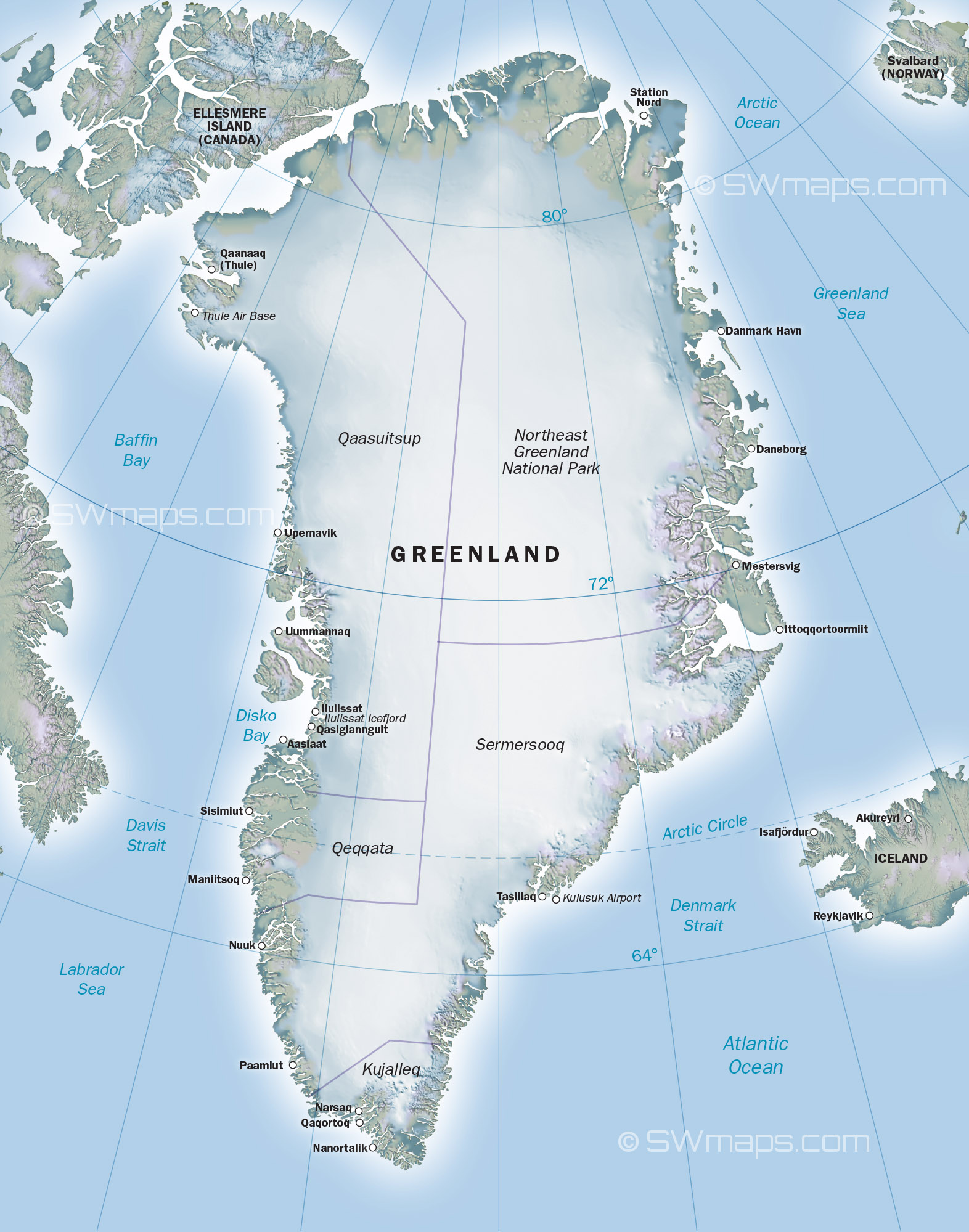
Greenland, the world’s largest island, has a rich geological and cultural history that is often depicted through its detailed maps. Understanding the Greenland map is crucial for several reasons; it not only illustrates the island’s extensive ice sheets but also showcases its unique topographical features, settlements, and natural resources. As climate change intensifies, the Greenland map serves as an essential tool for scientific research and international policy decisions.
The Features of the Greenland Map
The current map of Greenland reveals a diverse range of geographical elements. With over 80% of its land covered by an ice sheet, the map highlights various glaciers, mountain ranges, and fjords. Notable areas include the Greenland Ice Sheet, the largest single mass of ice outside Antarctica, which has gained attention due to its rapid melting. The map also features the capital city, Nuuk, and other important settlements, illustrating how communities are distributed across this vast island.
Significance of Mapping Greenland
Mapping Greenland serves not only tourists and researchers but is also crucial for understanding environmental changes. For instance, scientific expeditions use these maps to monitor glaciers and assess the impact of climate change. According to recent studies, the Greenland Ice Sheet is losing ice at an alarming rate, contributing significantly to global sea-level rise. Accurate maps are vital for forecasting these changes and formulating appropriate responses.
Recent Developments and Future Outlook
In recent years, there has been a surge in interest in Greenland’s natural resources, including rare minerals that are essential for modern technologies. This has led to discussions about mining and sustainable practices. Consequently, mapping efforts have been enhanced to inform stakeholders about potential areas for resource extraction and conservation.
Conclusion
The Greenland map is much more than a topographical representation; it is a critical document that offers insights into climate change, human habitation, and natural resources. As environmental challenges continue to escalate, understanding the Greenland map will become increasingly important for researchers, policymakers, and global citizens alike. It provides a necessary framework for engaging with one of the planet’s most significant and vulnerable environments.