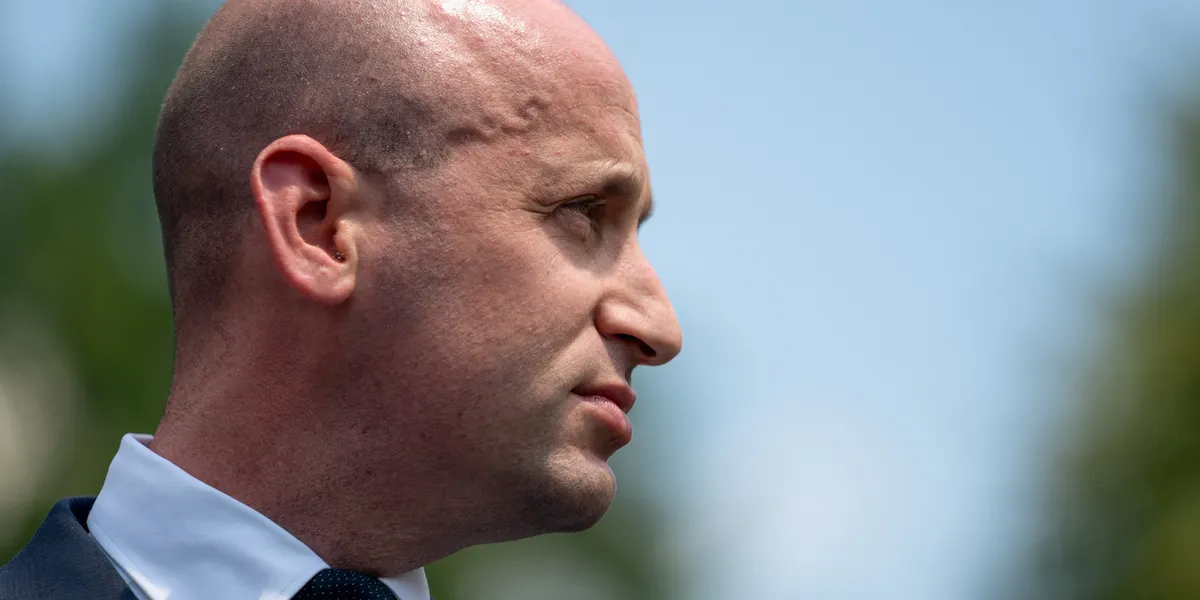
Introduction
Stephen Miller, a prominent political advisor and former senior policy advisor to President Donald Trump, has played a pivotal role in shaping contemporary US immigration policy and overall Republican strategy. As a key figure in the Trump administration, Miller’s views on immigration and national identity have sparked significant debate across the nation, making him a relevant topic for discussion in today’s political landscape.
Background and Career
Born on August 23, 1985, in Santa Monica, California, Miller graduated from Duke University in 2007 with a degree in political science. He began his political career as an intern for Republican Congressman John Shadegg and later worked as a communications director for various conservative political organisations. Miller gained national prominence during the Trump campaign in 2016, particularly as a spokesperson for Trump’s hardline immigration policies.
Impact on Immigration Policies
During his time in the White House, Miller was instrumental in implementing several controversial policies, including the travel ban targeting several Muslim-majority countries, the separation of families at the US-Mexico border, and the push for the ‘merit-based’ immigration system. He has been a staunch advocate for reducing immigration significantly, fearing that an influx of foreign nationals could threaten American jobs and cultural identity.
Controversies and Criticism
Miller’s hardline stance on immigration has attracted considerable criticism from various advocacy groups and politicians. His ideas are often accused of promoting xenophobia and racial bias, raising concerns about human rights violations. Notably, in 2019, leaked emails revealed that Miller had shared white nationalist content while corresponding with websites known for their anti-immigrant rhetoric, further intensifying scrutiny over his views and influence.
Current Relevance and Future Outlook
After leaving the White House, Miller remains active in political circles, continuing to influence Republican platforms and candidates. Recent events, such as the ongoing debates surrounding border security and immigration reform, underscore Miller’s lasting impact on the Republican Party and American politics. As the country grapples with immigration issues, Miller’s philosophies and policy recommendations will likely continue to play a pivotal role in shaping the political conversation.
Conclusion
Stephen Miller’s influence on US politics, particularly concerning immigration, cannot be understated. His role in the Trump administration and continuous advocacy for hardline policies may have lasting repercussions on the political landscape. As the United States moves forward, the debates surrounding these policies will remain crucial, and understanding Miller’s contributions provides insight into the evolving nature of political dialogue in America.