The numbers
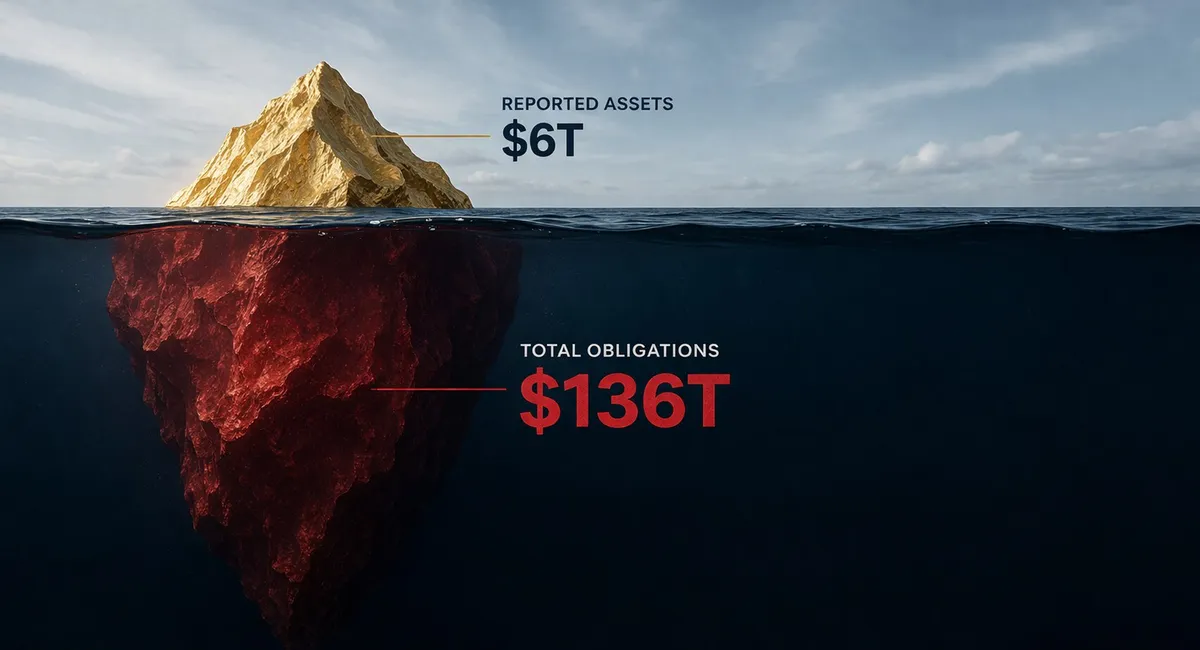
The U.S. Treasury’s FY2025 financial statements reveal a staggering negative net position of $41.72 trillion, a figure that has sent shockwaves through economic circles. This alarming statistic is compounded by total federal promises that exceed $136.2 trillion, which includes unfunded obligations for Social Security and Medicare. Such figures have led some analysts to declare that the U.S. government is facing a fiscal catastrophe.
For the past 29 consecutive years, the Government Accountability Office (GAO) has declined to certify U.S. government financial statements, raising questions about the reliability of these figures. The U.S. Treasury reports $6.06 trillion in assets against a staggering $47.78 trillion in liabilities, indicating that total liabilities are nearly eight times the reported assets. This stark imbalance is a clear indicator of a system on the brink of insolvency.
Federal debt has surged to $30.33 trillion, marking a $2 trillion increase from the previous year. Additionally, federal employee and veteran benefits payable have reached $15.47 trillion, up by $438.8 billion. The 75-year unfunded social insurance obligation has also seen a dramatic surge, rising by $10.1 trillion in just one year to a total of $88.4 trillion. Such rapid increases in liabilities paint a troubling picture of fiscal sustainability.
Interest payments now claim 13% of the federal budget, a significant portion that underscores the growing burden of debt on government finances. Despite these alarming figures, the U.S. government can still borrow and create currency, a fact that some analysts argue allows it to operate despite being labeled insolvent. “The U.S. government just admitted it’s insolvent,” one analyst remarked, highlighting the gravity of the situation.
As the fiscal gap widened from 4.3% of GDP in FY 2024 to 4.7% in FY 2025, the trajectory of U.S. fiscal policy appears increasingly unsustainable. “Uncle Sam, by any accounting standard, is insolvent,” another expert noted, emphasizing the urgent need for reform. The government’s ability to stay afloat is largely attributed to its practice of printing dollars and rolling over old debt into new loans.
The underlying trajectory of U.S. fiscal health has shifted, a reality now confirmed by the government’s own accounting. Observers are left to ponder the implications of these findings. Will there be a concerted effort to address this growing crisis, or will the government continue to rely on short-term fixes to manage its financial obligations?
Details remain unconfirmed as the situation evolves, but the consensus among analysts is clear: the U.S. is at a critical juncture, and the path forward will require significant changes in fiscal policy to avert a deeper crisis. The stakes are high, and the consequences of inaction could be dire for the nation’s economic future.