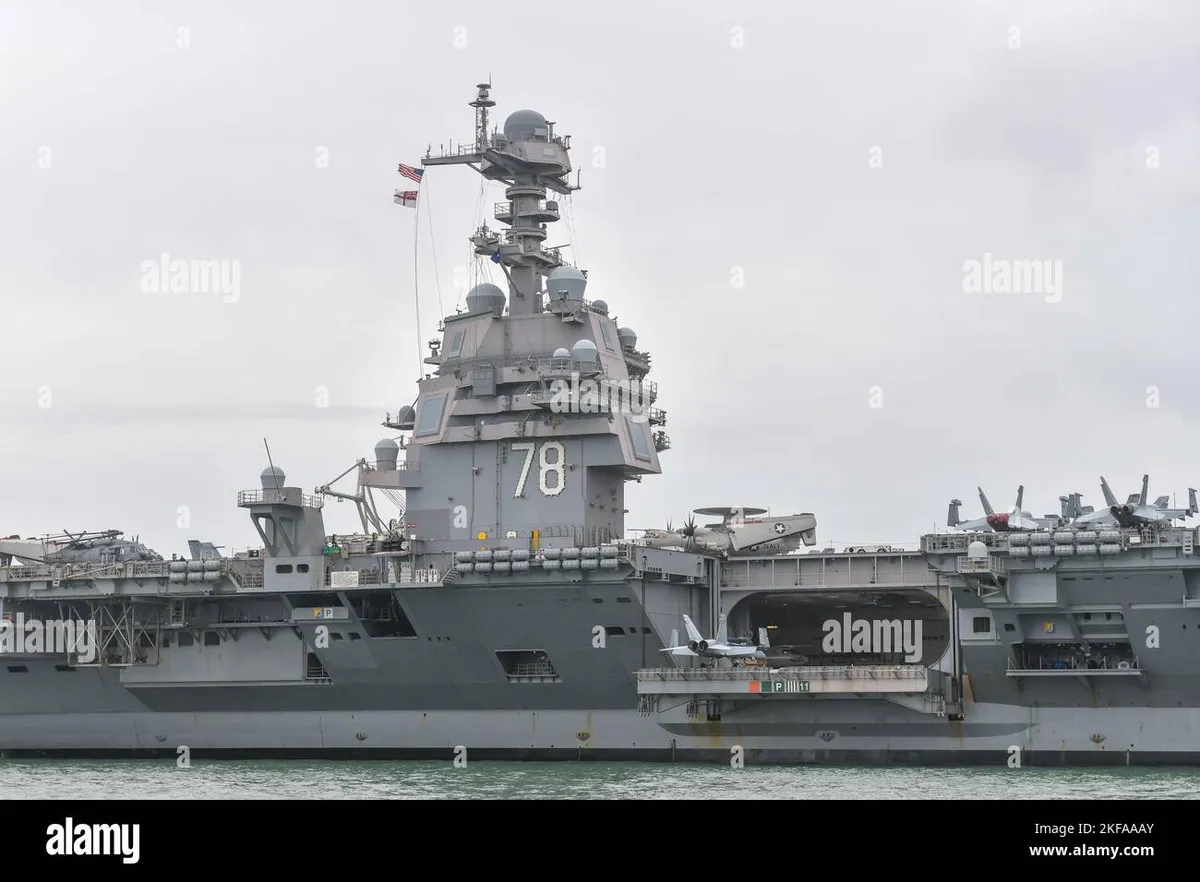
The USS Gerald R. Ford, the largest and most powerful aircraft carrier in the United States Navy, is currently deployed in the eastern Mediterranean Sea, where it has recently faced significant challenges. A fire broke out in the laundry department of the vessel in mid-March 2026, leading to a 30-hour effort by the crew to extinguish the flames and prevent them from reigniting. Fortunately, no sailors were seriously injured in the incident, but approximately 600 sailors lost access to their bunks due to the fire damage.
This incident is particularly concerning given the USS Gerald R. Ford’s ongoing deployment, which is on track to break the record for the longest deployment of an aircraft carrier since the Vietnam War. With about 4,500 sailors and dozens of tactical aircraft on board, the ship has been a pivotal asset in military operations under President Trump’s administration, particularly in relation to Iran and Venezuela.
The USS Gerald R. Ford, which has a staggering cost of $13 billion, has already seen its deployment extended by the military twice. This extension highlights the increasing reliance on the carrier to maintain an operational presence in critical regions. Brent Sadler, a naval analyst, emphasized the importance of the USS Gerald R. Ford in current military operations, stating, “If we didn’t have the Ford, we would be struggling to maintain an operational presence, but we’d also be struggling to keep our aircraft carriers ahead of our enemies.”
As the deployment continues, the stress on the sailors and their families is palpable. Amini Osias, a sailor aboard the USS Gerald R. Ford, expressed the emotional toll of the extended deployment, saying, “It’s constant uncertainty that we live on a daily basis.” This sentiment resonates with many aboard the ship, as they navigate the challenges of military life far from home.
Adding a unique element to the crew’s morale, Sage, a therapy dog, has been serving on the USS Gerald R. Ford since 2023, helping to relieve stress among sailors during these demanding times. The presence of therapy animals has become increasingly recognized for their positive impact on mental health, especially in high-pressure environments like military deployments.
In the broader context, the USS Gerald R. Ford’s extended deployment and recent fire incident underscore the complexities of modern military operations. The ship’s advanced electronic catapult system allows it to launch a variety of aircraft, showcasing a unique capability among U.S. aircraft carriers. This technological edge is crucial as the U.S. navigates geopolitical tensions in regions like the Middle East and South America.
As the situation develops, the military’s commitment to maintaining a robust presence in these areas remains clear. However, the challenges faced by the USS Gerald R. Ford raise questions about the sustainability of such extended deployments and their impact on the sailors involved. The ongoing operations in Iran and Venezuela, coupled with the recent fire incident, highlight the precarious nature of military readiness in an unpredictable global landscape.
While the immediate aftermath of the fire has been managed without serious injuries, the long-term implications for the crew and the ship’s operational capabilities are yet to be fully understood. As the USS Gerald R. Ford continues its mission, the eyes of the nation remain focused on its role in ensuring security and stability in volatile regions.