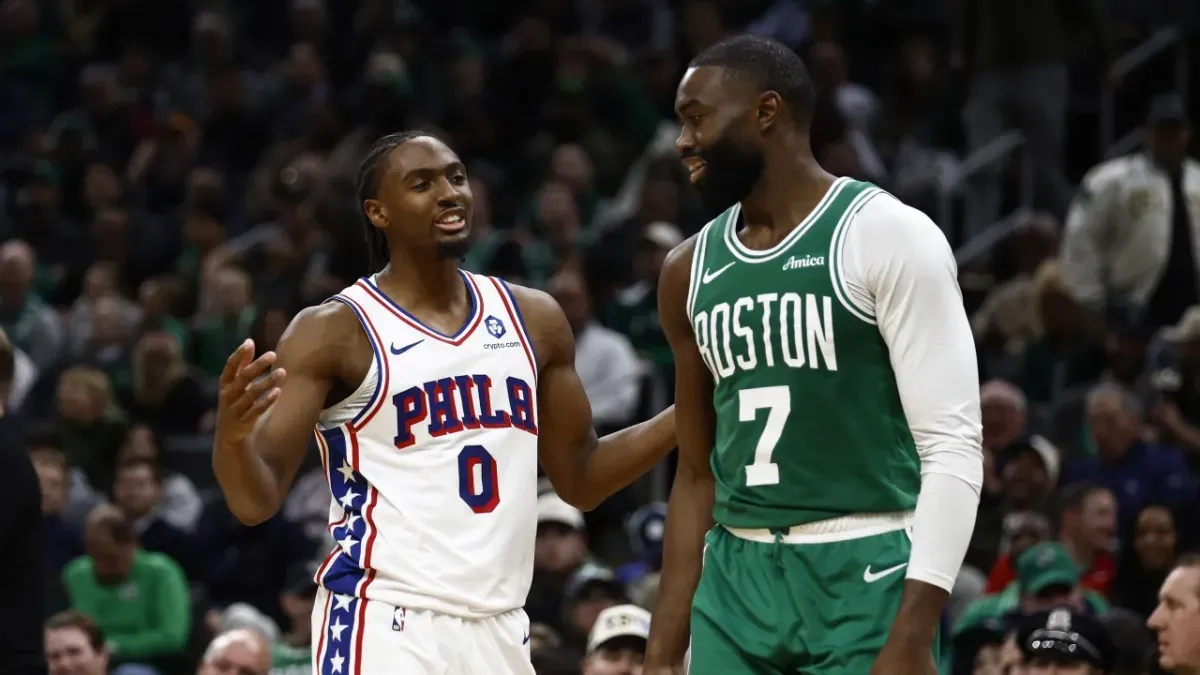
The Philadelphia 76ers and Boston Celtics have long been titans of the NBA, their rivalry steeped in history and intensity. Before this playoff series began, expectations were high—many analysts viewed it as a classic showdown. The Celtics, with a 56-26 record, secured the No. 2 seed, while the 76ers limped into the playoffs as the No. 7 seed at 45-37. This stark contrast in standings set the stage for what many anticipated would be a dominant performance by Boston.
However, pivotal changes loomed large over this matchup. Jayson Tatum, a key player for Boston, missed all four regular season games against the 76ers due to an Achilles injury—a significant absence that raised questions about the Celtics’ offensive efficiency. On the flip side, Joel Embiid’s recent emergency appendectomy cast a shadow over Philadelphia’s chances; his status for the series remains uncertain—details remain unconfirmed.
As Game 1 unfolded on April 19 in Boston, it became clear that injuries would heavily influence the outcome. The Celtics opened as heavy favorites, with a point spread of 10.5 points favoring them. They delivered on those expectations decisively, winning Game 1 by an impressive margin of 123-91. Jayson Tatum showcased his return to form with 25 points, 11 rebounds, and 7 assists—a performance that reaffirmed his importance to Boston’s playoff aspirations.
The implications of this game extend beyond mere numbers; they underscore a deeper narrative within this storied rivalry. The Celtics have historically excelled in first-round playoff matchups, winning five of their last six series either by sweep or in just five games. But this time is different—Philadelphia has boasted the best clutch-time defense in the NBA, holding opponents to a defensive rating of 98.6 during crucial moments throughout the season.
Expert opinions align with these observations. One analyst stated bluntly that “the Celtics are the better team in almost every metric,” suggesting that unless something changes dramatically, Boston is poised to advance easily in this series. Another echoed this sentiment: “If Jayson Tatum and Jaylen Brown are themselves, the Celtics win this series handily.” Such confidence from analysts paints a clear picture—Boston’s depth and talent may overwhelm Philadelphia if Embiid cannot contribute.
Yet, there’s always room for surprises in sports—especially during playoff time. The Sixers have been resilient and possess talent like Tyrese Maxey and Paul George who can shift momentum unexpectedly. Their ability to execute clutch plays could prove critical if they’re to challenge Boston effectively.
As we look ahead to Game 2 on April 21, one must wonder how each team will adapt to these evolving dynamics. Will Embiid’s potential absence further cripple Philadelphia’s chances? Or can they rally together to exploit any weaknesses shown by a Celtics team still finding its rhythm? Only time will tell.