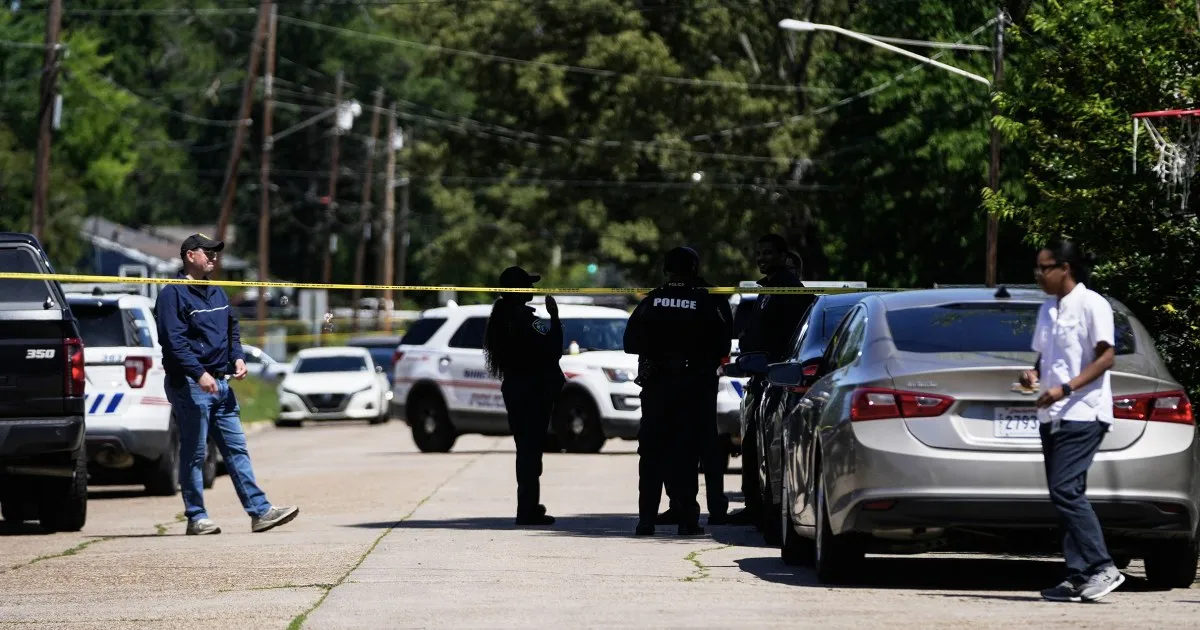
The landscape of domestic tranquility in Shreveport, Louisiana, was shattered on April 19, 2026. Until that day, the community had been largely insulated from such profound tragedy — a place where families thrived and children played without fear. But this illusion of safety crumbled with the shocking news of a mass shooting that claimed eight innocent lives.
What changed was not just the loss of life but the very fabric of a family torn apart. Shamar Elkins, identified as the shooter, was the father of seven of the children killed. The ages of these children ranged from just three to eleven years old — a heartbreaking reminder of innocence lost. The scene unfolded across two homes, where chaos erupted and lives were irrevocably altered.
In the wake of this horrific incident, immediate effects rippled through both the family and community. Two women, including Elkins’ wife, were critically injured. The Caddo Parish Coroner’s Office confirmed the devastating toll: eight children dead, leaving behind a community grappling with grief and disbelief. As local officials described it, this was perhaps the worst tragedy ever faced by Shreveport.
Elkins’ actions were marked by desperation — he fled the scene in a carjacked vehicle and was later confronted by police, armed with a rifle-style pistol. His prior conviction for illegal use of a firearm raises troubling questions about how he obtained weapons and what warning signs went unnoticed. Experts often point to such histories as critical indicators in preventing future tragedies; yet here we stand at a crossroads.
Tom Arceneaux, a local official, lamented the situation as “tragic” — words that seem woefully inadequate to describe the scale of loss experienced by so many families. Wayne Smith expressed disbelief: “I just cannot begin to imagine how such an event can occur.” This sentiment resonates deeply within communities affected by similar incidents across the nation.
But beyond shock lies uncertainty. The exact motive behind Elkins’ actions remains unclear; details about his relationship with the two injured women are not fully confirmed. Such uncertainties often cloud discussions surrounding mass shootings — raising more questions than answers and leaving communities searching for clarity amidst chaos.
As we reflect on this tragedy, we must also consider its implications for gun violence prevention efforts nationwide. The shooting is noted as the deadliest mass shooting in the U.S. since January 2024—a grim statistic that underscores an ongoing crisis. Local leaders like Tabatha Taylor have called for support: “This family and this community needs you.” It’s an urgent plea that resonates far beyond Shreveport.
This incident serves as a stark reminder that beneath every statistic lies a story — one that demands our attention and reflection. In moments like these, we must ask ourselves: what can be done to prevent such tragedies? How do we protect our communities while addressing deeper societal issues? These are not easy questions, but they are necessary ones as we seek to heal from this unimaginable loss.