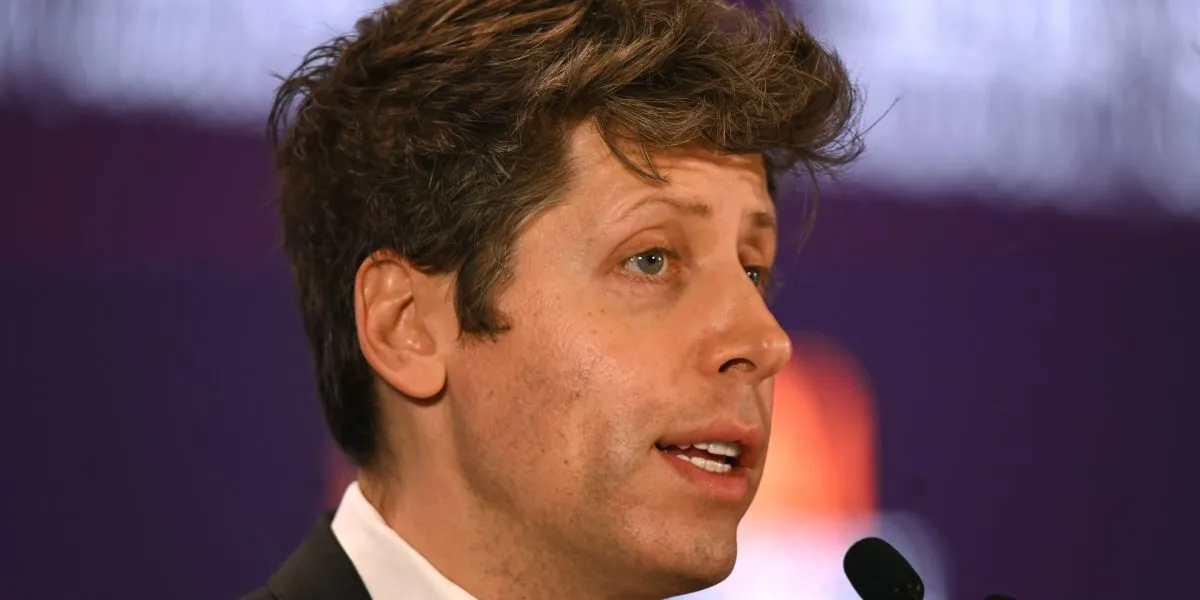
OpenAI CEO Sam Altman recently warned that some companies are engaging in a phenomenon known as ‘AI washing’—misattributing layoffs to artificial intelligence. This trend raises important questions about the actual impact of AI on employment.
A study by the National Bureau of Economic Research revealed that nearly 90% of executives surveyed reported no significant effect from AI on workplace employment in the past three years. This statistic starkly contrasts with the claims made by some companies, such as Snap, which announced layoffs of approximately 1,000 staff members, or about 16% of its workforce, citing AI as a primary factor.
This situation is indicative of a broader issue: many employers are following Snap’s lead. According to the 2025 World Economic Forum Future of Jobs Report, around 40% of employers anticipate reducing staff due to AI. Yet, experts like Martha Gimbel from the Yale Budget Lab emphasize that there are currently no significant macroeconomic effects from AI on labor.
Key insights:
- AI washing is defined as false or exaggerated claims about AI adoption and its impact.
- The SEC, DOJ, and FTC have initiated enforcement actions against companies overstating their AI capabilities.
- There has been a notable increase in AI-related litigation, with 16 securities class action lawsuits filed in 2025 alone.
As companies navigate this landscape, the credibility of their claims comes into question. With 92% of S&P 500 market value comprising intangible assets—including AI systems—corporate accountability is more crucial than ever. The stakes are high; misleading information not only affects market credibility but also undermines genuine advancements in AI technology.
Altman noted, “I don’t know what the exact percentage is, but there’s some AI washing where people are blaming AI for layoffs that they would otherwise do.” This statement encapsulates the tension between real technological advancement and the tendency to use AI as a scapegoat for business decisions.
The conversation around job displacement remains complex. While Anthropic CEO Dario Amodei estimates that 50% of entry-level office jobs could be wiped out by AI, many analysts argue that we must differentiate between automation and genuine AI capabilities—something vendors often blur intentionally.
The regulatory environment is evolving as well. With 145 AI-related bills enacted into law in the U.S. in 2025, companies must be cautious. Non-compliance could result in penalties up to 7% of global revenue under the EU AI Act.
The implications of these developments extend beyond immediate layoffs; they touch upon fundamental issues of governance and responsibility in a rapidly changing technological landscape. As discussions on AI governance continue, stakeholders must consider both the potential benefits and pitfalls associated with this transformative technology.