Introduction to the Solar Eclipse 2026
The solar eclipse expected on August 12, 2026, is set to be a spectacular astronomical event that will capture the attention of millions globally. Solar eclipses occur when the moon passes between the Earth and the sun, blocking all or part of the sun’s light. The upcoming eclipse is particularly significant as it will be a total solar eclipse visible from several key locations, providing a unique opportunity for enthusiasts and the general public alike to witness this celestial phenomenon.
The Path of Totality
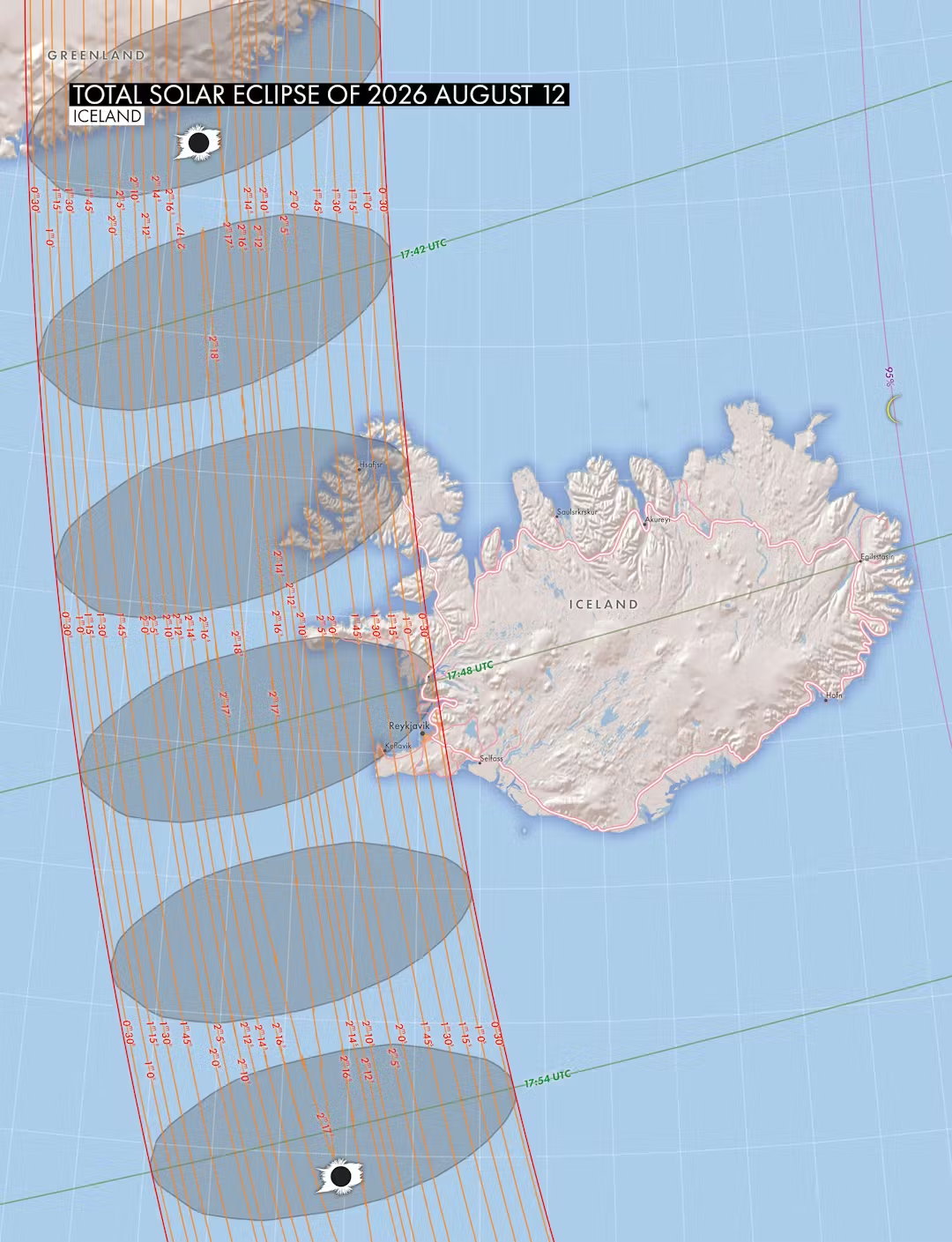
The path of totality, where the sun will be completely obscured by the moon, will pass through Spain, Greenland, and parts of Iceland, making these locations prime viewing spots for the event. In Spain, cities like Valencia and Barcelona will offer excellent vantage points, while in Iceland, the eclipse will cover much of the country, enabling residents and tourists to witness this rare occurrence. Observers in the United Kingdom will experience a partial eclipse, making it advisable to find local events and gatherings for optimal viewing.
Importance of Solar Eclipses
Solar eclipses are not only breathtaking to view; they also hold scientific importance. Astronomers use these events to study the sun’s corona and its outer atmosphere, gaining insights into solar phenomena that can affect space weather conditions on Earth. Eclipses have historically advanced our understanding of astronomy and physics, including work by famous scientists such as Sir Isaac Newton and Albert Einstein. As such, the 2026 eclipse presents a perfect opportunity for educational outreach and exploration of these scientific principles.
Preparing for the Event
As we approach 2026, preparation is key for both casual observers and eclipse chasers. For those wishing to view the total eclipse, booking travel accommodations in target areas should be done well in advance as interest will be high. Additionally, it is crucial to have the proper eye protection, such as certified eclipse glasses or solar viewers, to safely enjoy the event.
Conclusion
The solar eclipse of 2026 promises to be an awe-inspiring event that combines beauty with importance. As advancements in technology allow for better prediction and understanding of solar phenomena, events like the upcoming eclipse serve to inspire curiosity and enthusiasm for science within communities around the world. Engaging in eclipse viewing can promote education and a shared appreciation for our universe, leaving a lasting impact for years to come.