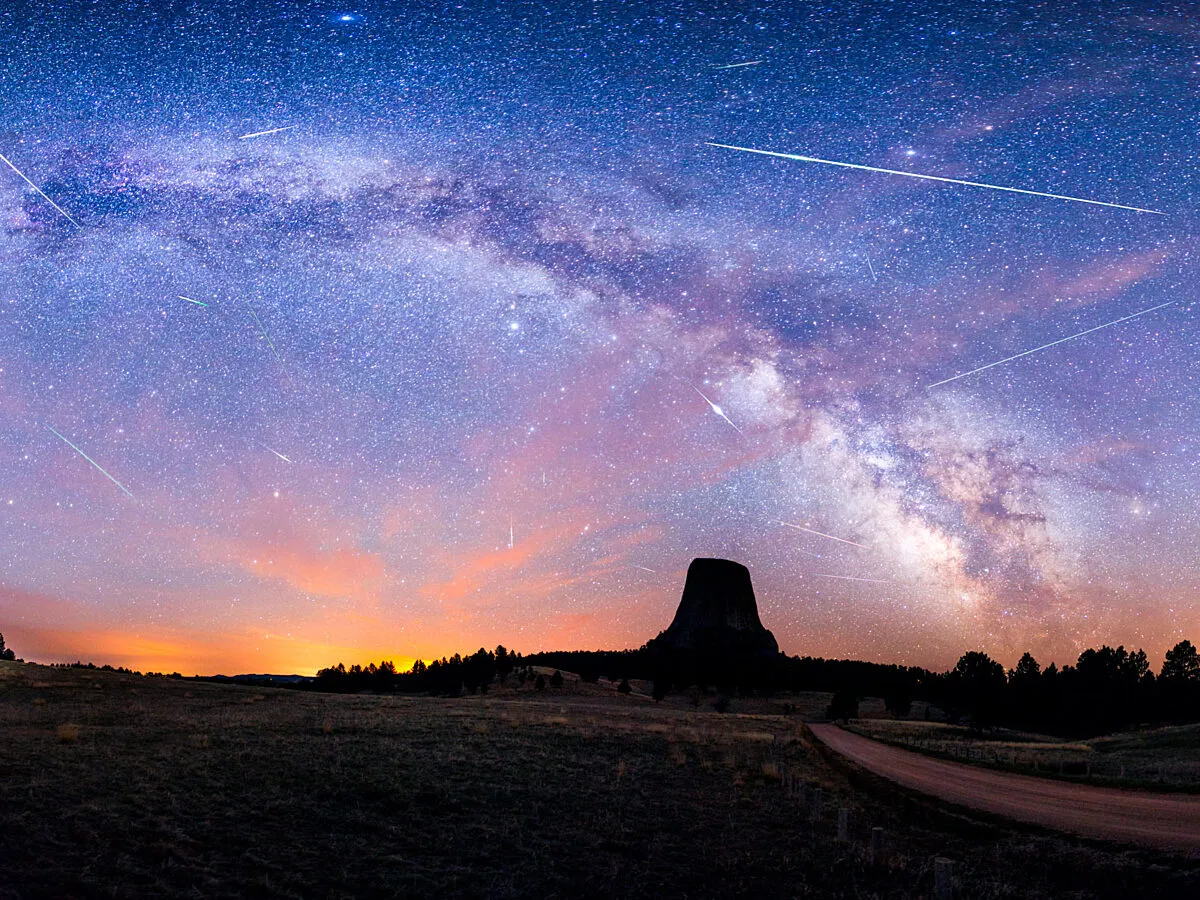
The upcoming Eta Aquarid meteor shower will peak on May 6, 2026, offering a chance for stargazers in Oregon to witness a celestial display. However, a bright moon may dim the experience, complicating efforts to catch glimpses of these shooting stars.
Typically, the Eta Aquarids are active from mid-April through late May, with ideal conditions allowing for up to 50 meteors per hour. Yet in the Northern Hemisphere—where most observers reside—the count often drops to between 10 and 30 meteors per hour due to various factors like light pollution and atmospheric conditions.
This year, the moon’s brightness could further reduce visibility. With a chance of cloud cover ranging from 66% to 84% along the Oregon Coast, stargazers may find themselves disappointed. The meteors travel at an impressive speed of about 40 miles per second, creating long, lingering streaks across the night sky rather than bright fireballs.
Key facts about the Eta Aquarids:
- The shower is caused by debris left behind by Halley’s Comet.
- Halley’s Comet orbits the sun approximately every 76 years.
- The radiant point of the meteor shower is located in the constellation Aquarius.
According to Teri Gee, an expert in astronomy, “The farther south you are, the better you’ll see it.” This suggests that those in darker regions away from city lights might have a better chance of witnessing the celestial phenomenon. Nico Adams adds that observers should be alert for bright streaks appearing briefly in their peripheral vision.
As Oregonians prepare for this event, they won’t need any special equipment to view the Eta Aquarids. With mostly clear skies expected during the early morning hours of May 6, there remains hope for a worthwhile experience. However, uncertainties linger regarding how many meteors will be visible due to moonlight interference.
After the Eta Aquarids fade from view on May 28, stargazers can look forward to other meteor showers later in the year. The Southern Delta Aquarids will be most active between July 30–31, followed by the Perseids peaking on August 12–13.