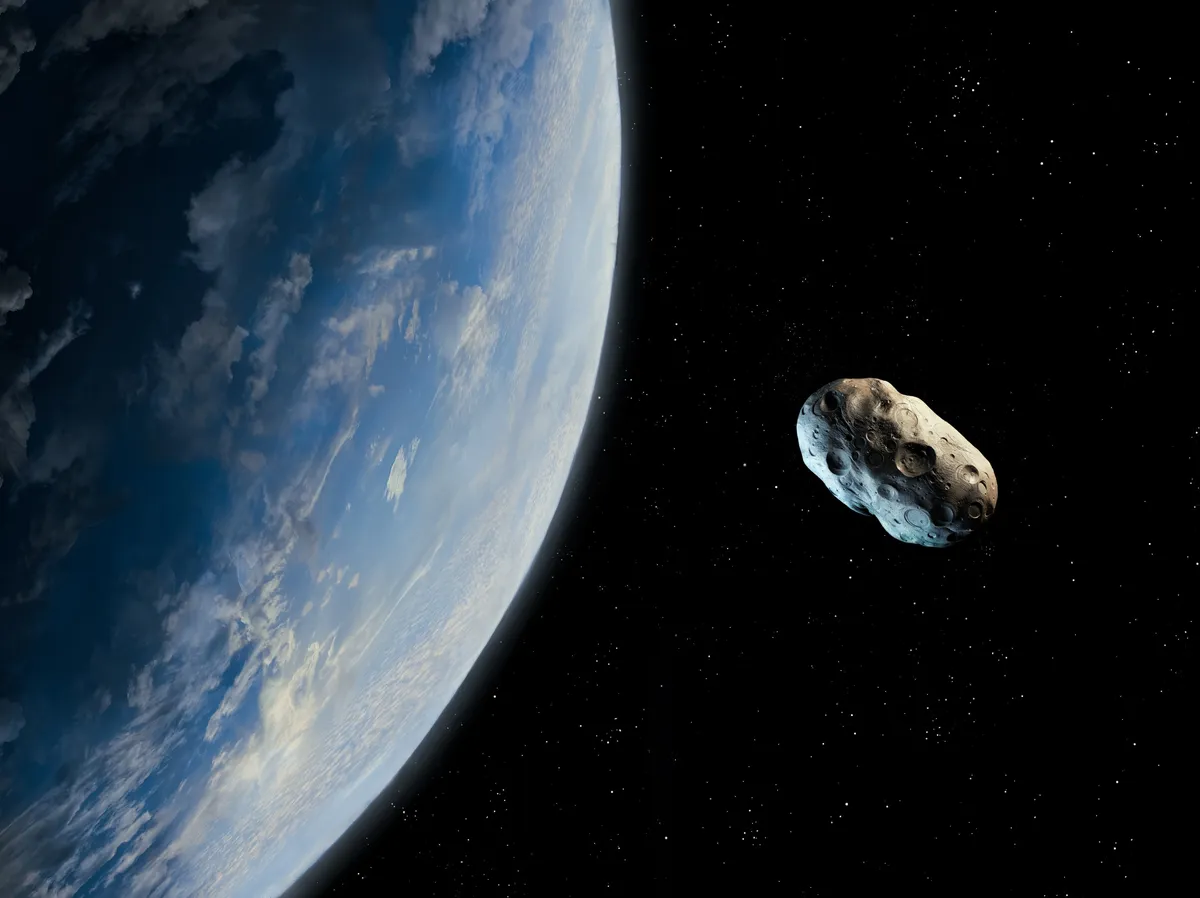
“NASA assures that there is no risk of impact and monitors its trajectory.” This statement comes as the agency prepares for the close approach of asteroid 2026 FM3, a car-sized rock measuring about 15 feet across, which is set to zoom past Earth on March 25, 2026.
At its closest, 2026 FM3 will come within 148,000 miles of our planet, a distance that is considered safe. This event is part of NASA’s ongoing efforts to track Near-Earth Objects (NEOs), of which they currently monitor over 41.
2026 FM3 is traveling at a speed of over 18 km/h, and while it may seem alarming to have an asteroid approaching, NASA emphasizes that the vast majority of monitored asteroids do not pose a real risk.
Historically, NASA has been tracking asteroids for decades, with the closest recorded encounter of 2026 FM3 occurring in 1965. Such monitoring is crucial, especially as asteroids measuring up to 30 feet across impact Earth roughly once every ten years, typically without causing any harm.
In contrast, larger asteroids, such as those over 3,000 feet, statistically hit Earth about every 700,000 years and could lead to global devastation. Meanwhile, asteroids over 6 miles across could cause mass extinctions, impacting Earth once every 100 million years.
NASA is also keeping an eye on other asteroids, including 2026 FX3, 2026 FT2, 2026 FQ2, and 2026 FG3, as part of their comprehensive monitoring program.
As for asteroid 2024 YR4, which was previously noted for its potential risk, it is now too far away to observe with either space or ground-based telescopes. NASA expects to make further observations of this asteroid when it returns to the vicinity of Earth in 2028.
In summary, while the approach of 2026 FM3 may capture public attention, NASA’s monitoring efforts ensure that there is no cause for concern. The agency continues to prioritize the safety of our planet by tracking these celestial objects.