Changing Expectations for Aurora Viewing
Historically, the best month for viewing the aurora borealis has been March, according to a comprehensive 75-year data set analyzed by retired NASA solar physicist David Hathaway. This period typically sees the highest number of geomagnetically active days, with October following closely behind. However, the landscape of aurora viewing is shifting as the NOAA has issued a watch for a significant geomagnetic event.
Decisive Moment: The G3 Storm
On December 6, 2025, a full-halo coronal mass ejection (CME) from the sun set the stage for a strong G3 geomagnetic storm, predicted to last through midday on December 9, 2025. This event marks a notable departure from the usual seasonal patterns, as auroras are expected to be visible from late December 8 into the early hours of December 9, and potentially again on the night of December 9.
Widespread Visibility
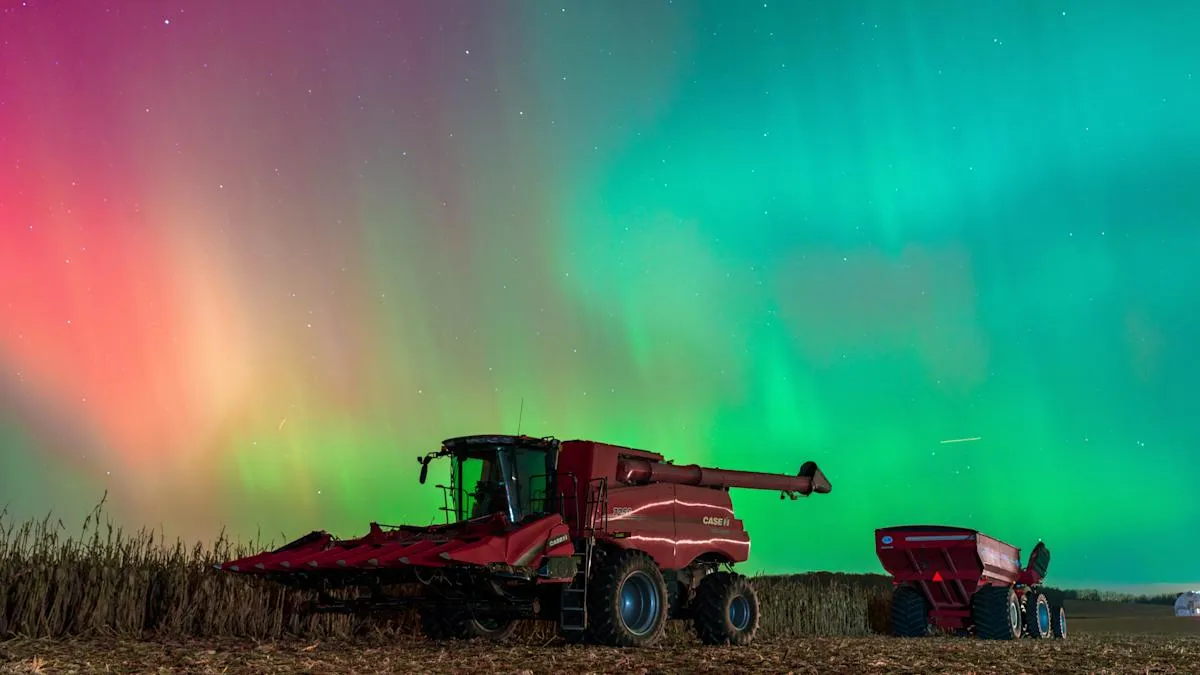
The implications of this storm are significant, as auroras may be visible across a wide swath of the northern U.S. This includes states such as Alaska, Washington, Oregon, Idaho, Montana, Wyoming, North Dakota, South Dakota, Nebraska, Minnesota, Iowa, Wisconsin, Illinois, Michigan, Indiana, Ohio, Pennsylvania, New York, Massachusetts, Vermont, New Hampshire, and Maine. Caitlin Kaiser from NOAA’s Space Weather Prediction Center noted, “On Monday, parts of the Great Lakes, Midwest and Northeast will have the best chance at seeing the northern lights while the rest of the Northern Tier contends with thick cloud cover.” This broad visibility is a direct result of the intensity of the G3 storm.
Expert Insights on the Shift
While March is traditionally favored for aurora sightings, the NOAA’s predictions indicate that the upcoming G3 storm could redefine expectations. The agency also forecasts a G1-class geomagnetic storm on March 6, 2026, which will further enhance aurora visibility farther south than usual. This shift in timing and intensity underscores the dynamic nature of solar activity and its effects on Earth’s magnetosphere.
Preparing for the Cold
As excitement builds for the aurora borealis, it is essential for observers to prepare adequately. Kaiser advises, “If you do head out either night, make sure to bundle up! Most of the area will see temperatures dropping well below freezing.” This reminder highlights the need for proper attire when venturing out to witness the natural light display, particularly in regions where temperatures can plummet during winter nights.
Understanding the Science Behind Auroras
Auroras are triggered by geomagnetic storms resulting from coronal mass ejections (CMEs). These solar phenomena can have profound effects on Earth, including disruptions to satellite communications and power grids. The current G3 storm, while offering a spectacular light show, also serves as a reminder of the interconnectedness of solar activity and terrestrial conditions.
The Future of Aurora Watching
As we look ahead, the next vernal equinox is set to occur at 3:46 pm UTC on March 20, 2026. This astronomical event could further influence aurora visibility in the months that follow. With the NOAA’s ongoing monitoring and predictions, enthusiasts can stay informed about upcoming opportunities to witness the aurora borealis, making this a pivotal time for both casual observers and dedicated aurora chasers.