Reaction from the field
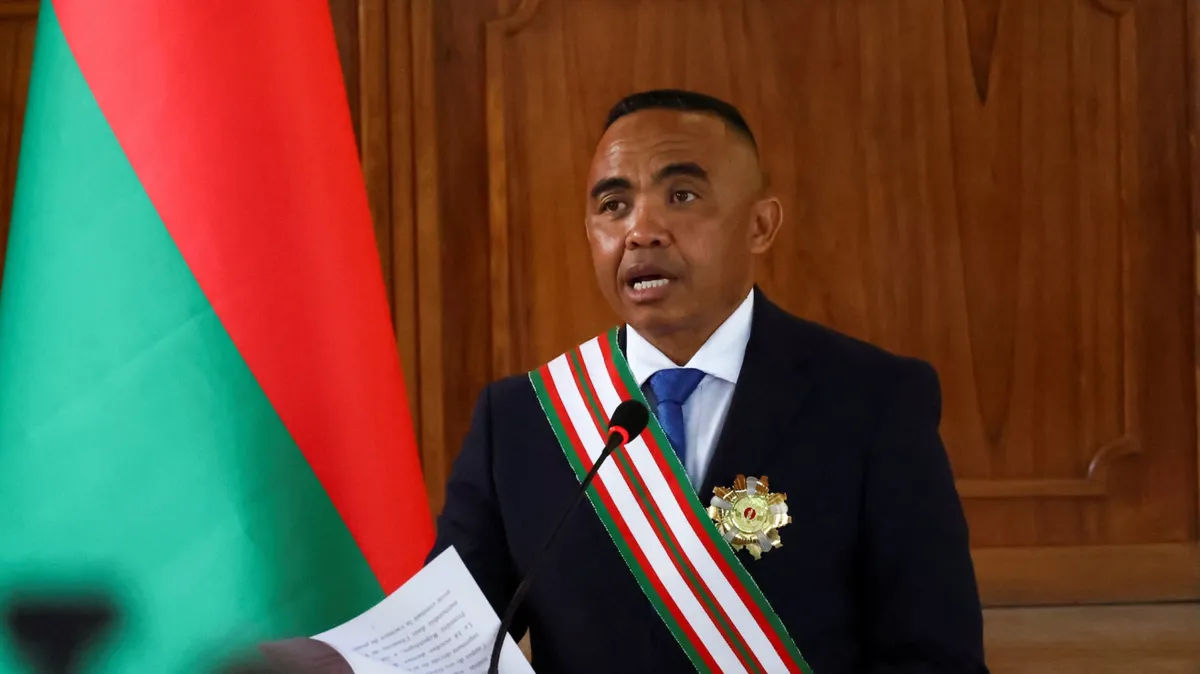
The recent coup in Madagascar, which saw Colonel Michael Randrianirina seize power from President Andry Rajoelina on October 12, 2025, has sent shockwaves through the region and beyond. This event, coupled with the 50th anniversary of Argentina’s last military coup, has reignited discussions about the fragility of democratic institutions and the potential for military intervention in governance. The implications of these developments are profound, as they challenge the very foundations of democracy in both nations.
The coup in Madagascar was characterized as a ‘coupvolution,’ a term that reflects a popular revolution culminating in a military takeover. Despite the Southern African Development Community (SADC) refraining from suspending Madagascar, citing the High Constitutional Court’s endorsement of the power transfer, the African Union (AU) took a firmer stance, suspending the country for what it deemed an unconstitutional change of government. This divergence in responses underscores the complexities of international diplomacy regarding coups and the varying thresholds for intervention.
In the wake of the coup, Randrianirina has promised to restore democratic civilian governance within 18 to 24 months. However, the reality of such promises often hinges on the military’s willingness to relinquish power, a historical pattern observed in numerous coups worldwide. The dialogue process for restoring civilian rule must be inclusive, as emphasized by various stakeholders, yet the path forward remains fraught with uncertainty.
Meanwhile, thousands gathered in Buenos Aires to commemorate the 50th anniversary of Argentina’s last military coup, a somber reminder of the country’s turbulent past. This national holiday honors the estimated 30,000 individuals who were forcibly disappeared during the dictatorship’s ‘Dirty War.’ The collective memory of this dark chapter in Argentine history serves as a poignant backdrop to current events, highlighting the ongoing struggle for human rights and accountability.
Justice Elena Kagan’s recent remarks during a U.S. Supreme Court oral argument about presidential immunity raised critical questions about the potential for a president to order military action without facing consequences. “He’s gone. Let’s say this president who ordered the military to stage a coup. He’s no longer president, he wasn’t impeached, he couldn’t be impeached, but he ordered the military to stage a coup. You’re saying that’s an official act. That’s immune?” Kagan’s hypothetical scenario reflects a growing concern about the erosion of democratic norms and the implications of unchecked executive power.
The juxtaposition of these events in Madagascar and Argentina illustrates a broader trend of instability and the potential for military coups in various regions. As nations grapple with governance challenges, the specter of military intervention looms large, raising questions about the resilience of democratic institutions. The historical context of Argentina’s military dictatorship serves as a cautionary tale for other nations facing similar dilemmas.
Looking ahead, the international community will be closely monitoring the situation in Madagascar as Randrianirina’s government navigates the complexities of restoring civilian rule. The effectiveness of this transition will likely depend on the military’s commitment to uphold democratic principles and the engagement of civil society in the political process. Details remain unconfirmed regarding the specific measures that will be taken to ensure a smooth transition, leaving many to wonder about the future of democracy in Madagascar.
As the anniversary of Argentina’s military coup serves as a reminder of the past, it also highlights the ongoing struggle for justice and accountability. The lessons learned from Argentina’s history may provide valuable insights for Madagascar and other nations facing similar challenges. The global discourse surrounding coups and governance continues to evolve, and the stakes have never been higher for the preservation of democratic values.