David Gross’s work has long been foundational in the realm of particle physics. He won the Nobel Prize in Physics in 2004 for his discovery of asymptotic freedom—an essential property that reveals how the force between quarks weakens as they come closer together. This groundbreaking insight contributed to the completion of the Standard Model of particle physics.
Recently, Gross received a $3 million Special Breakthrough Prize in Fundamental Physics. This accolade not only recognizes his past achievements but also highlights his ongoing contributions to theoretical physics. His shift from studying atomic components to string theories aims at unifying gravity with the other fundamental forces.
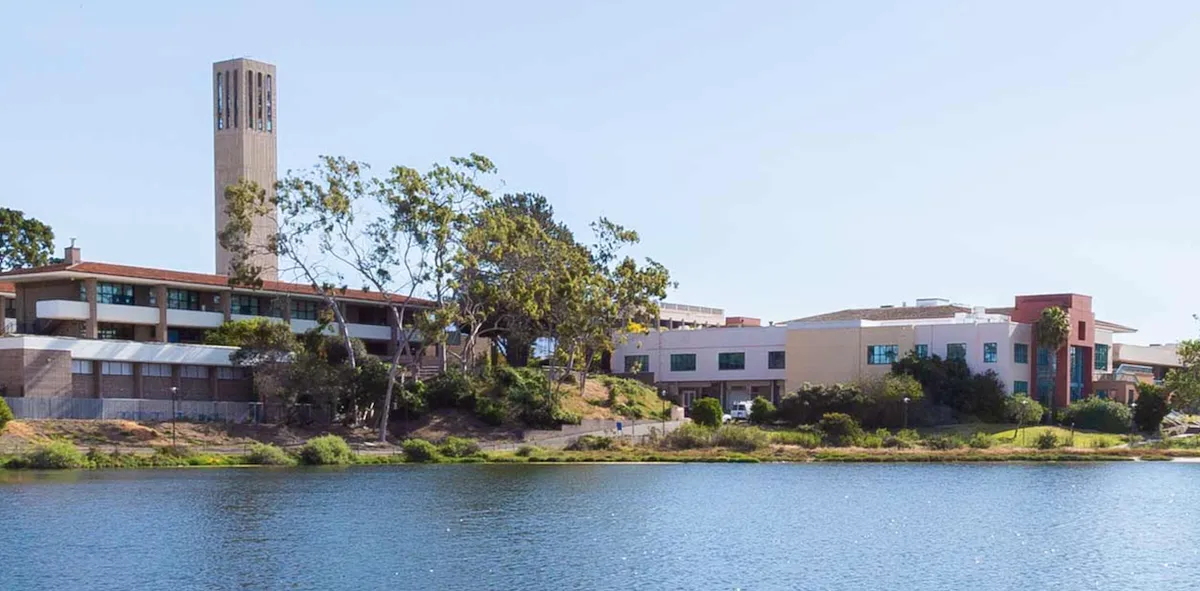
At age 13, a signed copy of ‘The Evolution of Physics’ by Albert Einstein ignited his passion for science. Since then, Gross has become a pivotal figure in theoretical physics, having previously served as director of the Kavli Institute for Theoretical Physics at UCSB.
In recent statements, he has expressed concerns about the future of certain scientific endeavors: “Survival beyond 50 years is unlikely,” he remarked. Such comments reflect a broader anxiety within the scientific community regarding funding and support for fundamental research.
Yet, despite these challenges, observers are optimistic. The recognition from the Breakthrough Prize may catalyze further interest and investment in fundamental physics. As Gross continues to explore uncharted territories—like string theories—his work remains critical for future advancements.
What will happen next? With this new prize, many expect that Gross will not only continue his research but also inspire a new generation of physicists. His legacy—marked by both accolades and profound discoveries—offers a glimpse into what lies ahead for theoretical physics.