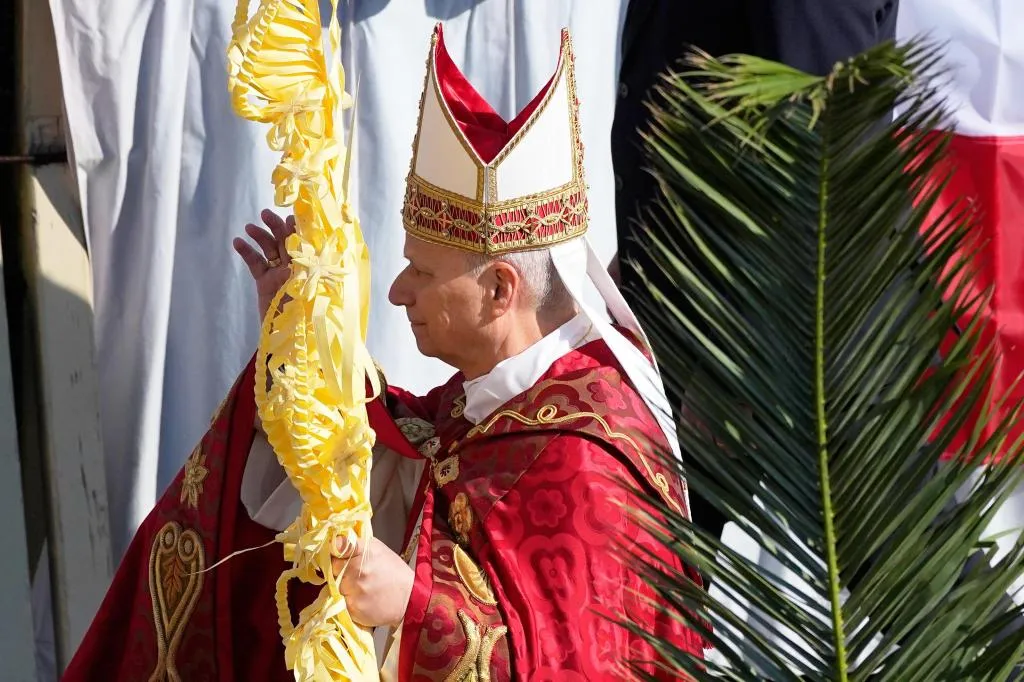
Domingo de Ramos 2026 unfolded as a significant moment for the Catholic Church, with Pope León XIV delivering a powerful message against the backdrop of ongoing global conflicts. The Pope’s assertion that “God is the ‘king of peace’ who rejects violence” resonated deeply with the tens of thousands gathered in Plaza de San Pedro, as the world grapples with the ramifications of war.
This year’s observance was particularly poignant, occurring two months into the United States and Israel’s military engagement with Iran. Pope León XIV specifically prayed for Christians in the Middle East, highlighting their plight amidst escalating tensions. His remarks served as a reminder of the human cost of conflict, urging a collective call for peace.
In a striking moment, the police in Jerusalem barred Catholic leaders from entering the Church of the Holy Sepulchre, marking the first time in centuries that such a restriction was imposed on the celebration of Domingo de Ramos at the site of Jesus’ crucifixion. This unprecedented action underscored the ongoing struggles for religious freedoms in the region, with the Israeli police stating that “freedom of worship will continue to be respected, subject to necessary restrictions.”
Pope León XIV’s message was clear: “Brothers and sisters, this is our God: Jesus, king of peace, who rejects war, whom no one can use to justify war.” This declaration not only addressed the immediate context of violence but also called for a broader reflection on the role of faith in times of strife.
The Pope’s first Domingo de Ramos as leader of the Catholic Church came after the passing of Pope Francis, who had been hospitalized for five weeks due to bilateral pneumonia prior to Easter the previous year. The transition in leadership brought a renewed focus on the Church’s mission of peace and reconciliation.
As León XIV prepares to preside over the Good Friday procession at the Colosseum and celebrate Easter Mass in St. Peter’s Square, the Church’s commitment to restoring traditional practices, such as the foot washing ceremony at the Basilica of St. John Lateran, signals a return to its roots amid contemporary challenges.
With the ongoing war in Ukraine also persisting during this significant religious observance, the Pope’s words echoed a universal call for peace and healing. He urged the faithful to elevate their prayers to the “Prince of Peace” for those suffering due to war and to seek concrete paths toward reconciliation.
As the world watches, the implications of Pope León XIV’s messages during Domingo de Ramos 2026 may extend beyond the confines of the Church, influencing public discourse on war and peace. Details remain unconfirmed regarding the potential impact of these declarations on international relations and the Church’s role in advocating for peace.